




 |
 |
INDEX |
|
| Original Cigarette-Style Box and Cassette |
|||
|
TITLE
|
THE BEATLES |
|||||
| CATALOG NUMBER | TC2-PCS 4501 / 1E 274 o 04844 |
|||||
|
RELEASE DATE
|
August 1971 / First Issue | |||||
| TRACK LISTING | SIDE 1 | SIDE 2 | ||||
| Back In The U.S.S.R. [A1] |
Everybody's Got Something To Hide Except Me And My Monkey [C4] |
|||||
| Dear Prudence [A2] |
Sexy Sadie [C5] |
|||||
| Glass Onion [A3] |
Helter Skelter [C6] | |||||
| Ob-La-Di, Ob-La-Da [A4] |
Revolution 1 [D1] |
|||||
| Wild Honey Pie [A5] |
Honey Pie [D2] |
|||||
| The Continuing Story Of Bungalow
Bill [A6] |
Savoy Truffle [D3] | |||||
| While My Guitar Gently Weeps [A7] | Good Night [D7] |
|||||
| Martha My Dear [B1] |
Happiness Is A Warm Gun [A8] |
|||||
| I'm So Tired [B2] |
Birthday [C1] |
|||||
| Blackbird [B3] |
Yer Blues [C2] |
|||||
| Piggies [B4] |
Mother Nature's Son [C3] | |||||
| Rocky Raccoon [B5] |
Cry Baby Cry [D4] |
|||||
| Don't Pass Me By [B6] |
(" Can You Take Me Back...") [D5] |
|||||
| Why Don't We Do It In The Road?
[B7] |
Revolution 9 [D6] |
|||||
| I Will [B8] |
||||||
| Julia [B9] | ||||||
| Long, Long, Long [C7] |
||||||
| CASSETTE CASE AND TAPE |
CASE FRONT | CASE BACK | SIDE 1 --> Click! | SIDE 2 --> Click! | ||
 |
 |
|
 |
|||
 |
|
 |
||||
 |
||||||
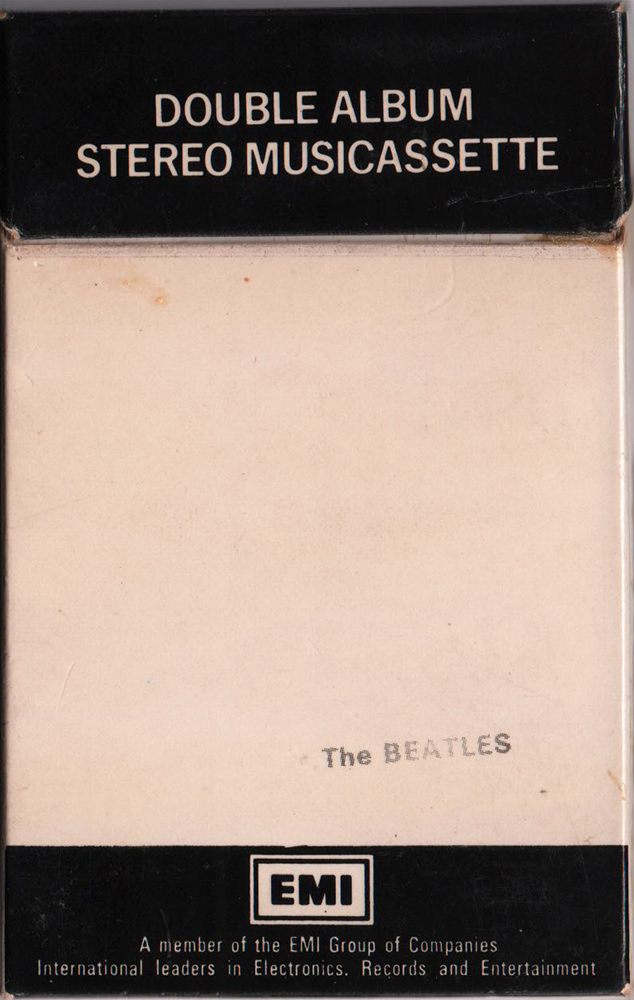
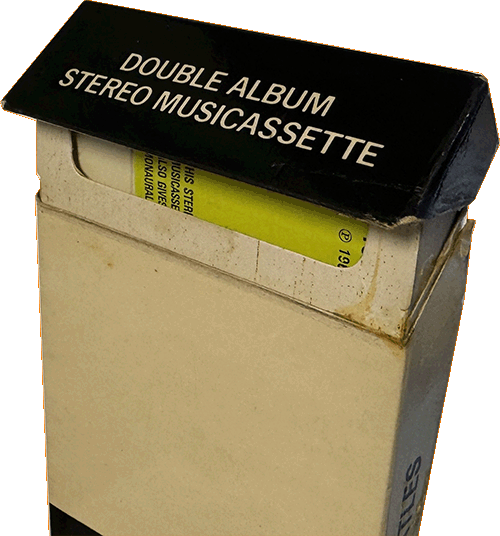
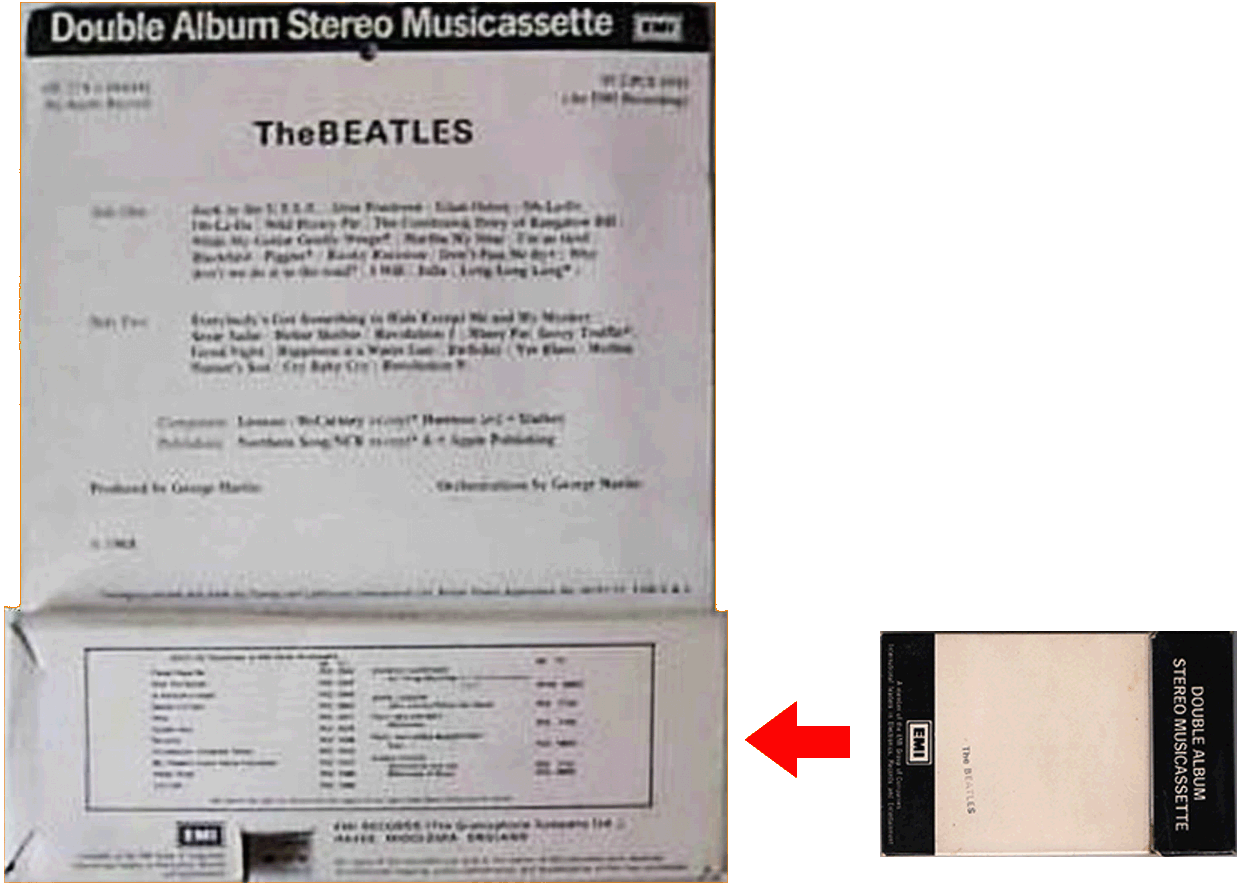
| The White Album was originally issued on a single double-play cassette in a flip-top, cigarette-style cardboard box. Some early copies came with a large cardboard display card that held the boxed cassette (sorry! I don’t have it.) |
The first UK issue has Lemon Yellow paper label without
Parlophone logo |
|||||
| CASSETTE CASE |
CASE OPEN1 |
CASE OPEN2 |
||
 |
 |
|||
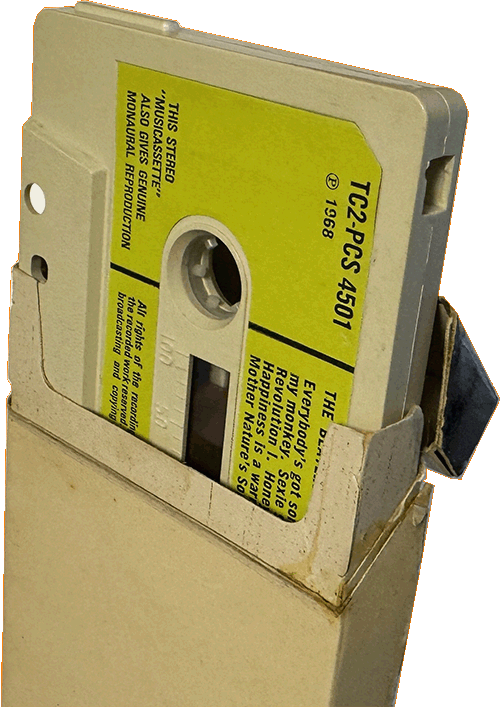
| Open the flip-top lid of the cigarette-style box and remove the cassette. |
||||
| CASE: FRONT CLOSE-UP | ||||
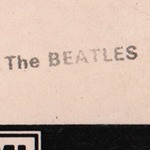 |
This cassette contains The Beatles, also known as the White Album | 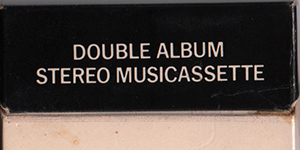 |
The complete double album is contained on a single cassette. | |
| CASE: FRONT CLOSE-UP | ||||
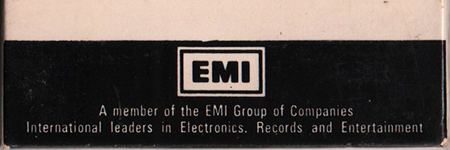 |
EMI logo mark and the credit
"A member of the EMI Group of Companies International
leaders in Electronics, Records and Entertainment" were
printed at the bottom of the case. |
|||
| CASE: BOTTOM CLOSE-UP | ||||
 |
The standard copyright
text was printed at the bottom of the case. |
|||
| CASE: BACK CLOSE-UP | ||||
 |
 |
|||
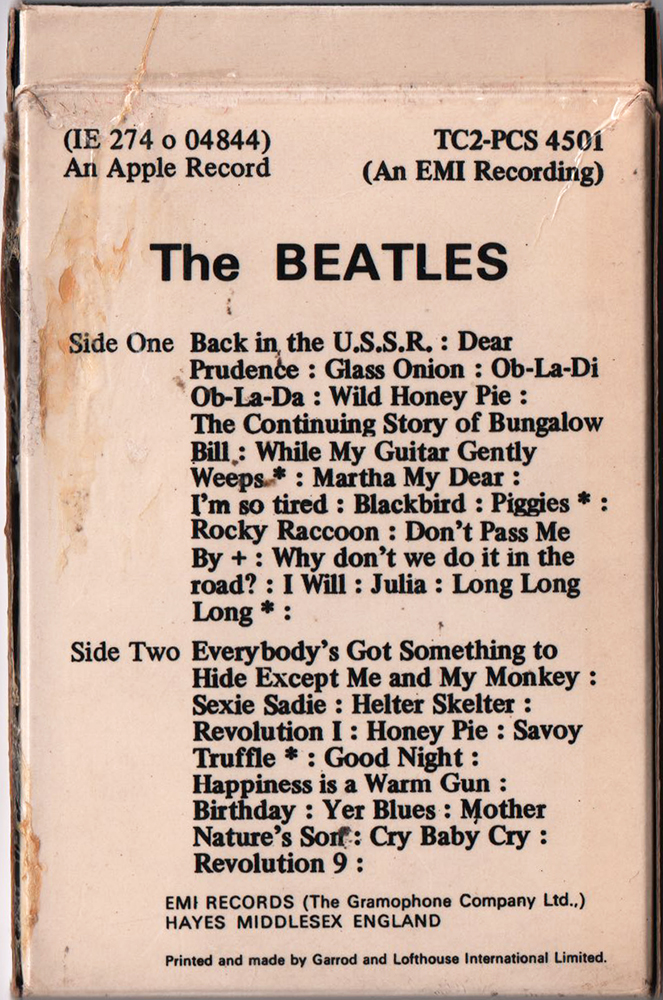
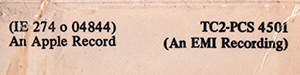
| Catalog number
"TC2-PCS 4501" and the EMI country code (*1) were printed on
the back of the box. The word "An Apple Record" was printed at the top of the rear case. |
"E.M.I. Records
(The Gramophone Company Ltd.)" credit was printed at the
bottom of the case. Printer credit "Printed and made by Garrod and Lofthouse International Limited" was printed at the bottom. |
|||
| LABEL CLOSE-UP | ||||
 |
 |
 |
 |
|
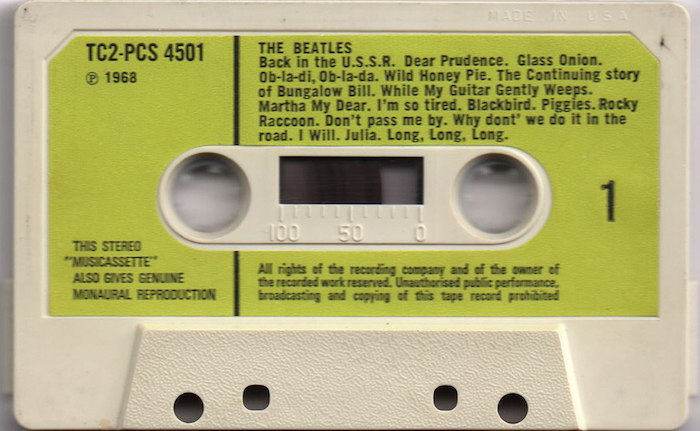
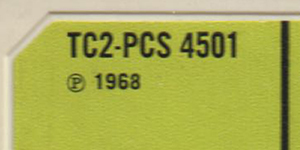
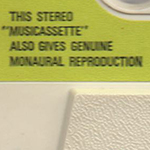
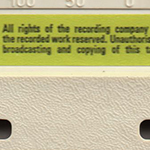
| This cassette was issued without the £ Parlophone logo. The "1E" number appeared on the packaging alongside "TC2-PCS 4501", but was not printed on the labels. |
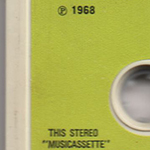
A prerecorded music cassette is called a "Musicassette". | The "DP (*2)" logo was not
embossed on the cassette shells. |
||
| LABEL CLOSE-UP | ||||
 |
 |
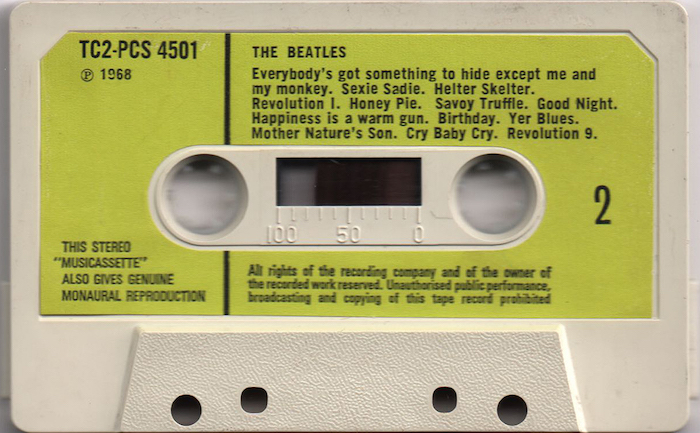
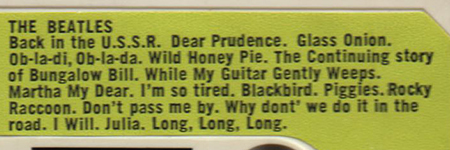
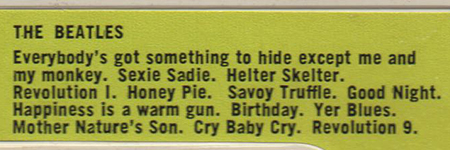
The rearranged cassette running order was most likely related to the need to balance the playing times of the four programs on the 8-track edition produced alongside it. | ||
 |
 |
|||
| LABEL CLOSE-UP | ||||
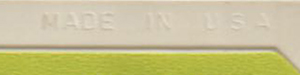 |
"Made
in
U.S.A" was embossed on the shell. |
|||
| OTHER
ITEM: Cardboard Display Panel |
||||
| CARDBOARD:
FRONT |
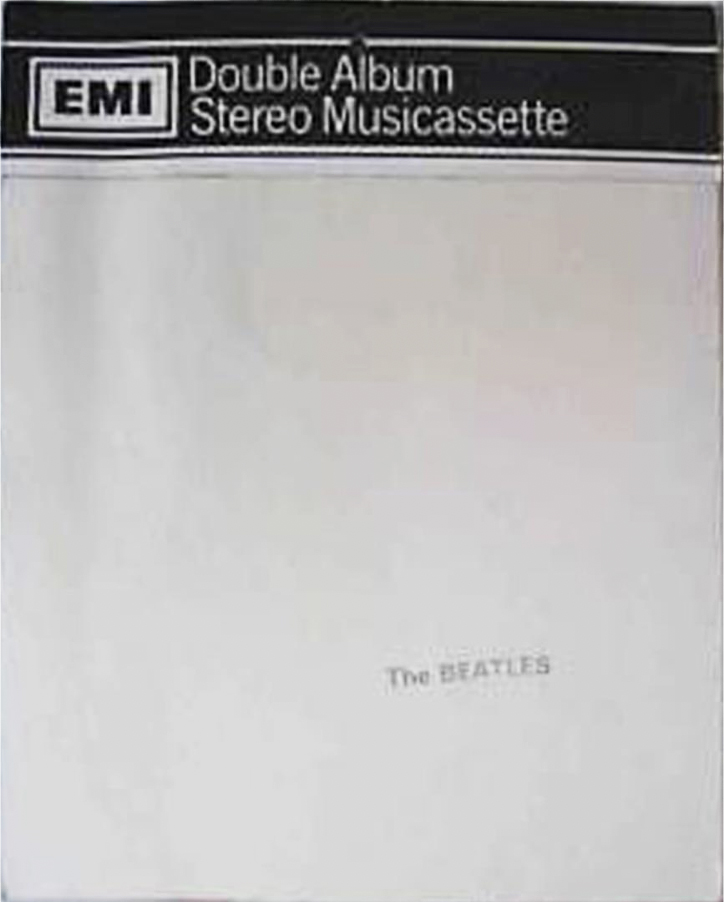
CARDBOARD: BACK | Some early copies came with a large cardboard display panel that held the boxed cassette. (sorry! I don’t have it.) |
||
 |
 |
|||
| LABEL | Lemon Yellow Paper Label without Parlophone logo |
|||
| MIX | STEREO |
|||
| RECORD COMPANY'S NAME | An Apple Record / EMI Records (The Gramophone Company Ltd.) / An E.M.I. Recording | |||
| CENTRAL REMARK "SOLD IN U.K." |
- | |||
| RECORDING PUBLISHED CREDIT | ℗ 1968 |
|||
| INLAY FORM | No inlay card |
|||
| SHELL | White Shell / embossed "MADE IN
USA" |
|||
| CASSETTE CASE |
In a
cigarette type card box which was attached to the back of a
large display card. |
|||
| PRINTER CREDIT | Printed and made by Garrod and Lofthouse
International Limited |
|||
| COVER DESIGN/ PHOTO/ NOTES | Some early copies came with a large cardboard display panel that held the boxed cassette. |
|||
| PRODUCER | George Martin | |||
| COMMENTS | This copy is housed in the original flip-top, cigarette-style cardboard box and has no inlay card. The cassette contains the complete 1968 double album The Beatles (the White Album) on one tape. It was first issued in this cassette format in August 1971 (TC2-PCS 4501). The original packaging was a flip-top, cigarette-style cardboard box. Some early copies came with a large cardboard display card that held the boxed cassette. This packaging may have been an experimental design intended to test the developing cassette market. Later issues used a white foldover inlay in a Norelco case. Both early packaging styles are difficult to find, particularly the original box complete with its display card. The Lemon Yellow paper labels have no black-boxed EMI/Parlophone logo. The absence of the logo may have been due to a shortage of costly letterpress blocks. During the initial Beatles cassette release period (1967–1971), vinyl remained the dominant format. These early cassettes were probably produced in substantially smaller quantities than their vinyl counterparts. The rearranged cassette running order was most likely related to the need to balance the playing times of the four programs on the 8-track edition produced alongside it. The catalog number TC2-PCS 4501 and the EMI number 1E 274 o 04844 were printed on the box. This copy should not be confused with the later Norelco-case version. The "DP (*2)" logo was not embossed on the cassette shells. "MADE IN U.S.A." was embossed on the shell. (*1) EMI country code: 1E 274 o 04844 The EMI country codes (introduced on 1 June, 1969): In most cases the EMI Codes are the first two letters of the record's catalog#. These EMI Country Codes were used to indicate the country in which the record was pressed. Note this doesn't necessarily mean the record was also released in that country (from Discogs). OC / 0C / 1E= UK (*2) Data Packaging Corporation: (who also traded as Hellerman Data Packaging Ltd) supplied cassette and 8 track shells, tape and other components to the music industry. The "DP" logo can often be found molded into cassette shells, especially during the early to mid 1970s. |
|||
|
TITLE
|
THE BEATLES |
|||
| CATALOG NUMBER | TC2-PCS 4501 / 1E 274 o 04844 |
|||
|
RELEASE DATE
|
Late 1971? / Second Issue | |||
| TRACK LISTING | SIDE 1 | SIDE 2 | ||
| Back In The U.S.S.R. [A1] |
Everybody's Got Something To Hide Except Me And My Monkey [C4] |
|||
| Dear Prudence [A2] |
Sexy Sadie [C5] |
|||
| Glass Onion [A3] |
Helter Skelter [C6] |
|||
| Ob-La-Di, Ob-La-Da [A4] |
Revolution 1 [D1] |
|||
| Wild Honey Pie [A5] |
Honey Pie [D2] |
|||
| The Continuing Story Of Bungalow
Bill [A6] |
Savoy Truffle [D3] |
|||
| While My Guitar Gently Weeps [A7] |
Good Night [D7] |
|||
| Martha My Dear [B1] |
Happiness Is A Warm
Gun [A8] |
|||
| I'm So Tired [B2] |
Birthday [C1] |
|||
| Blackbird [B3] |
Yer Blues [C2] |
|||
| Piggies [B4] |
Mother Nature's Son [C3] |
|||
| Rocky Raccoon [B5] |
Cry Baby Cry [D4] |
|||
| Don't Pass Me By [B6] |
(" Can You Take Me Back...") [D5] |
|||
| Why Don't We Do It In The Road? [B7] |
Revolution 9 [D6] | |||
| I Will [B8] |
||||
| Julia [B9] |
||||
| Long, Long, Long [C7] | ||||
| CASSETTE CASE AND TAPE |
CASE FRONT | CASE BACK | SIDE 1 --> Click! | SIDE 2 --> Click! |
 |
 |
 |
 |
|
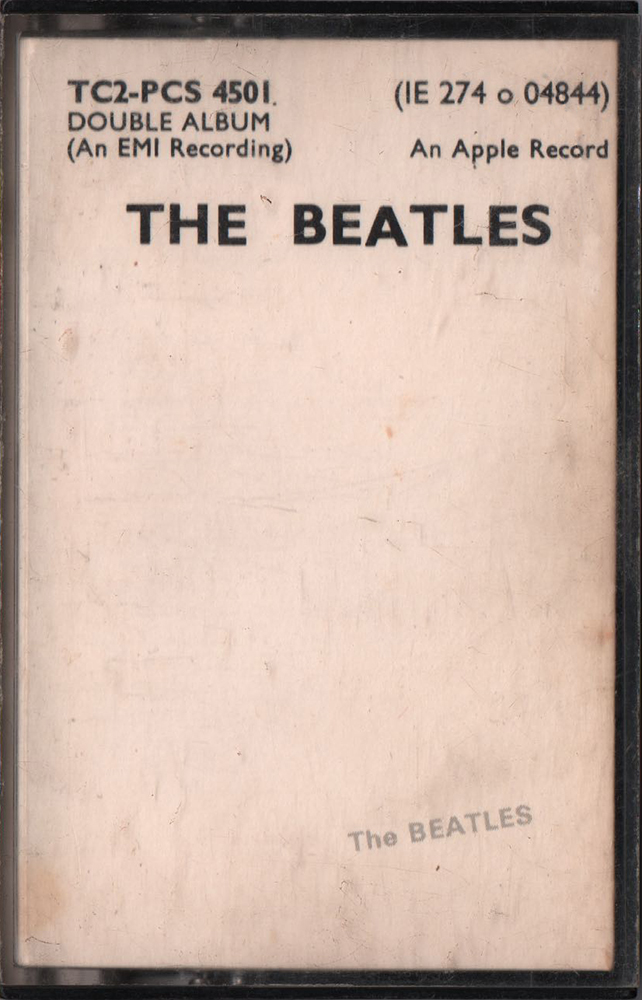
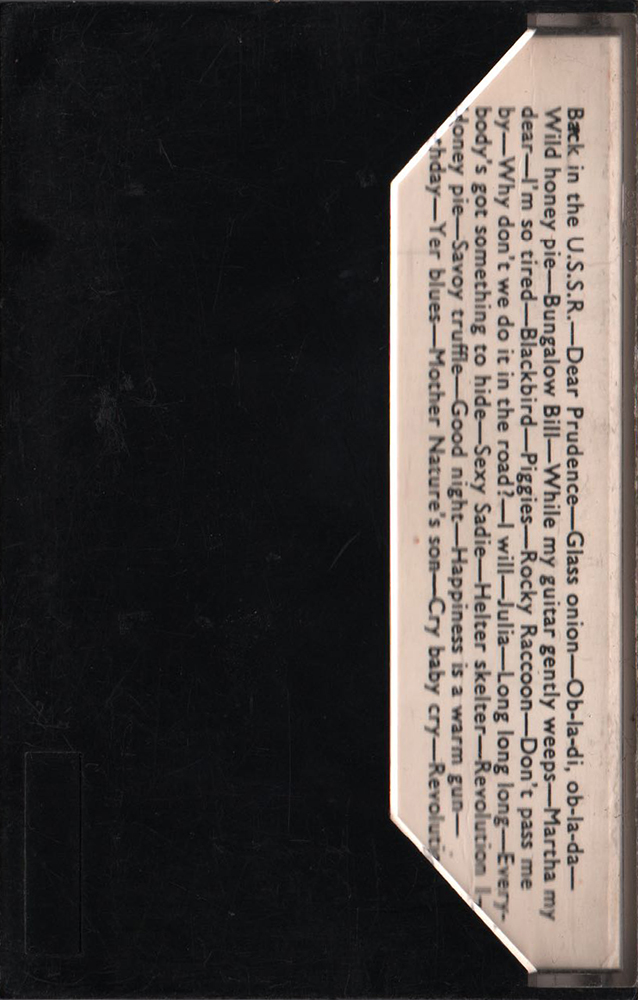
| The cassette cases ("Norelco" cases)
were clear plastic at the front and around the spine area,
and black plastic at the rear. |
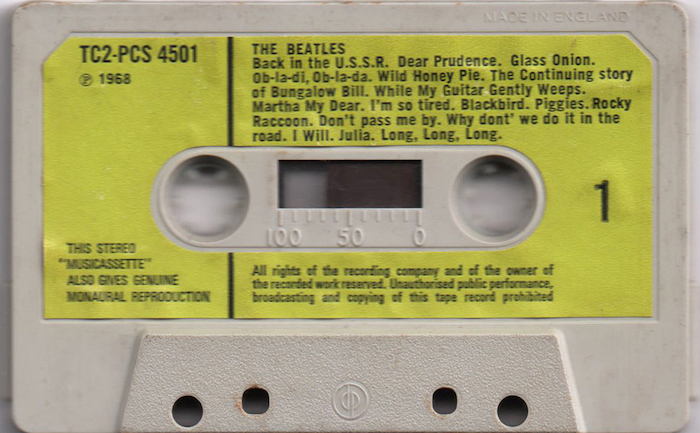
This UK issue has Lemon
Yellow paper label without Parlophone logo |
|||
| INLAY |
INLAY: FRONT | INLAY: INSIDE |
||
 |
 |
|||
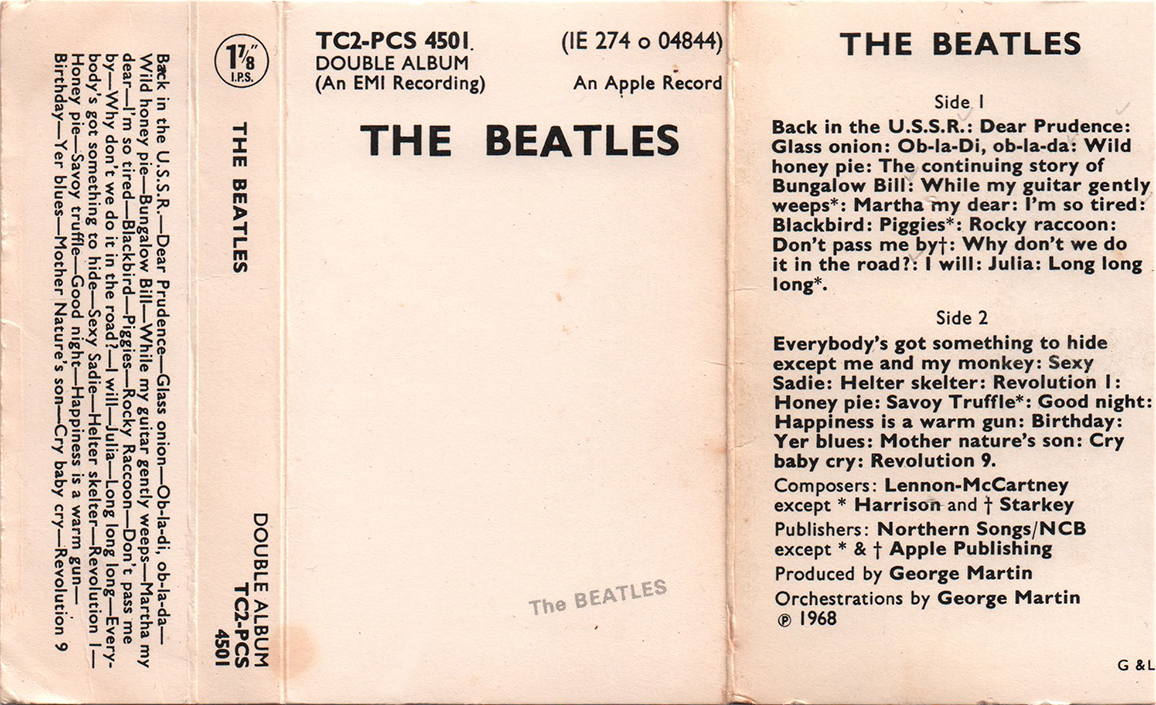
| Reissue cassettes had white inlays and,
aside from the small reproduction of the front cover, no
artwork was included nor the original liner notes. The track listings were printed on the foldover sections of the inlay. |
||||
| INLAY: FRONT CLOSE-UP | ||||
 |
The
circular 1 7/8 " I.P.S. mark was printed on the spine. The standard tape speed for a compact cassette is 1 ⅞ ips (1.875 inches per second). |
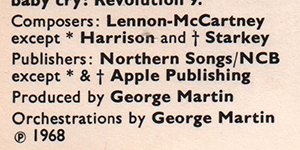 |
Publisher's credit
"Northern Songs/NCB" was printed on the inlay. |
|
| INLAY: FRONT CLOSE UP | ||||
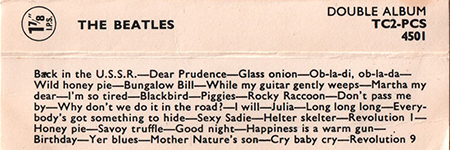 |
The rearranged cassette running order was most likely related to the need to balance the playing times of the four programs on the 8-track edition produced alongside it. |
|||
| INLAY: INSIDE CLOSE-UP | ||||
 |
 |
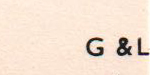 |
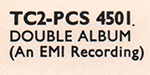
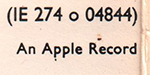
Catalog No. "TC2-PCS 4501" and the
EMI country code (*1) were printed on the inlay. The wording "An Apple Record" was printed at the top. The printer's initials "G & L" were printed at the bottom of the inlay, identifying Garrod & Lofthouse. |
|
| LABEL CLOSE-UP | ||||
 |
 |
 |
 |
|
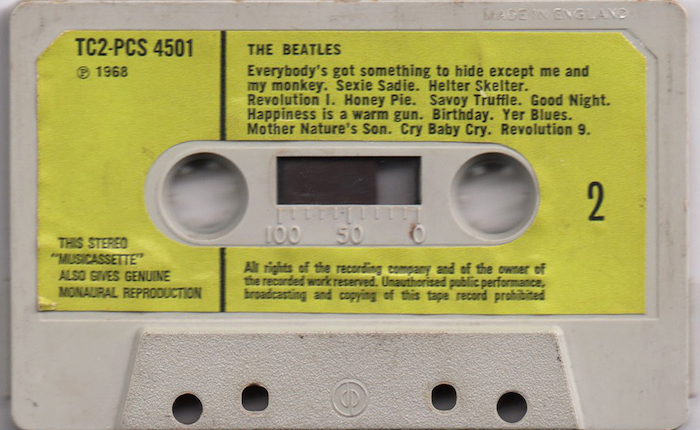
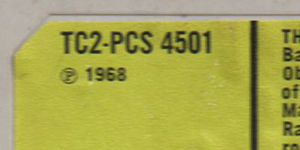
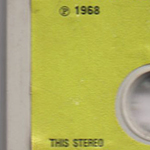
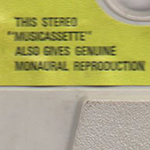
| This cassette was issued without the £ Parlophone logo. The "1E" number appeared on the packaging alongside "TC2-PCS 4501", but was not printed on the labels. |
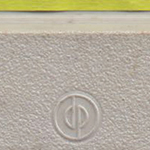
A prerecorded music cassette is called a "Musicassette". | The "DP (*2)" logo can often be found molded into cassette shells, especially during the early to mid 1970s. | ||
| LABEL CLOSE-UP | ||||
 |
 |
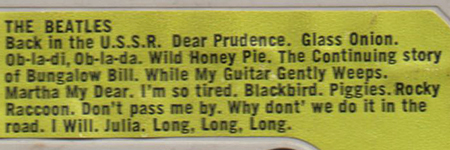
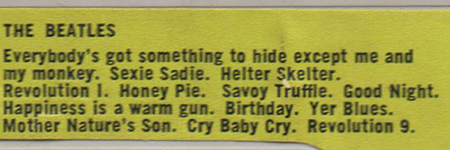
The rearranged cassette running order was most likely related to the need to balance the playing times of the four programs on the 8-track edition produced alongside it. |
||
 |
 |
|||
| LABEL CLOSE-UP | ||||
 |
"Made
in
ENGLAND" was embossed on the shell. |
|||
| OTHER ITEM | ||||
| - |
||||
| LABEL | Lemon Yellow Paper Label without Parlophone logo |
|||
| MIX | STEREO |
|||
| RECORD COMPANY'S NAME | An E.M.I. Recording / An Apple Record |
|||
| CENTRAL REMARK "SOLD IN U.K." |
- | |||
| RECORDING PUBLISHED CREDIT | ℗ 1968 |
|||
| INLAY FORM | "white" inlay (Foldover) |
|||
| SHELL | Light Gray Shell / embossed "MADE
IN ENGLAND" and "dp" logo mark |
|||
| CASSETTE CASE |
"Norelco"
cases:
clear
plastic at the front and around the spine area, and black
plastic at the rear. |
|||
| PRINTER CREDIT | "G & L" (Garrod & Lofthouse) |
|||
| COVER DESIGN/ PHOTO/ NOTES | - |
|||
| PRODUCER | George Martin | |||
| COMMENTS | This copy is a later issue with a white foldover inlay in a Norelco case. Its estimated issue date is Late 1971?. The cassette contains the complete 1968 double album The Beatles (the White Album) on one tape. It was first issued in this cassette format in August 1971 (TC2-PCS 4501). The original packaging was a flip-top, cigarette-style cardboard box. Some early copies came with a large cardboard display card that held the boxed cassette. This packaging may have been an experimental design intended to test the developing cassette market. Later issues used a white foldover inlay in a Norelco case. Both early packaging styles are difficult to find, particularly the original box complete with its display card. The Lemon Yellow paper labels have no black-boxed EMI/Parlophone logo. The absence of the logo may have been due to a shortage of costly letterpress blocks. During the initial Beatles cassette release period (1967–1971), vinyl remained the dominant format. These early cassettes were probably produced in substantially smaller quantities than their vinyl counterparts. The rearranged cassette running order was most likely related to the need to balance the playing times of the four programs on the 8-track edition produced alongside it. The catalog number TC2-PCS 4501 and EMI number 1E 274 o 04844 were printed on the inlay. The spine carried the tape-speed marking, 1⅞ ips. The Norelco case has a clear front and spine and a black rear. The "DP (*2)" logo was embossed on the cassette shells. "MADE IN ENGLAND" was embossed on the shell. Unlike the later white-inlay version shown here, the first White Album cassette was issued in a box without an inlay. Early Revolver cassettes had a black spine and a black panel above the front-cover image. (*1) EMI country code: 1E 274 o 04844 The EMI country codes (introduced on 1 June, 1969): In most cases the EMI Codes are the first two letters of the record's catalog#. These EMI Country Codes were used to indicate the country in which the record was pressed. Note this doesn't necessarily mean the record was also released in that country (from Discogs). OC / 0C / 1E= UK (*2) Data Packaging Corporation: (who also traded as Hellerman Data Packaging Ltd) supplied cassette and 8 track shells, tape and other components to the music industry. The "DP" logo can often be found molded into cassette shells, especially during the early to mid 1970s. |
|||
