




 Parlophone 1st. Sleeve |
|
|
TITLE
|
LET IT BE |
||||
| CATALOG NUMBER | P-PCS 7096 | ||||
|
RELEASE DATE
|
late 1970? /Second Press/ Export Edition / Decca Contract Press | ||||
| TRACK LISTING | SIDE 1 | SIDE 2 | |||
| Two Of Us |
I've Got A Feeling |
||||
| Dig A Pony |
One After 909 |
||||
| Across The Universe |
The Long And Winding Road |
||||
| I Me Mine |
For You Blue |
||||
| Dig It |
Get Back | ||||
| Let It Be |
|||||
| Maggie Mae | |||||
| FRONT --> Click! | BACK --> Click! | SIDE 1 --> Click! | SIDE 2 --> Click! | DISK --> Click! | |
| |
 |
 |
 |
 |
|
| INNER SLEEVE | BACK COVER CLOSE UP | ||||
| Plain White Sleeve (Unconfirmed) |
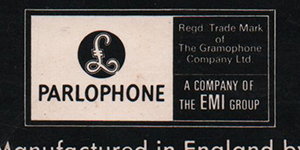 |
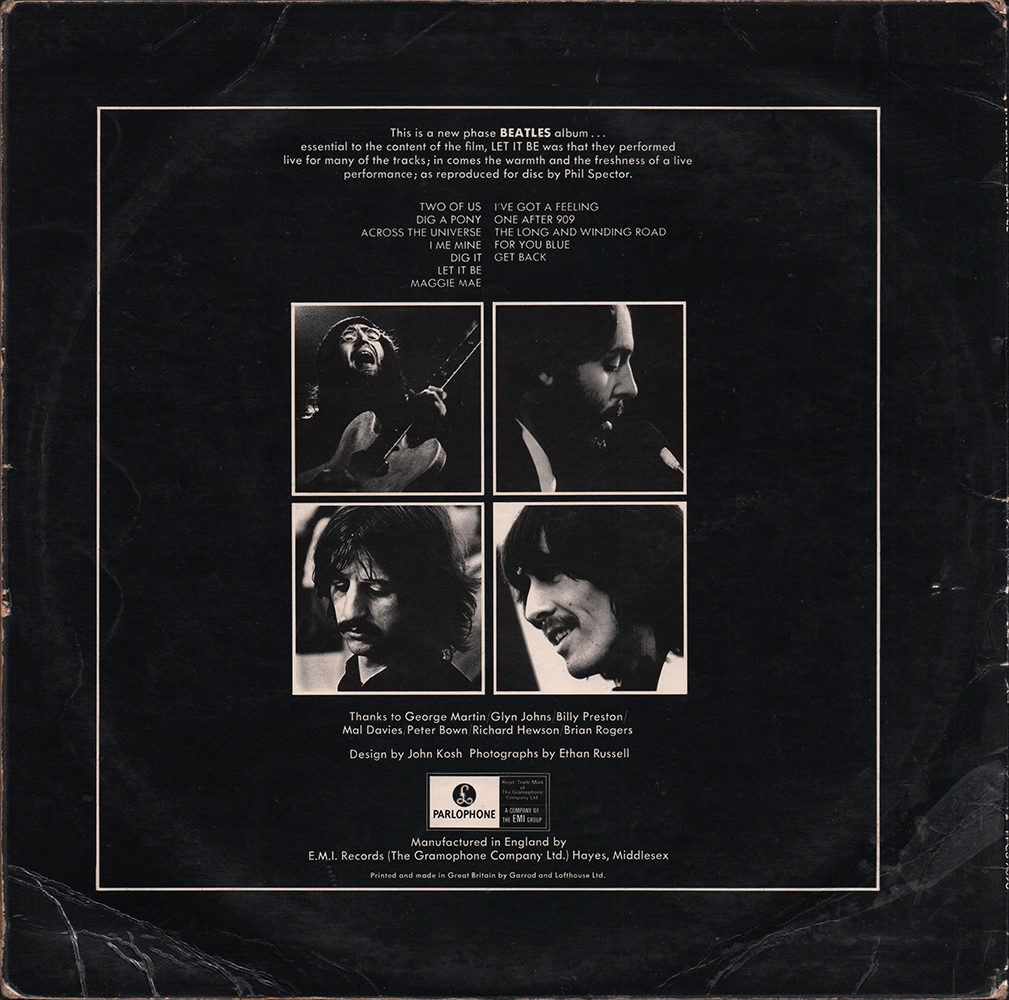
Full laminated sleeve. On the back cover of the export pressing, the Parlophone logo is printed in black lettering on a white background instead of the Apple logo. Printed and made by Garrod & Lofthouse Ltd. |
|||
| BACK COVER CLOSE UP | |||||
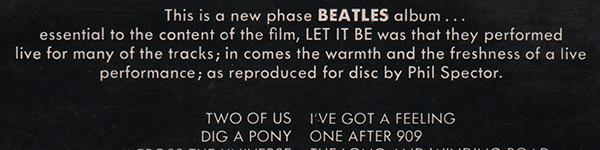 |
On the UK version, the producer is
credited as "Phil Spector" with lowercase letters, on the US
version, it's written as "PHIL SPECTOR" in all capital
letters. |
||||
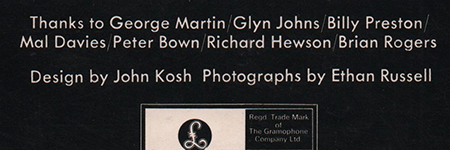 |
In the "Thanks to ~" section
below the photo, the name "Harold Seider*" is included on
the US version, but it does not appear on the UK version. |
||||
 |
|||||
| Printer's credit "Garrod and
Lofthouse Ltd." is printed at the bottom of the back cover. |
|||||
| LABEL CLOSE UP | |||||
 |
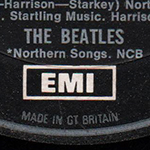 |
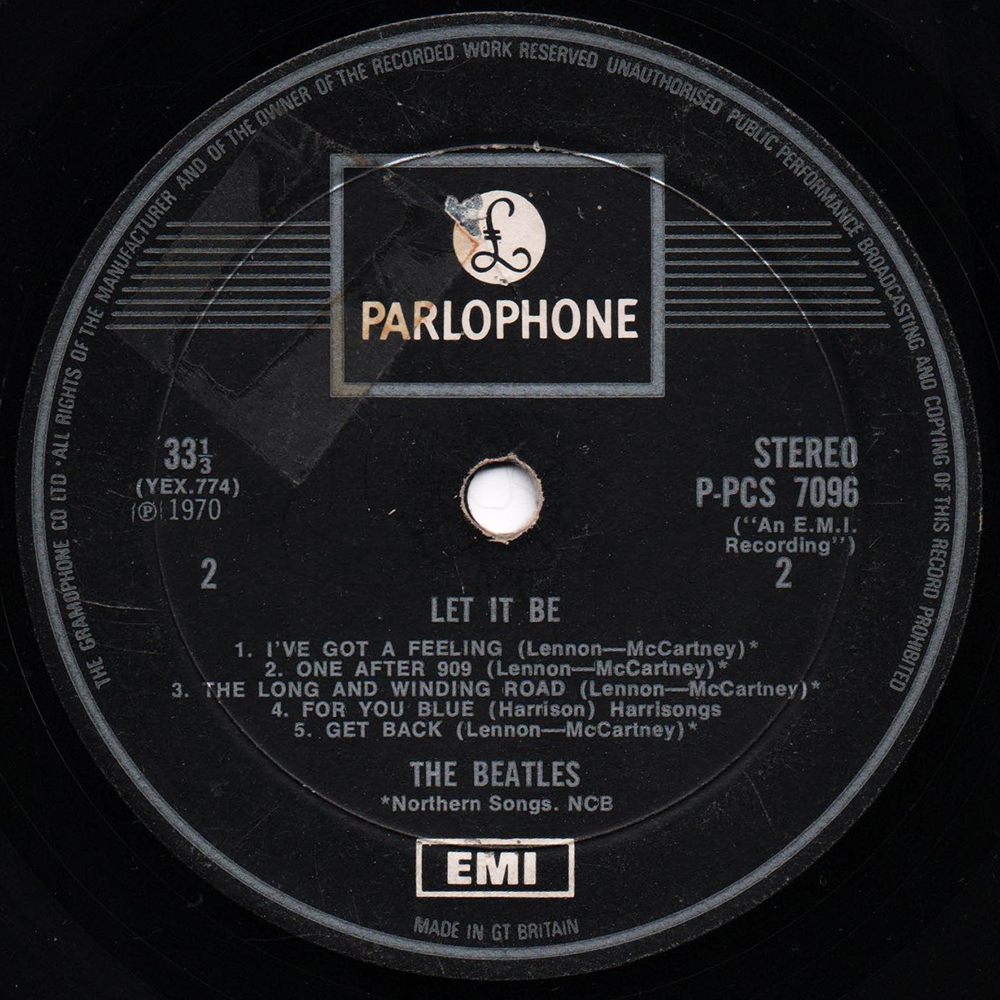
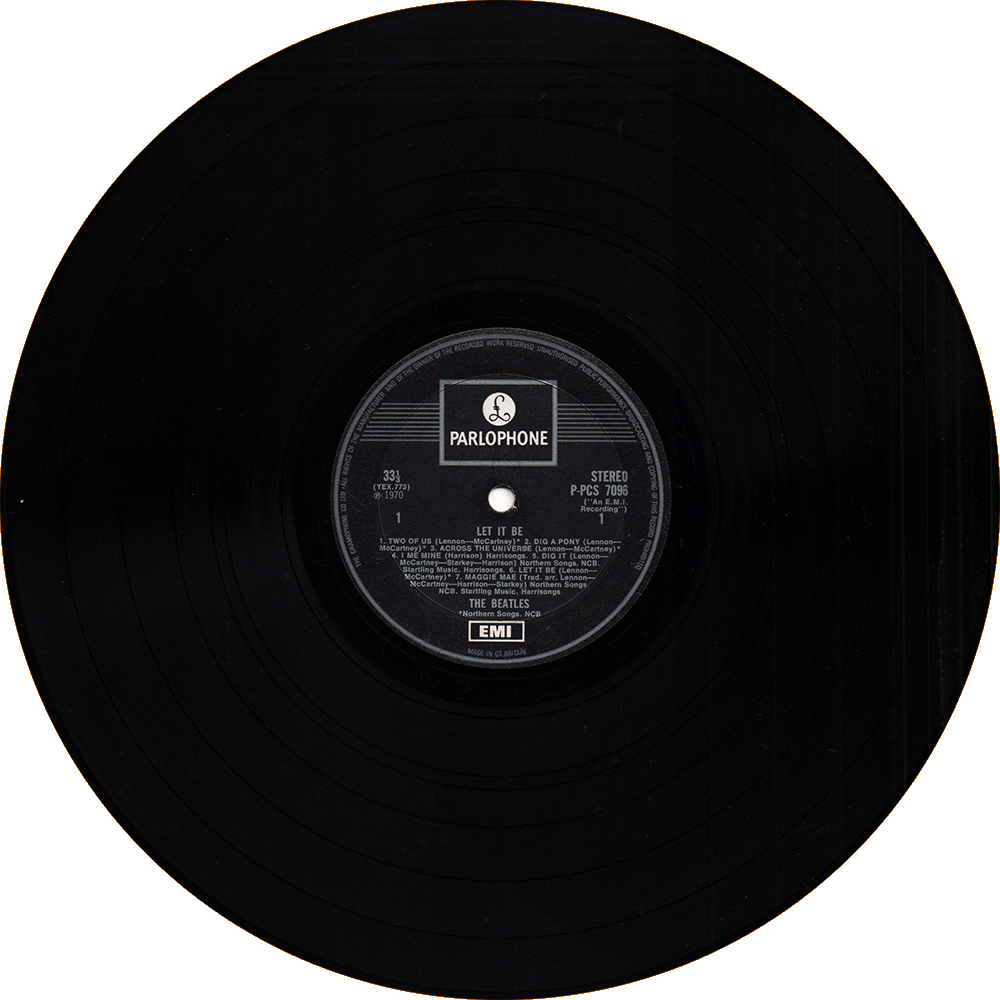
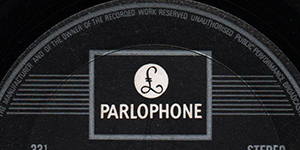
Decca contract press:
The most promiment groove, which is a typical characteristic
of Decca LP presses is approximately 31mm out from the
centre hole and 15mm in from the edge of the label. This label have one "EMI" mark, placed at the bottom, which are white print. "MADE IN GT BRITAIN" is printed at the bottom of the label. |
|||
| LABEL CLOSE UP | |||||
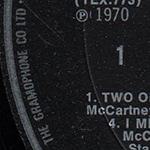 |
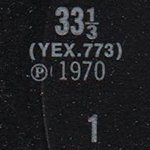 |
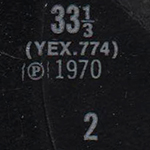 |
"THE GRAMOPHONE CO. LTD.
(capital letter)" was printed at the perimeter. The "(P) 1970" statement is printed at the left part of the label. |
||
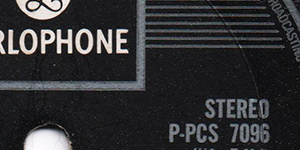 |
The most prominent groove, which is a
typical characteristic of Decca LP presses is approximately
31mm out from the center hole and 15mm in from the edge of
the label. |
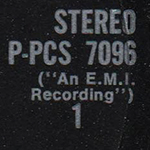 |
Catalog No. "P-PCS 7096" and "("An E.M.I. Recording")" were printed at the right part of the label. | ||
| LABEL CLOSE UP | |||||
 |
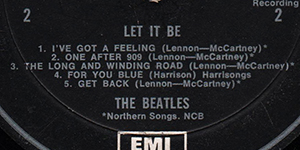 |
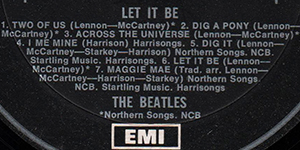
The song title, composer's name, and music publisher's name on the label are printed in a rounded sans-serif font. | |||
| OTHER ITEM | |||||
| - | |||||
| LABEL | Silver Parlophone Type-1 | ||||
| MIX | STEREO | ||||
| MATRIX No. | SIDE 1 | YEX 773-2U |
MOTHER & STAMPER |
1 |
|
| SIDE 2 | YEX 774-2U | ||||
| VINYL COLOR | BLACK | ||||
| RECORD COMPANY'S NAME | THE GRAMOPHONE CO. LTD. (capital letter) | ||||
| CENTRAL REMARK "SOLD IN U.K." |
- | ||||
| RECORDING PUBLISHED CREDIT | (P) 1970 | ||||
| COVER FORM | Single type. Full laminated cover | ||||
| PRINTER CREDIT | Printed and made in Great Britain by Garrod and Lofthouse Ltd. | ||||
| COVER DESIGN/ PHOTO/ NOTES | Design by John Kosh Photographs by Ethan Russell |
||||
| INNER SLEEVE | Plain white sleeve (Unconfirmed) | ||||
| PRODUCER | Reproduced for disc by Phill Spector | ||||
| COMMENTS | Export edition. These are regular U.K. albums with different labels from the U.K. domestic releases, perhaps the U.K. domestic labels were forbidden in some countries due to a record contract. For example, the Parlophone label was used instead of the Apple label on exporting "The Beatles", "Abbey Road" or "Let It Be" to those countries. The prefix was "P-PCS", "P" maybe for Parlophone. Black label with one silver EMI logo and silver print. “THE GRAMOPHONE CO. LTD. (capital letter)” printed at the start perimeter print and “MADE IN GT BRITAIN” lower text. Stereo only.
Decca contract pressing: these are distinguishing characteristics Decca: 1: There is no tax code around the center hole on either side of the disk. 2: There's a light ridge that runs around approximately 5mm out from the center hole. This ridge is also 41mm in from the edge of the label. 3: The most prominent groove, which is a typical characteristic of Decca LP presses is approximately 31mm out from the center hole and 15mm in from the edge of the label. 4: There is no tax code stamped at the 12 o'clock position. 5: The mother plate number (either single or double figured) is at the 9 o'clock position. There is no tx code stamped above it. 6: The contract pressings did NOT utilise the BUCKINGHAM stamper codes, so there are no such letters at the 3 o'clock position. 7: The matrix number is stamped at the 6 o'clock position in the deadwax. (According to "The Beatles-Collection.com") (*)Harold Seider, a lawyer who worked for Allen Klein’s ABKCO, is credited in the “Thanks to...” section on the back cover of the U.S. edition of Let It Be. His name does not appear on the UK edition. The U.S. release was distributed by United Artists rather than Capitol, as the album was associated with the Let It Be film. The U.S. jacket also identifies Apple Records as “an abkco managed company.” Seider’s inclusion in the U.S. “Thanks to...” credits appears to reflect his involvement on the ABKCO/Klein side in the U.S. business and legal affairs surrounding the release. |
||||
