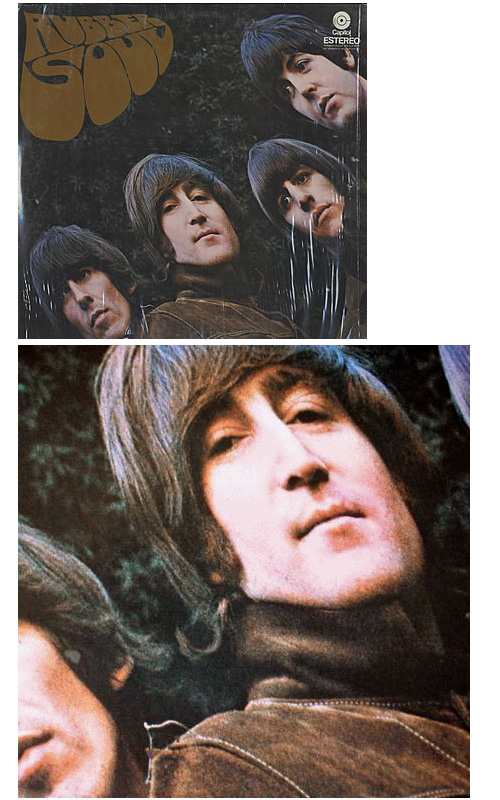



 1st Press Parlophone Sleeve |
|
| TITLE | Rubber Soul | ||||
| CATALOG NUMBER | PMC 1267 | ||||
| RELEASE DATE | 3rd December 1965 / First Press | ||||
| TRACK LISTING | SIDE 1 | SIDE 2 | |||
| Drive My Car |
What Goes On |
||||
| Norwegian Wood (This Bird Has
Flown) |
Girl |
||||
| You Won't See Me |
I'm Looking Through You |
||||
| Nowhere Man |
In My Life |
||||
| Think For Yourself |
Wait |
||||
| The Word |
If I Needed Someone |
||||
| Michelle | Run For Your Life | ||||
| FRONT --> Click! | BACK --> Click! | SIDE 1 --> Click! | SIDE 2 --> Click! | DISC | |
|
 |
 |
 |
 |
|
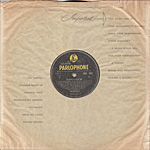
| INNER SLEEVE | FRONT
COVER CLOSE-UP |
||||
 |
 |
 |
Mono sleeves were printed by Garrod & Lofthouse Ltd. or Ernest J. Day & Co. Ltd. Garrod & Lofthouse front covers carried the words “TRADE MARK OF THE GRAMOPHONE CO. LTD.” beneath the Parlophone logo; Ernest J. Day front covers did not. The original cover photograph shows a loose thread on the right shoulder of John’s jacket. This was airbrushed out on most U.K. sleeves, while some countries, including Mexico, used the unretouched photograph. | ||
| BACK COVER CLOSE-UP | |||||
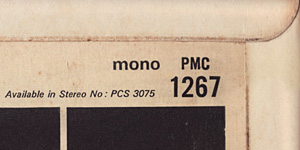 |
Wrap-around cover. Round-cut
corner. The catalog number “PMC 1267” and the word “mono” were printed in the upper-right corner of the back cover. |
 |
The words “TRADE MARK OF THE GRAMOPHONE CO. LTD.” were printed beneath
the Parlophone logo on this Ernest J. Day sleeve. |
||
| BACK COVER CLOSE-UP | |||||
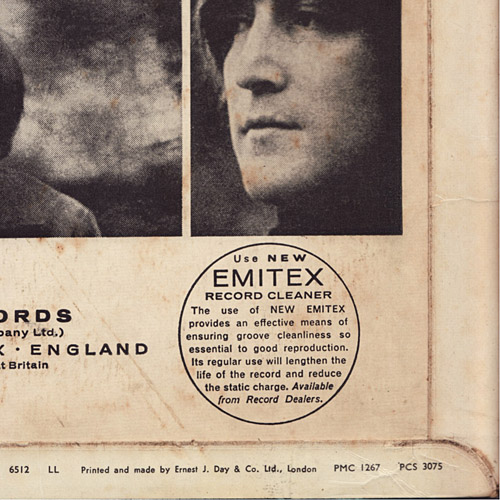 |
Printer name credit: "6512 LL Printed and made by Ernest J. Day & Co. Ltd., London PMC 1267 PCS 3075" | ||||
| LABEL CLOSE-UP | |||||
 |
 |
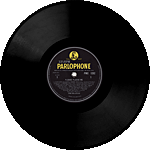
"THE GRAMOPHONE CO. LTD." (uppercase) was printed
around the label rim. "℗
1965" statement was printed on the label. The tax-code letters K and T were embossed around the center hole. |
 |
||
| "SOLD IN U.K. SUBJECT TO RESALE PRICE CONDITIONS, SEE PRICE LISTS." statement was printed at the center of the label. | |||||
| LABEL CLOSE-UP | |||||
| #6-1: Sans Serif type (=this record) |
Roman type | There are at least two label
variants with different typefaces for the song titles and
artist name: 1) sans-serif; 2) Roman. |
SIDE 1 | SIDE 2 | |
 |
 |
 |
 |
||
| Matrix
Nos.: Side-1: XEX 579 - 1 Side-2: XEX 580 - 1 |
|||||
|
OTHER ITEM
|
|||||
| - | |||||
| LABEL | Yellow Parlophone Type-6-1 | ||||
| MIX | MONO | ||||
| MATRIX No. | SIDE 1 | XEX 579 - 1 | |||
| SIDE 2 | XEX 580 - 1 | ||||
| VINYL COLOR | BLACK | ||||
| RECORD COMPANY'S NAME | THE GRAMOPHONE CO. LTD. (uppercase) | ||||
| CENTRAL REMARK "SOLD IN U.K..." |
YES | ||||
| RECORDING PUBLISHED CREDIT | ℗ 1965 | ||||
| COVER FORM | Single type. Wrap-around cover / Round-cut corner | ||||
| “mono” TEXT SIZE | None | ||||
| PRINTER CREDIT | 6512 LL Printed and made by Ernest J. Day & Co. Ltd., London PMC 1267 PCS 3075 | ||||
| COVER DESIGN/ PHOTO/ NOTES | Photo: Robert Freeman | ||||
| INNER SLEEVE | Tracing-rice-paper-lined “Use Emitex” die-cut sleeve | ||||
| PRODUCER | George Martin | ||||
|
COMMENTS
|
Black and Yellow
Parlophone label with silver print: the name "THE GRAMOPHONE CO. LTD." (uppercase) on the outer rim, the "SOLD IN U.K." remark, and the "℗ 1965" statement. Beginning in 1964, Parlophone (and all the other EMI companies) began printing a phrase in the centers of all their singles, EPs and LPs, which said: SOLD IN U.K. SUBJECT TO RESALE PRICE CONDITIONS, SEE PRICE LISTS. This notice appears on the labels of every UK market EMI product, from very early 1964, right through mid-1969. On 1st July 1965, EMI underwent a merger and each individual ceased to be a L.T.D. company and became a subsidiary of "The Gramophone Co. Ltd." which was owned by EMI. This merger meant yet another label change occurred and previous "Parlophone Co. Ltd." rims were replaced with the new "Gramophone" rims. Sleeves were produced by two London printing companies: Ernest J. Day & Co. Ltd. and Garrod & Lofthouse Ltd. This copy has a sleeve printed by Ernest J. Day. The initial -1 mono cuts of the U.K. Rubber Soul are known as the “Loud Cut” and are reported to differ from subsequent cuts. Cutting engineers may have been asked to reduce the bass after early buyers reported mistracking and skipping. Early copies used the initial “Loud Cut”, identified by XEX.579-1 and XEX.580-1 in the dead wax. Later copies commonly used the recut, identified by XEX. 579-4 and 580-4. These are cutting variations rather than different mixes. |
||||
| TITLE | Rubber Soul | ||||
| CATALOG NUMBER | PMC 1267 | ||||
| RELEASE DATE | 1965 / Second Press | ||||
| TRACK LISTING | SIDE 1 | SIDE 2 | |||
| Drive My Car |
What Goes On |
||||
| Norwegian Wood (This Bird Has
Flown) |
Girl |
||||
| You Won't See Me |
I'm Looking Through You |
||||
| Nowhere Man |
In My Life |
||||
| Think For Yourself |
Wait |
||||
| The Word |
If I Needed Someone |
||||
| Michelle | Run For Your Life | ||||
| FRONT --> Click! | BACK --> Click! | SIDE 1 --> Click! | SIDE 2 --> Click! | DISC | |
 |
 |
 |
 |
|
|
| INNER SLEEVE | FRONT
COVER CLOSE-UP |
||||
| #6-1 Ernest J. Day |
#6-2 Garrod & Lofthouse |
Mono sleeves were printed by Garrod & Lofthouse Ltd. or Ernest J. Day & Co. Ltd. Garrod & Lofthouse front covers carried the words “TRADE MARK OF THE GRAMOPHONE CO. LTD.” beneath the Parlophone logo; Ernest J. Day front covers did not. The original cover photograph shows a loose thread on the right shoulder of John’s jacket. This was airbrushed out on most U.K. sleeves, while some countries, including Mexico, used the unretouched photograph. | |||
|
|
 |
|||
| BACK COVER CLOSE-UP | |||||
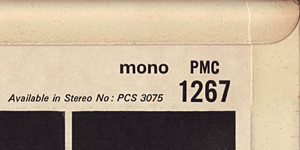 |
Wrap-around cover. Round-cut
corner. The catalog number “PMC 1267” and the word “mono” were printed in the upper-right corner of the back cover. |
 |
"TRADE MARK OF THE GRAMOPHONE
CO. LTD." was printed under the Parlophone logo. |
||
| BACK COVER CLOSE-UP | |||||
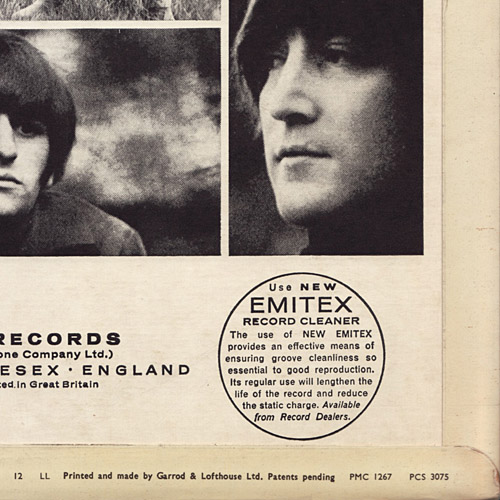 |
Printer name credit: "12 LL Printed and made by Garrod & Lofthouse Ltd. Patents pending PMC 1267 PCS 3075" | ||||
| LABEL CLOSE-UP | |||||
 |
 |
"THE GRAMOPHONE CO. LTD." (uppercase) was printed
around the label rim. "℗
1965" statement was printed on the label. The tax-code letters K and T were embossed around the center hole. |
 |
||
| "SOLD IN U.K. SUBJECT TO RESALE PRICE CONDITIONS, SEE PRICE LISTS." statement was printed at the center of the label. | |||||
| LABEL CLOSE-UP | |||||
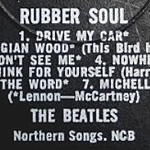
| #6-2: Roman type (=this record) |
Sans Serif type | There are at least two label
variants with different typefaces for the song titles and
artist name: 1) Roman; 2) sans-serif. |
SIDE 1 | SIDE 2 | |
 |
 |
 |
 |
||
| Matrix
Nos.: Side-1: XEX 579 - 4 Side-2: XEX 580 - 4 |
|||||
|
OTHER ITEM
|
|||||
| - | |||||
| LABEL | Yellow Parlophone Type-6-1 | ||||
| MIX | MONO | ||||
| MATRIX No. | SIDE 1 | XEX 579 - 4 | |||
| SIDE 2 | XEX 580 - 4 | ||||
| VINYL COLOR | BLACK | ||||
| RECORD COMPANY'S NAME | THE GRAMOPHONE CO. LTD. (uppercase) | ||||
| CENTRAL REMARK "SOLD IN U.K..." |
YES | ||||
| RECORDING PUBLISHED CREDIT | ℗ 1965 | ||||
| COVER FORM | Single type. Wrap-around cover / Round-cut corner | ||||
| “mono” TEXT SIZE | None | ||||
| PRINTER CREDIT | 12 LL Printed and made by Garrod & Lofthouse Ltd. Patents pending PMC 1267 PCS 3075 | ||||
| COVER DESIGN/ PHOTO/ NOTES | Photo: Robert Freeman | ||||
| INNER SLEEVE | Tracing-rice-paper-lined “Use Emitex” die-cut sleeve | ||||
| PRODUCER | George Martin | ||||
|
COMMENTS
|
Black and Yellow
Parlophone label with silver print: the name "THE GRAMOPHONE CO. LTD." (uppercase) on the outer rim, the "SOLD IN U.K." remark, and the "℗ 1965" statement. Sleeves were produced by two London printing companies: Ernest J. Day & Co. Ltd. and Garrod & Lofthouse Ltd. This copy has a sleeve printed by Garrod & Lofthouse. The initial -1 mono cuts of the U.K. Rubber Soul are known as the “Loud Cut” and are reported to differ from subsequent cuts. Cutting engineers may have been asked to reduce the bass after early buyers reported mistracking and skipping. Early copies used the initial “Loud Cut”, identified by XEX.579-1 and XEX.580-1 in the dead wax. Later copies commonly used the recut, identified by XEX. 579-4 and 580-4. These are cutting variations rather than different mixes. The -5 cutting is widely recognized as having been cut by EMI's top classical cutting engineer, Hazel Yarwood, in January 1966. The -4 cut was also made by Hazel Yarwood, as confirmed by the credit on the master tape box. Hazel Yarwood was one of the pioneering female disc cutting engineers at EMI’s Abbey Road Studios in London. She began working in the cutting rooms around 1950, during a major transition in recording history from 78 rpm shellac discs to the new 33⅓ rpm LP format. As a cutting engineer, she operated disc-cutting lathes that transferred recorded sound into physical grooves on lacquer discs. Known as a pioneer in both technology and sound quality, Hazel had the ability to make new systems work reliably. She was the first engineer to successfully introduce diamond cutting styli for lacquer disc cutting. While the traditional sapphire styli lasted only around 20–30 hours, she improved the system so that diamond styli could be used for more than 1,500 hours. Her career coincided with EMI’s expansion of LP production and the development of high-fidelity recording techniques. She also cut some of EMI’s earliest digital recordings, including Debussy’s Images and Prélude à l’après-midi d’un faune, conducted by André Previn in 1979. In early 1984, she became the first engineer to use the new Neumann Digital Metal Mastering system. Hazel’s careful and consistent work resulted in outstanding classical LP cuts, whose sound quality was highly praised within the industry. Her reputation for exceptional sound quality remains an important part of recording history. T he -5 mono cut of Rubber Soul is highly regarded among collectors. |
||||
| TITLE | Rubber Soul | ||||
| CATALOG NUMBER | PMC 1267 | ||||
| RELEASE DATE | 1966? / Third Press | ||||
| TRACK LISTING | SIDE 1 | SIDE 2 | |||
| Drive My Car |
What Goes On |
||||
| Norwegian Wood (This Bird Has
Flown) |
Girl |
||||
| You Won't See Me |
I'm Looking Through You |
||||
| Nowhere Man |
In My Life |
||||
| Think For Yourself |
Wait |
||||
| The Word |
If I Needed Someone |
||||
| Michelle | Run For Your Life | ||||
| FRONT --> Click! | BACK --> Click! | SIDE 1 --> Click! | SIDE 2 --> Click! | DISC | |
 |
 |
 |
 |
|
|
| INNER SLEEVE | FRONT
COVER CLOSE-UP |
||||
|
 |
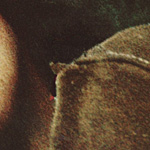 |
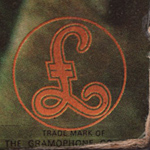
Mono sleeves were printed by Garrod & Lofthouse Ltd. or Ernest J. Day & Co. Ltd. Garrod & Lofthouse front covers carried the words “TRADE MARK OF THE GRAMOPHONE CO. LTD.” beneath the Parlophone logo; Ernest J. Day front covers did not. The original cover photograph shows a loose thread on the right shoulder of John’s jacket. This was airbrushed out on most U.K. sleeves, while some countries, including Mexico, used the unretouched photograph. | ||
| BACK COVER CLOSE-UP | |||||
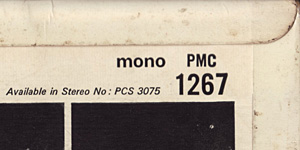 |
Wrap-around cover. Round-cut
corner. The catalog number “PMC 1267” and the word “mono” were printed in the upper-right corner of the back cover. |
 |
"TRADE MARK OF THE GRAMOPHONE
CO. LTD." was printed under the Parlophone logo. |
||
| BACK COVER CLOSE-UP | |||||
|
Printer name credit: "12 LL Printed and made by Garrod & Lofthouse Ltd. Patents pending PMC 1267 PCS 3075" | ||||
| LABEL CLOSE-UP | |||||
 |
 |
"THE GRAMOPHONE CO. LTD." (uppercase) was printed
around the label rim. "℗
1965" statement was printed on the label. The tax-code letters K and T were embossed around the center hole. |
 |
||
| "SOLD IN U.K. SUBJECT TO RESALE PRICE CONDITIONS, SEE PRICE LISTS." statement was printed at the center of the label. | |||||
| LABEL CLOSE-UP | |||||
| #6-3: Roman type (=this record) |
Sans Serif type | There are at least two label
variants with different typefaces for the song titles and
artist name: 1) Roman; 2) sans-serif. |
SIDE 1 | SIDE 2 | |
 |
 |
 |
 |
||
| Matrix
Nos.: Side-1: XEX 579 - 5 Side-2: XEX 580 - 5 |
|||||
|
OTHER ITEM
|
|||||
| - | |||||
| LABEL | Yellow Parlophone Type-6-1 | ||||
| MIX | MONO | ||||
| MATRIX No. | SIDE 1 | XEX 579 - 5 | |||
| SIDE 2 | XEX 580 - 5 | ||||
| VINYL COLOR | BLACK | ||||
| RECORD COMPANY'S NAME | THE GRAMOPHONE CO. LTD. (uppercase) | ||||
| CENTRAL REMARK "SOLD IN U.K..." |
YES | ||||
| RECORDING PUBLISHED CREDIT | ℗ 1965 | ||||
| COVER FORM | Single type. Wrap-around cover / Round-cut corner | ||||
| “mono” TEXT SIZE | None | ||||
| PRINTER CREDIT | 12 LL Printed and made by Garrod & Lofthouse Ltd. Patents pending PMC 1267 PCS 3075 | ||||
| COVER DESIGN/ PHOTO/ NOTES | Photo: Robert Freeman | ||||
| INNER SLEEVE | Tracing-rice-paper-lined “Use Emitex” die-cut sleeve | ||||
| PRODUCER | George Martin | ||||
|
COMMENTS
|
Black and Yellow
Parlophone label with silver print: the name "THE GRAMOPHONE CO. LTD." (uppercase) on the outer rim, the "SOLD IN U.K." remark, and the "℗ 1965" statement. The matrix number printed on the label is positioned farther left than the year credit. This layout is found on almost all later standard pressings with matrices XEX 579-5 / XEX 580-5. Sleeves were produced by two London printing companies: Ernest J. Day & Co. Ltd. and Garrod & Lofthouse Ltd. This copy has a sleeve printed by Garrod & Lofthouse. The -5 cutting is widely recognized as having been cut by EMI's top classical cutting engineer, Hazel Yarwood, in January 1966. The -4 cut was also made by Hazel Yarwood, as confirmed by the credit on the master tape box. Hazel Yarwood was one of the pioneering female disc cutting engineers at EMI’s Abbey Road Studios in London. She began working in the cutting rooms around 1950, during a major transition in recording history from 78 rpm shellac discs to the new 33⅓ rpm LP format. As a cutting engineer, she operated disc-cutting lathes that transferred recorded sound into physical grooves on lacquer discs. Known as a pioneer in both technology and sound quality, Hazel had the ability to make new systems work reliably. She was the first engineer to successfully introduce diamond cutting styli for lacquer disc cutting. While the traditional sapphire styli lasted only around 20–30 hours, she improved the system so that diamond styli could be used for more than 1,500 hours. Her career coincided with EMI’s expansion of LP production and the development of high-fidelity recording techniques. She also cut some of EMI’s earliest digital recordings, including Debussy’s Images and Prélude à l’après-midi d’un faune, conducted by André Previn in 1979. In early 1984, she became the first engineer to use the new Neumann Digital Metal Mastering system. Hazel’s careful and consistent work resulted in outstanding classical LP cuts, whose sound quality was highly praised within the industry. Her reputation for exceptional sound quality remains an important part of recording history. T he -5 mono cut of Rubber Soul is highly regarded among collectors. |
||||
| TITLE | Rubber Soul | ||||
| CATALOG NUMBER | PMC 1267 | ||||
| RELEASE DATE | July 1981? / Limited Edition |
||||
| TRACK LISTING | SIDE 1 | SIDE 2 | |||
| Drive My Car |
What Goes On |
||||
| Norwegian Wood (This Bird Has
Flown) |
Girl |
||||
| You Won't See Me |
I'm Looking Through You |
||||
| Nowhere Man |
In My Life |
||||
| Think For Yourself |
Wait |
||||
| The Word |
If I Needed Someone |
||||
| Michelle | Run For Your Life | ||||
| FRONT --> Click! | BACK --> Click! | SIDE 1 --> Click! | SIDE 2 --> Click! | DISC | |
 |
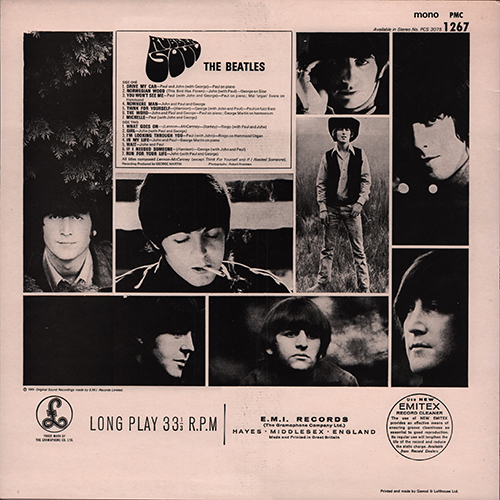 |
 |
 |
 |
|
| INNER SLEEVE | |||||
| FRONT --> Click! | BACK --> Click! | White paper sleeve
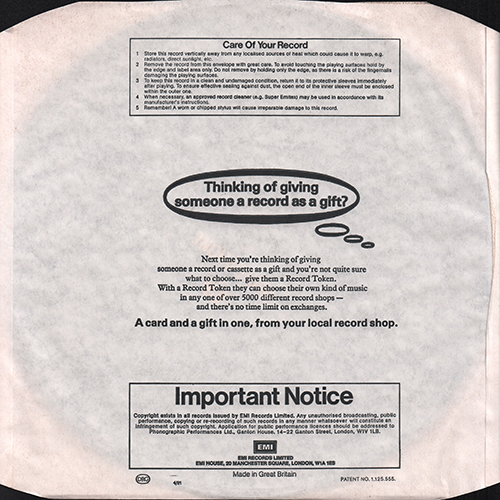
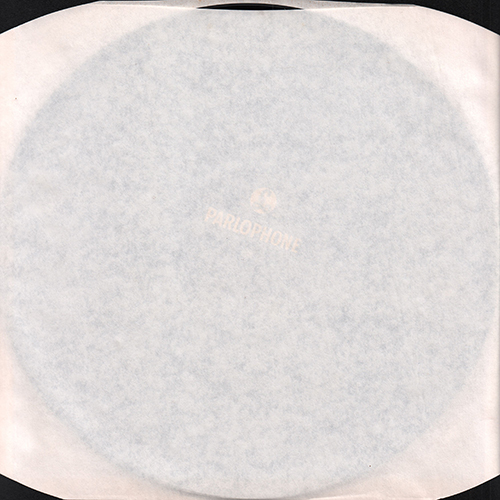
"IMPORTANT NOTICE in rectangle box" Type-3-2. |
CLOSE-UP |
||
 |
 |
 |
“4/81” (April 1981) was printed on the
inner sleeve. |
||
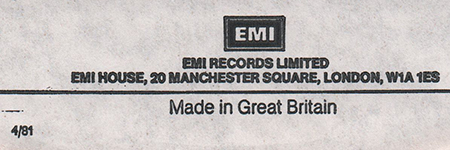 |
"DRG" logo was added. "PATENT NO. 1.125.555." and "Made in Great Britain" were printed at the bottom. |
||||
| FRONT COVER CLOSE-UP | |||||
|
 |
The mono sleeve was printed by
Garrod & Lofthouse Ltd. and
carried the words “TRADE
MARK OF THE GRAMOPHONE CO. LTD.” beneath the
Parlophone logo. The original cover photograph shows a loose
thread
on the right shoulder of John’s jacket. This was airbrushed
out on most U.K. sleeves. |
|||
| BACK COVER CLOSE-UP | |||||
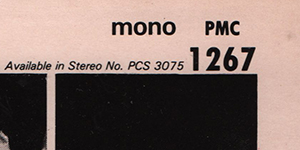 |
Full vinyl-coated cover, both
sides of the cover are coated with thin vinyl film. The catalog number “PMC 1267” was printed in the upper-right corner of the back cover. |
 |
"TRADE MARK OF THE GRAMOPHONE
CO. LTD." was printed under the Parlophone logo. |
||
| BACK COVER CLOSE-UP | |||||
|
The credit "℗ 1965 Original Sound
Recordings made by E.M.I. Records Limited." was printed on
the cover. |
||||
 |
|
||||
| "Made and Printed
In Great Britain" was printed at the bottom of the back
cover. |
Printer name credit: "Printed and made by Garrod & Lofthouse Ltd." | ||||
| LABEL CLOSE-UP | |||||
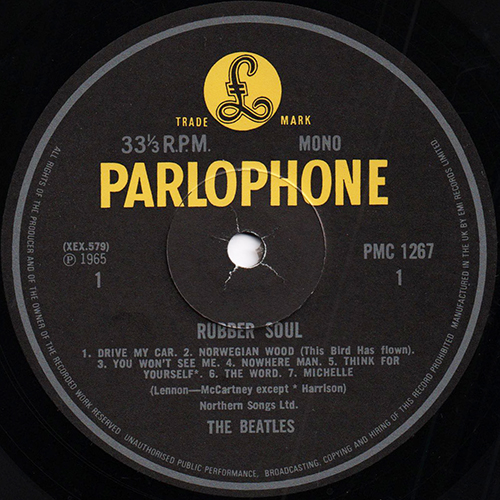
 |
 |
 |
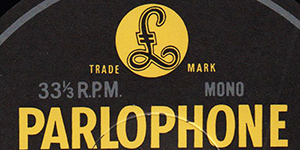
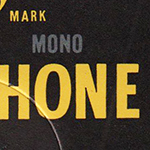
"ALL RIGHTS rim" (uppercase) was printed
around the label rim. The word "MONO" was added above and to
the right of the Yellow Parlophone logo. |
||
| LABEL CLOSE-UP | |||||
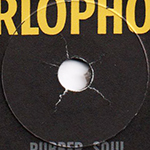 |
"SOLD IN U.K.
SUBJECT TO RESALE PRICE CONDITIONS, SEE PRICE LISTS."
statement was removed at the center of the label. |
 |
|||
| "Manufactured in the UK by EMI
Records Limited" (uppercase) was printed around the label
rim. |
|||||
| LABEL CLOSE-UP | |||||
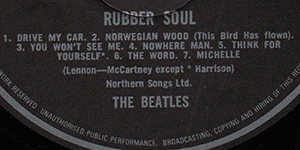
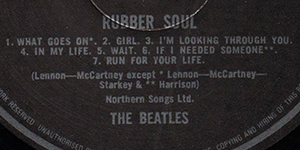
| SIDE 1 | SIDE 2 | This label has a
slender printing type. "All songs written by Lennon - McCartney" was printed at the bottom of the label. |
|||
 |
 |
||||
|
OTHER ITEM
|
|||||
| - | |||||
| LABEL | Yellow Parlophone Type-8 | ||||
| MIX | MONO | ||||
| MATRIX No. | SIDE 1 | XEX 579 - 6 |
MOTHER & STAMPER |
1 / 4 HTM |
|
| SIDE 2 | XEX 580 - 5 | 4 / 5 |
|||
| VINYL COLOR | BLACK | ||||
| RECORD COMPANY'S NAME | EMI RECORDS LIMITED
(uppercase) |
||||
| CENTRAL REMARK "SOLD IN U.K..." |
- |
||||
| RECORDING PUBLISHED CREDIT | ℗ 1965 | ||||
| COVER FORM | Single type. Full vinyl-coated
cover. |
||||
| “mono” TEXT SIZE | None | ||||
| PRINTER CREDIT | Printed and made by Garrod
& Lofthouse Ltd. |
||||
| COVER DESIGN/ PHOTO/ NOTES | Photo: Robert Freeman | ||||
| INNER SLEEVE | White paper sleeve "IMPORTANT
NOTICE in rectangle box" Type-3-2. |
||||
| PRODUCER | George Martin | ||||
|
COMMENTS
|
This mono reissue was
released in the U.K. in 1981. The mono version may not have
been sold by EMI since 1969/70. The 1981 mono reissue series included eight Parlophone albums, from Please Please Me to Sgt. Pepper’s Lonely Hearts Club Band, and two Apple albums, The Beatles and Yellow Submarine. This copy features a reproduction of the 1960s yellow-and-black Parlophone label, with a yellow Parlophone logo at the top and “MONO” printed above and to its right. The two Apple titles also carried a mono designation. The 1981 mono reissues were initially sold individually and were subsequently released together in 1982 as a box set (catalog number BMC-10). The 1981 mono reissues were produced in limited quantities. Side 1 of this pressing was recut at Abbey Road by Harry Moss. His initials, “HTM”, were etched into the Side 1 dead wax. Side-2: The -5 cutting is widely recognized as having been cut by EMI's top classical cutting engineer, Hazel Yarwood, in January 1966. Housed in a semi-gloss 'Garrod & Lofthouse' printed mono cover together with its original EMI inner-sleeve. |
||||