




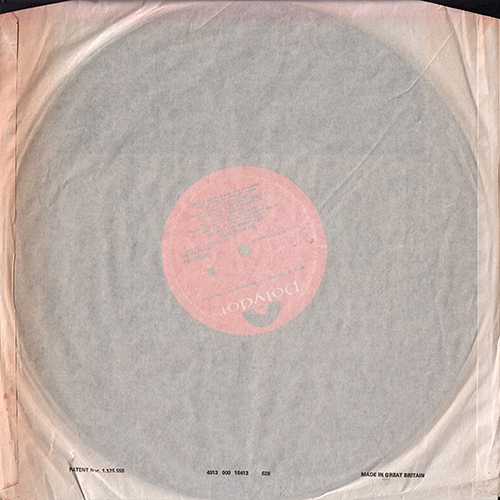
 Polydor 1st Sleeve |
|
|
|
TITLE
|
THE BEATLES TAPES from the DAVID WIGG INTERVIEWS |
||||
| CATALOG NUMBER | 2683 068 |
||||
|
RELEASE DATE
|
30th July 1976 / First Press |
||||
| TRACK LISTING | SIDE 1 The Beatle Tapes- John Lennon with Yoko Ono |
SIDE 2 The Beatle Tapes- Paul McCartney |
|||
| Interview (Part 1) / June 1969 |
Interview (Part 1) March 1970 |
||||
| Give Peace A Chance (Lennon-McCartney) |
Because (Lennon-McCartney) | ||||
| Interview (Part 2) / June 1969 |
Interview (Part 2) March 1970 |
||||
| Imagine (Lennon) |
Yesterday (Lennon-McCartney) | ||||
| Interview (Part 3) / June 1969 |
Interview (Part 3) March 1970 | ||||
| Come Together (Lennon-McCartney) | Hey Jude (Lennon-McCartney) | ||||
| Interview /
October 1971 |
|||||
| SIDE
3 The Beatle Tapes- George Harrison |
SIDE
4 The Beatle Tapes- Ringo Starr |
||||
| Interview (Part 1) / March 1969 | Interview / December 1968 | ||||
| Here Comes The
Sun (Harrison) |
Interview / July 1970 | ||||
| Interview (Part 2) / March 1969 | Interview (Part 1) / December 1973 | ||||
| Something (Harrison) | Octopus's Garden
(Richard Starkey) |
||||
| Interview (Part 2) / December 1973 | |||||
| |
Yellow Submarine (Lennon-McCartney) | ||||
| FRONT --> Click! | BACK --> Click! | INSIDE --> Click! | DISC | ||
| |
 |
 |
 |
||
| SIDE 1 --> Click! | SIDE 2 --> Click! | SIDE 3 --> Click! | SIDE 4 --> Click! | INNER SLEEVE | |
 |
 |
 |
 |
 |
|
| FRONT COVER CLOSE UP |
BACK COVER CLOSE UP | ||||
 |
The Polydor name and half-circle logo were printed in white at the bottom of the front cover. |
 |
|||
| The Polydor logo and the printer's
credit "Sleeve printed and made in England by MacNeill
Press" were printed in white at the bottom of the back
sleeve. |
|||||
| BACK COVER CLOSE UP | INNER SLEEVE CLOSE UP |
||||
 |
 |
The Beatles Tapes from the David Wigg Interviews is an album of interviews conducted by journalist David Wigg with the individual members of The Beatles. |  |
||
| The catalog numbers for the LP and cassette editions were printed at the upper center of the back cover. |
 |
||||
| INSIDE CLOSE UP --> Click! |
|||||
 |
|
Credits for the interviewer, engineer, musicians, and photographers were printed inside the gatefold sleeve. |
|||
| LABEL CLOSE UP | |||||
 |
Red labels with black half-circle logos and white “Polydor” lettering. |  |
"MADE IN ENGLAND" was
printed at the left side of the label. |
||
| LABEL CLOSE UP | |||||
 |
 |
 |
 |
The “M” mono designation above “33” in the speed triangle to the right of the center hole was blacked out. |
|
| LABEL CLOSE UP | |||||
| SIDE 1 |
|||||
 |
Major
topics in John Lennon's interview include his relationship
with Yoko Ono, his peace activism, The Beatles' business
affairs (a portion of his statement about Brian Epstein's
management is on Anthology 1), the nature of God, and the
band's break-up and whether they would reunite musically. |
||||
| SIDE 2 | |||||
 |
Among
Paul McCartney's topics are fatherhood, his favorite songs
from Abbey Road, why The Beatles appeared at only one Royal
Variety Performance, and the composition of "Golden
Slumbers". Shortly after his interview, McCartney met with
the other Beatles to decide whether Allen Klein or Lee
Eastman would handle the group's affairs. Having failed to
persuade the other Beatles to choose Eastman, McCartney
"stormed out of the meeting, resigning from the Apple board" |
||||
| SIDE 3 |
|||||
 |
George
Harrison discusses the spiritual side of his life, including
his seeming destiny to be a Beatle, Hare Krishna,
meditation, drug use, and whether it is possible for The
Beatles to split up. He also discusses business—the British
government's anti-monopoly policies and high taxation, and
the difference in radio offerings between the United Kingdom
and the United States—and his Abbey Road favorites. |
||||
| SIDE 4 | |||||
 |
Ringo
Starr's first interview took place while he was heading to a
medical examination required for insurance in anticipation
of his work in The Magic Christian. Starr discusses The
Beatles' feelings for one another, the band's break-up, how
he has spent his money, the ups and downs of fame (such as
being photographed and asked for autographs), reincarnation,
and vegetarianism. |
||||
| 8-PAGE BOOKLET | |||||
 |
 |
 |
 |
 |
|
 |
 |
 |
This double album has a black gatefold sleeve with a laminated front and an eight-page booklet stapled inside. The booklet contains black-and-white photographs from 1963–1975. |
||
| OTHER ITEM | |||||
| - | |||||
| LABEL | Red labels with black half-circle logos and white “Polydor” lettering. |
||||
| MIX | STEREO? |
||||
| MATRIX No. | SIDE 1 | 2478089 A//1 ? 420 03 11 5 | |||
| SIDE 2 |
2478089
B//1 ? 420 03 12
1 |
||||
| SIDE 3 |
2478090
A//1
? 420 03
11
1 |
||||
| SIDE 4 |
2478090 B//1 ? 420
03
1
1 |
||||
| VINYL COLOR | BLACK | ||||
| RECORD COMPANY'S NAME | Polydor Limited UK |
||||
| CENTRAL REMARK "SOLD IN U.K." |
- | ||||
| RECORDING PUBLISHED CREDIT | ℗ 1976 |
||||
| COVER FORM | front laminated black gatefold sleeve |
||||
| PRINTER CREDIT | Sleeve printed and made in England by
MacNeill Press |
||||
| COVER DESIGN/ PHOTO/ NOTES | Art Direction: Ian Murray Design: John Gorham Photographers: Dezo Hoffmann, David Nutter, Michael Putland, and Larry Ellis |
||||
| INNER SLEEVE | Plain white paper inner sleeves. |
||||
| PRODUCER | Interviews & Editing: David Wigg Concept: Bryan Morrison |
||||
| COMMENTS | The Beatles Tapes from the David Wigg Interviews contains excerpts from interviews that journalist David Wigg conducted with the individual members of The Beatles between December 1968 or January 1969 and December 1973. Wigg wrote the “Young London” column for the London newspaper The Evening News. The interviews were intended for broadcast on BBC Radio 1’s “Scene and Heard”. Interspersed among the interview
excerpts are instrumental performances of Beatles songs,
played by other musicians. The Beatles tried to prevent the
album’s release, but it was released in the United
Kingdom in 1976 under the Polydor label. This double album has a black gatefold sleeve with a laminated front and an eight-page booklet stapled inside. The booklet contains black-and-white photographs from 1963–1975. The two records are housed in plain white paper inner sleeves. The records have red labels with black half-circle logos and white “Polydor” lettering. Matrix numbers: Side 1: 2478089 A//1 ? 420 03 11 5 Side 2: 2478089 B//1 ? 420 03 12 1 Side 3: 2478090 A//1 ? 420 03 11 1 Side 4: 2478090 B//1 ? 420 03 1 1 Reported matrix variants: Record 1: A//2, B//2; Record 2, Side 3: A//2, A//3, and A//4. --> See: Promotional Record (7-inch) |
||||
