


 |
|
TITLE
|
Twist and Shout | ||||
|
TRACK LISTING
|
SIDE 1
|
Twist And Shout (Medley-Russell) A Taste Of Honey (Scott-Marlow) |
|||
|
SIDE 2
|
Do You
Want A Know A Secret (McCartney-Lennon) There's A Place (McCartney-Lennon) |
||||
|
RELEASE DATE
|
1964? /Third Press | ||||
| DISK --> Click! | |||||
 |
 |
 |
 |
 |
|
|
BACK COVER CLOSE UP
|
|||||
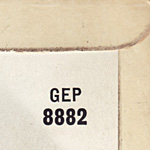 |
 |
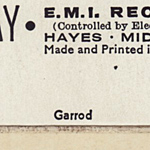 |
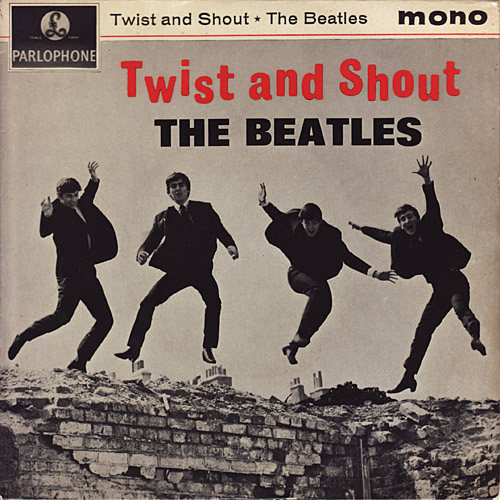
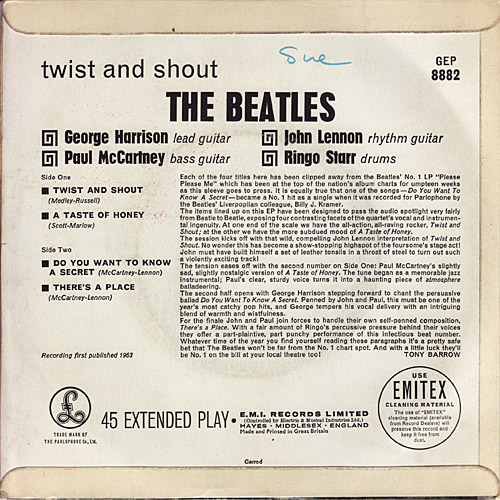
Wrap-around cover. Round-cut corner. Printer name "Garrod (& Lofthouse Ltd.)" was printed at the bottom of the back cover. |
||
| LABEL CLOSE UP | |||||
 |
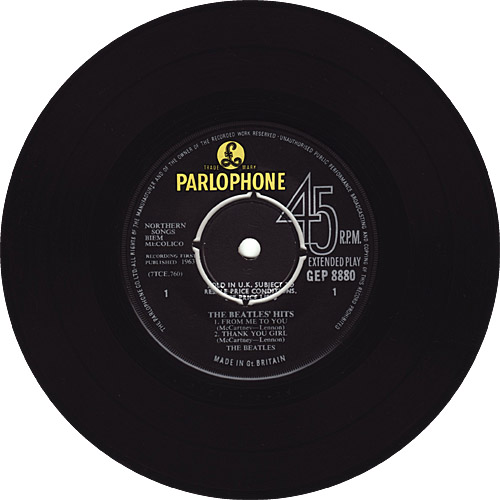
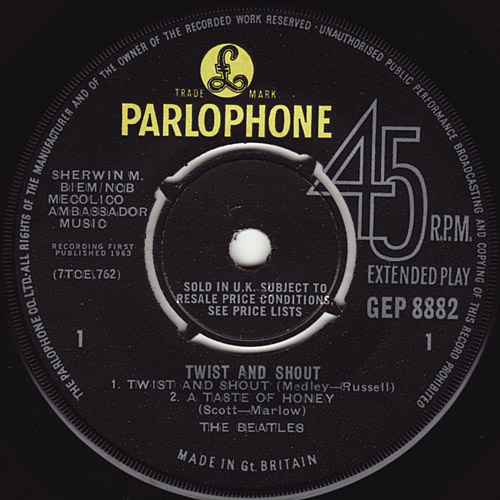
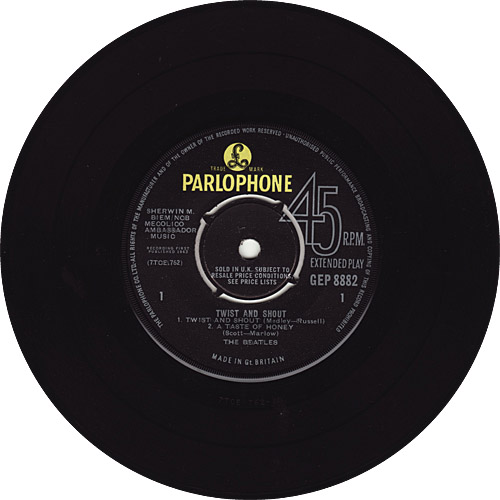
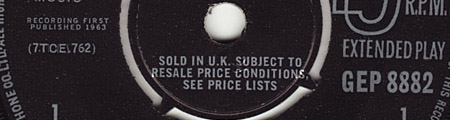
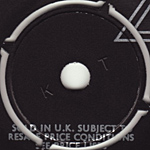
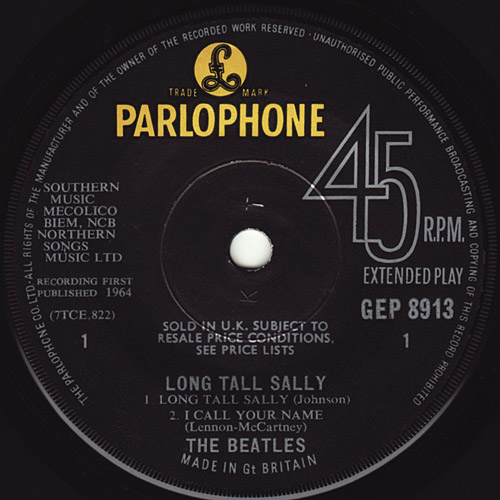
Push-out center. The embossed letter (tax code) is "K, T". " SOLD IN U.K. SUBJECT TO RESALE PRICE CONDITIONS, SEE PRICE LISTS." statement was printed at the center of the label. |
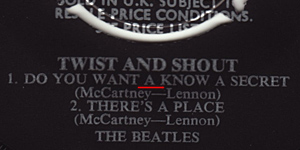 |
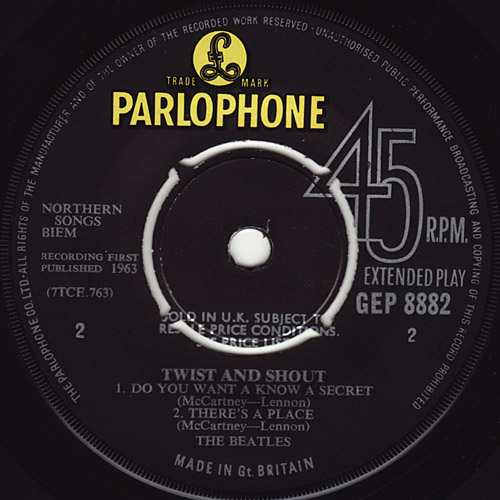
The side-2 label was mis-printed with "Do You Want A Know A Secret" instead of "Do You Want To Know A Secret" in roman type. | ||
| LABEL CLOSE UP | |||||
 |
 |
The
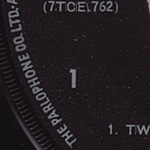
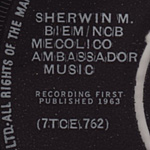
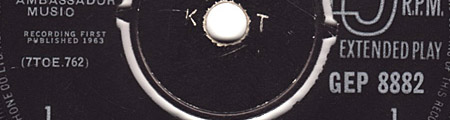
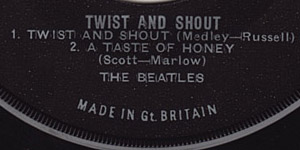
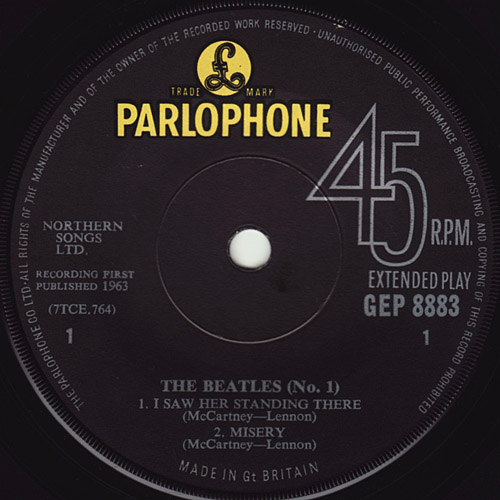
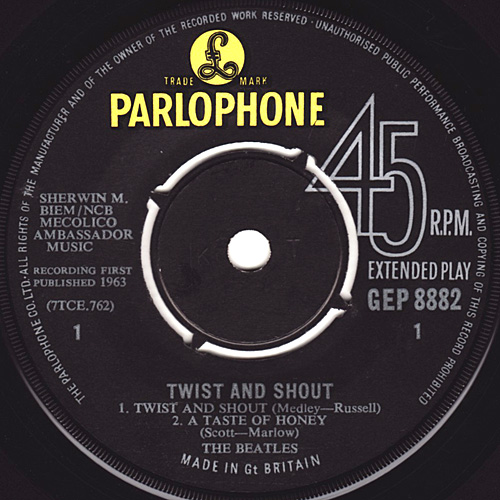
3rd. pressing has (1) capitalized PARLOPHONE rims (2) "RECORDING FIRST PUBLISHED 1963" statement. (3) "Sold In U.K." statement. |
 |
 |
|
| SIDE 1 | SIDE 2 | ||||
| Matrix
suffixed with side-1: "2N" side-2: "1N" |
|||||
|
OTHER ITEM
|
|||||
| - | |||||
| GEP-8882 | |||||
| RECORD LABEL | Black/yellow Parlophone label with silver print: Type-2 | ||||
|
MIX
|
MONO | ||||
| MATRIX No. | SIDE 1 | 7TCE 762 - 2N | |||
| SIDE 2 | 7TCE 763 - 1N | ||||
| BLACK | |||||
| COVER | THE PARLOPHONE Co., Ltd. | ||||
| LABEL | THE PARLOPHONE CO. LTD. (capital letter) | ||||
| Push-out center | |||||
| Yes | |||||
|
PUBLISHER'S NAME
|
SIDE 1 | SHERWIN M. BIEM/NCB MECOLICO AMBASSADOR
MUSIC |
|||
| SIDE 2 | NORTHERN SONGS BIEM | ||||
|
COVER
FORM
|
Single type Laminated rounded upper and lower rear flaps and no tab cut on the back |
||||
|
PRINTER CREDIT
|
Garrod | ||||
| COVER DESIGN/ PHOTO/ NOTES | Photo: Fiona Adams / Notes: Tony Barrow | ||||
| PRODUCER | George Martin | ||||
|
COMMENTS
|
Beginning in 1964,
Parlophone (and all the other EMI companies) began printing a
phrase in the centers of all their singles, EP's and LP's, which
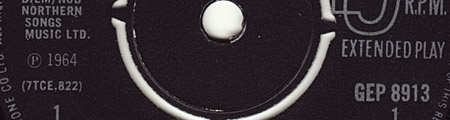
said: SOLD IN U.K. SUBJECT TO RESALE PRICE CONDITIONS, SEE PRICE LISTS. The side-2 label was mis-printed with "Do You Want A Know A Secret" instead of "Do You Want To Know A Secret" in Roman Type. |
||||
| Company's Name | Publisheing date of the recording | Central
Remark "Sold in U.K...." |
Variations |
| THE PARLOPHONE CO. LTD. | "Recording First Published 196X" | - | Type 1 |
| Yes | Type 2 | ||
| (P) 196X | Yes | Type 3 | |
| THE GRAMOPHONE CO. LTD. | (P) 196X | Yes | Type 4 |
| - | Type 5 | ||
| EMI RECORDS LTD. | (P) 196X | - | Type 6 |
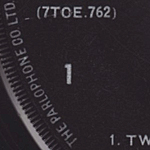
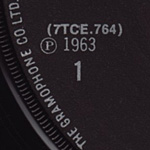
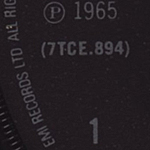
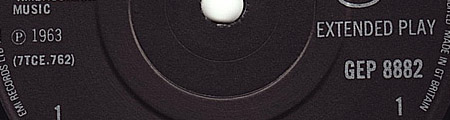
| The outer rim statement on the label,
which always said "THE PARLOPHONE CO. LTD." from 1963 to
June 1965. On 1st July 1965, EMI underwent a merger and each individual ceased to be a L.T.D. company and became a Subsidiary of "THE GRAMOPHONE CO. LTD." which was owned by EMI. This merger meant yet another label change occurred and previous "Parlophone Co. Ltd." rims where replaced with the new "Gramophone" rims. The reissued Yellow Parlophone in 1981 (Collection Box Set) have a credit "EMI RECORDS LTD." around the label. |
| Spring 1963-June 1965 | July 1965-1969 | 1981-reissue (Box Set) |
 |
 |
 |
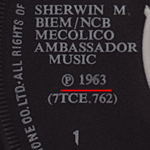
| 1963 | Spring 1963-Early 1965? | Early 1965?- Late 1969 and 1981 |
 |
|
 |
| Publishing date
of therecording was not
printed on the label. *"The Beatles' Hits (1st. Press "matrix 1N/1N": GEP 8880)" only (maybe) |
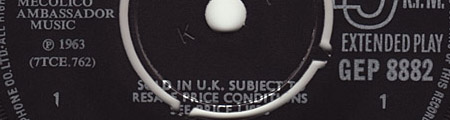
Publishing year printed as: "RECORDING FIRST PUBLISHED 196X" was printed. | The statement "RECORDING FIRST PUBLISHED 196X" was replaced by a symbol "(P)". |
| The "SOLD IN U.K. SUBJECT TO RESALE PRICE
CONDITIONS, SEE PRICE LISTS" statement was introduced in February
1964 on all EMI singles, EPs and LPs. In this time, "With The Beatles" was at #1 in the LP charts for a twenty-one week stay. Beyond any doubt, EMI who had unprecedented advance orders, manufactured an overwhelming amount of these before the "SOLD IN U.K." notice was introduced. Resultantly, there might not have been a need, right away, to press the LP in February with the "SOLD IN U.K." statement, as so many copies had yet to be sold, which were already made. In summer of 1969, the "SOLD IN U.K." statement was removed on the label. |
| Summer 1963-January 1964 |
 |
| February 1964-Early 1965? |
 |
| Early 1965?-Summer 1969 |
 |
| Summer 1969- |
|
|
1981 (EP Collection Box)
|
 |
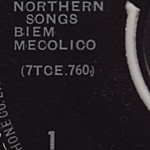
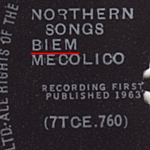
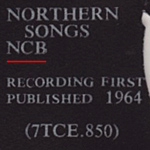
| The record companies printed copyright information on records
that were intended for export and on a lot of domestic U.K.
pressings. In case of EPs and Singles, this information was
usually printed at the left side on the label. |
The most usual ones are:
|
| B.I.E.M. | N.C.B. |
 |
 |
| The type for the information printed on the disk's center (i.e. titles, artist, writer, record number, etc.) depends fully on the different sets of type that each printer had to use at his disposal, and not at all indicate a first pressing. |
| "Sans Serif" type | "Roman" type |
 |
 |
| Most 1960's EMI pressings, in the center
of the LP, single or EP, have letters embossed from under the
surface of the label's center. The letters were indented into a
stamper ( a negative image of the disk which records are pressed
from); so that when pressing the positive disk, the indented
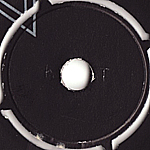
letters become lifted from the surface. Right: the center of "The Beatles' Million Sellers", with initials "KT" very visible. The ones are KT, MT, PMT, PT, MKT or PKT and maybe a couple more; KT and MT seen most frequent. |
 |
| According
to "LABELOGRAPHY written by Jan Petterson", there were 17
different tax codes until VAT was introduced in 1973. The record companies introduced the new tax codes at specific dates but sometimes continued to use an old code even when they had introduced the new one. (Similar information was received from Mr. Andy.Thanks!) |
|
| Tax codes | |||
| NT | 1954 | OT | 26th. July 1961 |
| NI | 1955 | ZT | 10th. April 1962 |
| RT | Summer 1955 | PT | 26th. November 1963 |
| XT | Summer 1957 | MT | 1st. January 1963 |
| ET | August 1959 | KT | 1st. July 1963 (used until at least 1972) |
| WT | 1st. August 1960 | JT | 1968 |
| The most common center for an EMI group 7 inches record
was the four-spoke push-out
center. This type of center was in use from the beginning
and was still used in 1975, the year where this description of the
EMI labels ends. EMI decided in November 1966 to only press singles (and EPs?) with solid centers. However, they continued to produce push-out center for "special purposes" seemed to be export, another for use in jukeboxes. There are a lot of push-out center singles in Sweden which were released after November 1966. |
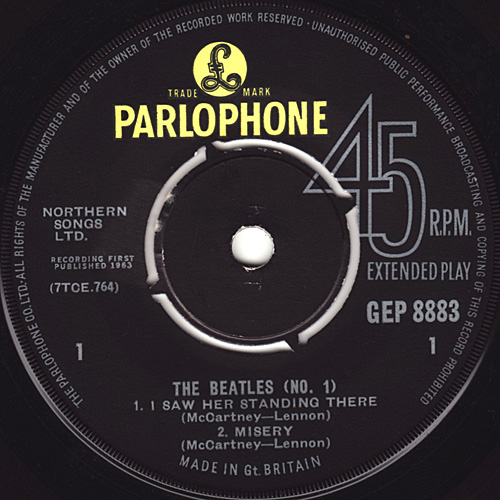
| Push-out Center | Solid Center: type-1 | Solid Center: type-2 | ||
| The
Beatles (No.1) (1st. Press: GEP 8883) |
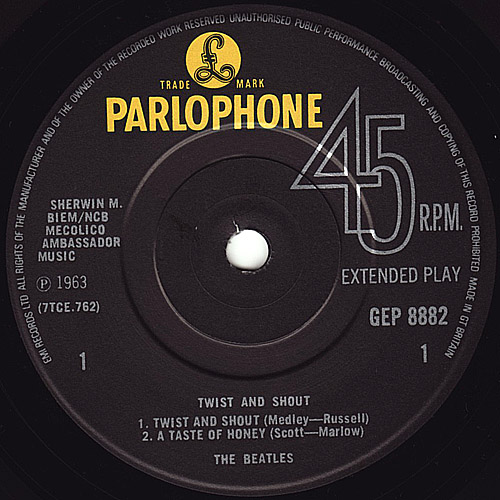
The Beatles (No.1) (2nd. Press? : GEP 8883) | Twist
And Shout (GEP 8882) 1973 reissue |
||
| LABEL | CLOSE UP | LABEL | CLOSE UP | LABEL |
 |
 |
 |
 |
 |
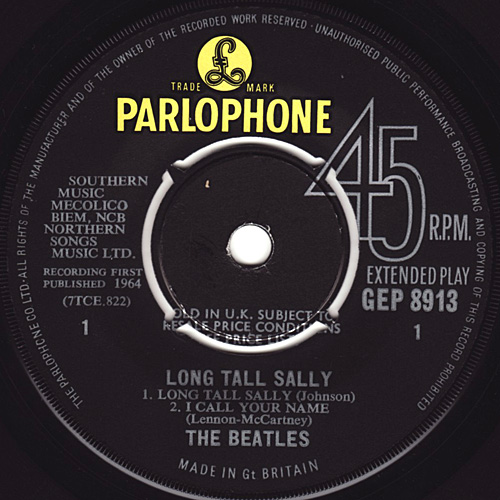
| Long Tall Sally (1st. Press: GEP 8913) | Long Tall Sally (2nd. Press? : GEP 8913) | Magical
Mystery Tour (SMMT-1) 1981 box set |
||
| LABEL | CLOSE UP | LABEL | CLOSE UP | LABEL |
 |
 |
 |
 |
 |
| EPs | PARLOPHONE rim | GRAMOPHONE rim | EMI RECORDS rim | |||
| Push-out | Solid | Push-out | Solid | Push-out | Solid | |
| Twist And Shout (GEP 8882) | Yes | - | Yes | Yes | Yes | Yes |
| The Beatles' Hits (GEP 8880) | Yes | Yes | Yes | Yes | Yes | ? |
| The Beatles (No.1) (GEP 8883) | Yes | Yes | Yes | Yes | Yes | Yes |
| All My Loving (GEP 8891) | Yes | Yes | Yes | Yes | Yes | Yes |
| Long Tall Sally (GEP 8913) | Yes | Yes | Yes | Yes | - | - |
| A Hard Day's Night (GEP 8920) | Yes | Yes | - | - | Yes | ? |
| A Hard Day's Night (GEP 8924) | Yes | - | - | - | Yes | Yes |
| Beatles For Sale (GEP 8931) | Yes | Yes | - | - | Yes | Yes |
| Beatles For Sale No.2 (GEP 8938) | Yes | - | Yes | Yes | Yes | Yes |
| The Beatles' Million Sellers (GEP 8946) | - | - | Yes | Yes | Yes | Yes |
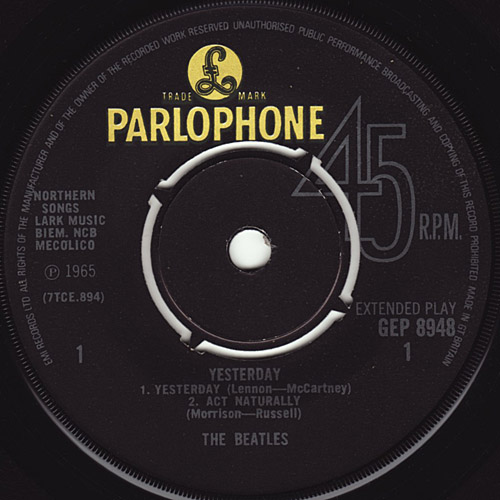
| Yesterday (GEP 8948) | - | - | Yes | - | Yes | Yes |
| Nowhere Man (GEP 8952) | - | - | Yes | Yes | Yes | Yes |
| 12 original Beatles' EPs were
issued on the yellow Parlophone label between 1963 and 1966 which
were issued in mono only. On 8th December 1967, "Magical Mystery Tour" (a 2-EP set) was issued, this set was available in both mono and stereo. And in1981, "The Beatles EPs colection Box Set" was released, "Magical Mystery Tour" and "The BEATLES (a bonus EP)" were issued in stereo. |
Magical Mystery Tour |
 |
|
| The Beatles (bonus EP) | |
 |
|
Mono |
Yellow Parlophone | Silver Parlophone | ||
| 1963-1966 | 1973 reissue | EP
Collection Box 1981 reissue |
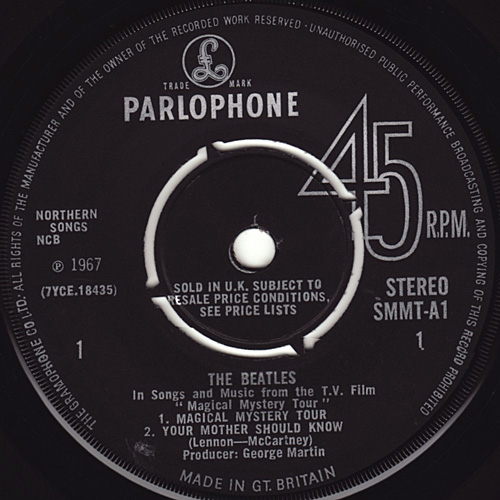
Magical
Mystery Tour |
|
 |
 |
|
 |
|
| Stereo | Yellow Parlophone | Silver Parlophone | ||
| 1963-1966 | 1973 reissue | EP
Collection Box 1981 reissue |
Magical Mystery Tour | |
| No Disk | No Disk |
 |
 |
|
| Original Parlophone Label | |||
| RELEASE DATE | TITLE | MONO | STEREO |
| 12. July 1963 | Twist and Shout | Yes | - |
| 6. September 1963 | The Beatles' Hits | Yes | - |
| 1. November 1963 | The Beatles (No.1) | Yes | - |
| 7. February 1964 | All My Loving | Yes | - |
| 19. June 1964 | Long Tall Sally | Yes | - |
| 4. November 1964 | A Hard Day's Night #1 | Yes | - |
| 6. November 1964 | A Hard Day's Night #2 | Yes | - |
| 6. April 1965 | Beatles For Sale | Yes | - |
|
4. June 1965 |
Beatles For Sale (No.2) | Yes | - |
| 6. December 1965 | The Beatles' Milloin Sellers | Yes | - |
| 4. March 1966 | Yesterday | Yes | - |
| 8. July 1966 | Nowhere Man | Yes | - |
| 8. December 1967 | Magical Mystery Tour | Yes | Yes |
| 7. December 1981 | The Beatles' EPs Collection Box Set | Yes | "Magical Mysrery Tour" and "The Beatles (bonus EP)" |
| Original Apple Label | |||
| RELEASE DATE | TITLE | MONO | STEREO |
| 20. March 1995 | Baby It's You | Yes | - |
| Parlophone released their EPs in two record number series: the GEP series for mono releases and the SGE series for stereo releases. Their first EP released during 1954 (maybe). The record number series ended in 1968. |
| Prefix | Label | Kind |
| GEP | Yellow Parlophone | Mono |
| MMT | Silver Parlophone | Mono (Magical Mystery Tour) |
| SMMT | Silver Parlophone | Stereo (Magical Mystery Tour) |
| SGE | Yellow Parlophone | Stereo ("The Beatles": a bonus EP from EP Collection Box) |
| Matrix Number...Back to the LP List |
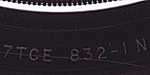
| Matrix numbers are alphanumeric codes (and on occasion, other symbols) stamped or hand written (or a combination of the two) into the run-out groove area of a gramophone record. This is the non-grooved area between the end of the final song on a record's side and the label, also known as the run-off groove area, end-groove area, matrix area, or "dead wax". |
| Matrix numbers are intended for the internal use of the record manufacturing plant, but they are also studied and documented by record collectors, as they can sometimes provide useful information about the edition of the record. |
| The most important part of the extra information is usually the cut number, which is a suffix to the main number. For example, matrix number 12345 is seen on a label, but examination of the run-out groove area reveals number 12345–3, which indicates this is the third cut of this side. It is not unusual to find records with a different cut number on each side. |
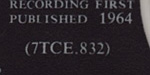
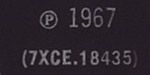
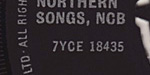
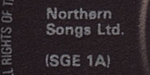
| you can see each label and inner groove both side 1 and 2. Mono Mono (GEP) label using: 7TCE. "Magical Mystery Tour" mono (MMT-1) label using: 7XCE. Stereo "Magical Mystery Tour" stereo (SMMT-1) label using: 7YCE. "THE BEATLES (a bonus EP from colection Box)" (SGE-1) label using: SGE. |
| Mono | Stereo | ||
| GEP Series | MMT Series | SMMT Series | SGE Series |
 |
 |
 |
 |
 |
 |
 |
 |
Lacquer, Mother and Stamper NumberThe courtesy of Mr. Michael Fremer (Thanks!) |
||||||||||||||||||||||
 |
 |
At the "6 O'clock" position on the inner groove area is
the matrix number with a -1 or -2 etc. For instance, Beatles For Sale in stereo is YEX 142-1 (etc.). The "1" means the FIRST LACQUER cut from the master. -2 the second etc. |
||||||||||||||||||||
 |
At the "9 O'clock" is a number which tell you what "mother" was used to generate the stamper actually used the press the record. A number of "mothers" are generated from the lacquer. Obviously a "1" means first mother generated from the lacquer. A "5" means it was much later--the fifth mother generated from the lacquer. | |||||||||||||||||||||
 |
At the "3 O'clock" position there will be one to three letters,
which are codes associated with numbers as follows, which tell you
what stamper was used to press the actual record: G R A M O P H L T D (gramophone Ltd) |
|||||||||||||||||||||
|
||||||||||||||||||||||
| 7TCE 762-1N, mother 1, stamper G is the very first pressing of "Twist and Shout" in mono: first lacquer, first mother, first stamper. 7TCE 762-1N, mother 4, stamper RLT. That would be first lacquer, 4th mother and 289th stamper generated from that mother. |
||||||||||||||||||||||