




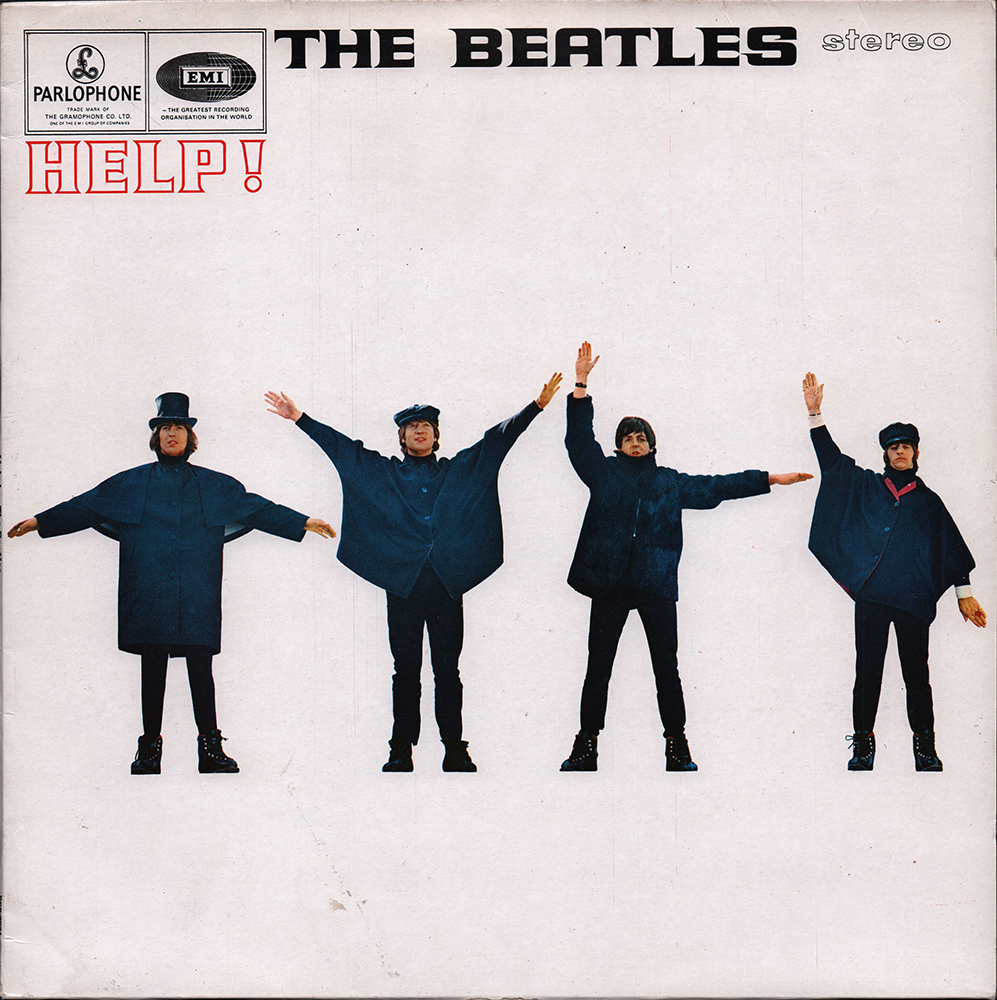
 DMM Reissue Parlophone Sleeve |
|
| TITLE | HELP! | ||||
| CATALOG NUMBER | PCS 3071 | ||||
| RELEASE DATE | Circa 1987–1988 (unconfirmed) /
First Press The DMM series and label design belong to the late 1980s; published references give both 1987 and 1988. |
||||
| TRACK LISTING | SIDE 1 | SIDE 2 | |||
| Help! |
Act Naturally |
||||
| The Night Before |
It’s Only Love |
||||
| You’ve Got to Hide Your Love Away |
You Like Me Too Much |
||||
| I Need You |
Tell Me What You See |
||||
| Another Girl |
I’ve Just Seen a Face |
||||
| You’re Going to Lose That Girl |
Yesterday |
||||
| Ticket to Ride | Dizzy Miss Lizzy | ||||
| FRONT --> Click! | BACK --> Click! | SIDE 1 --> Click! | SIDE 2 --> Click! | DISC --> Click! | |
|
 |
 |
 |
 |
|
| INNER SLEEVE | FRONT COVER CLOSE-UP | ||||
| FRONT --> Click! | BACK --> Click! | ||||
 |
 |
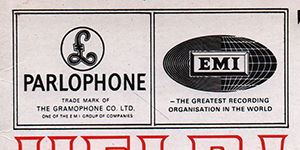 |
The Parlophone and EMI logos are printed in separate boxes in the upper-left corner of the front cover. | ||
| FRONT COVER CLOSE-UP | BACK COVER CLOSE-UP | ||||
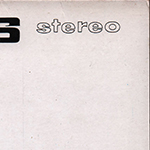 |
The word “stereo” was printed in outlined lettering in the upper-right corner of the front cover. | 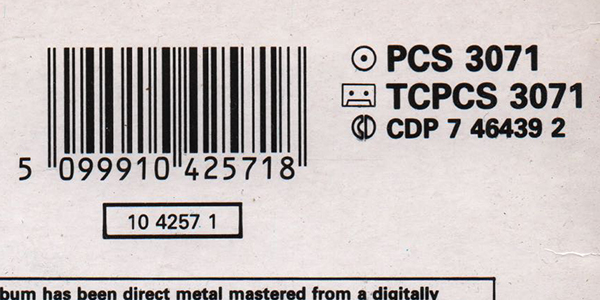 |
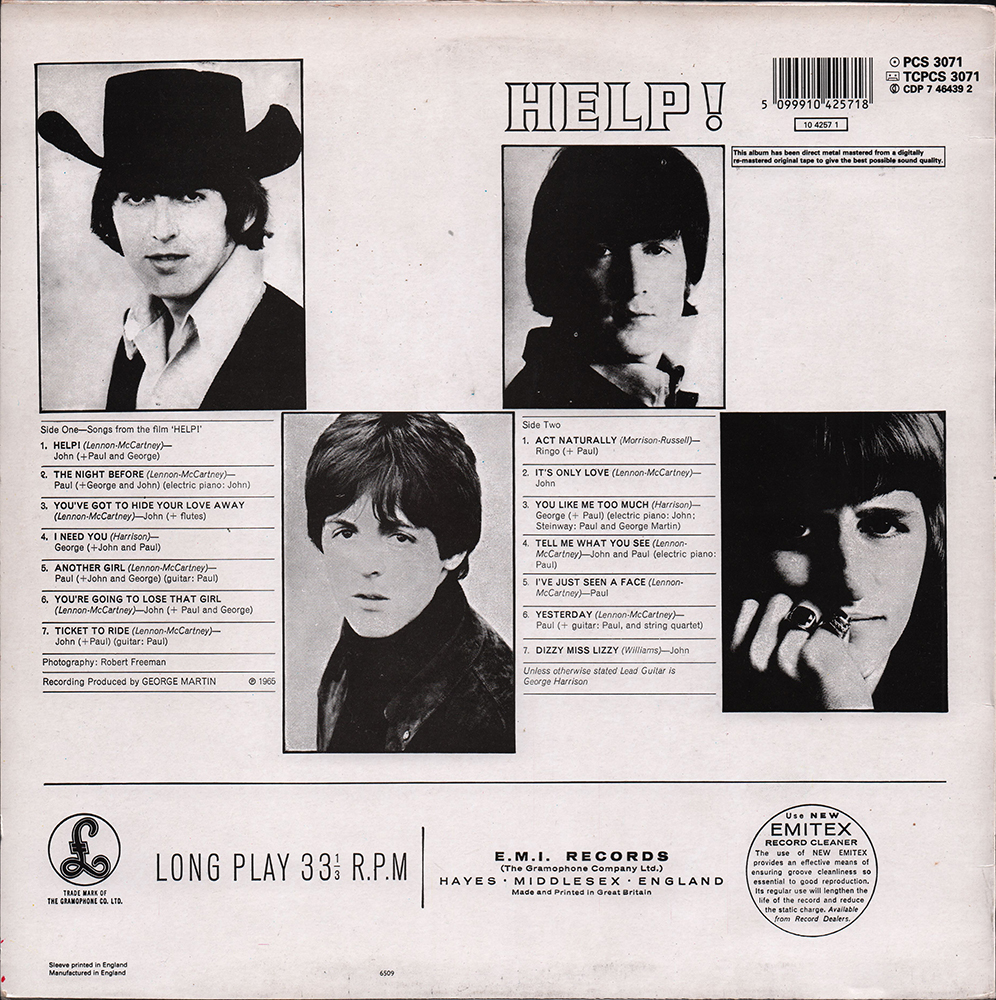
The upper right carries an
EAN barcode, LP/Cassette/CD catalog numbers, and the DMM
statement. |
||
| BACK COVER — CLOSE-UP | |||||
 |
The back cover states that the album was digitally remastered and cut using DMM technology. |
||||
 |
 |
||||
| No Apple
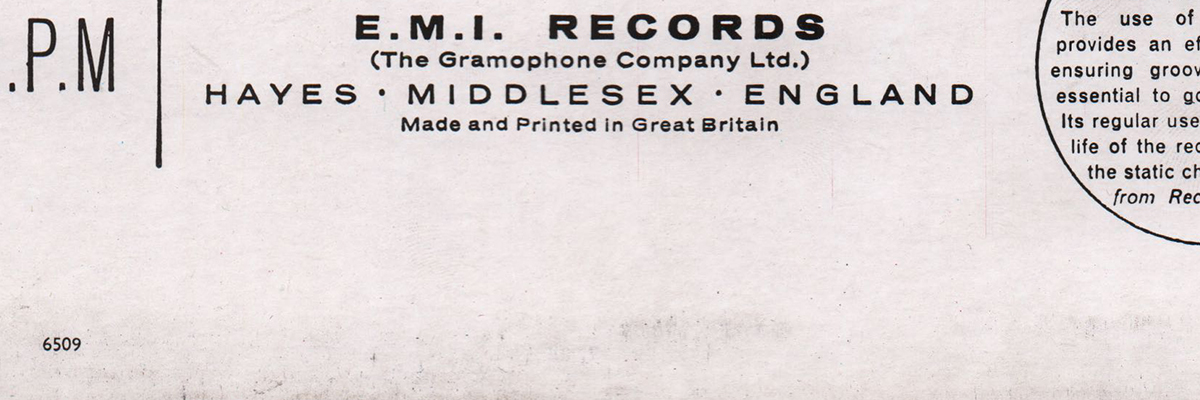
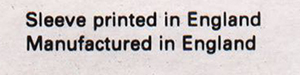
logo is printed on the back. “Sleeve printed in England” / “Manufactured in England” at lower left. The older design also prints “Made and Printed in Great Britain” in the center notice. |
|||||
| LABEL CLOSE-UP | |||||
 |
 |
 |
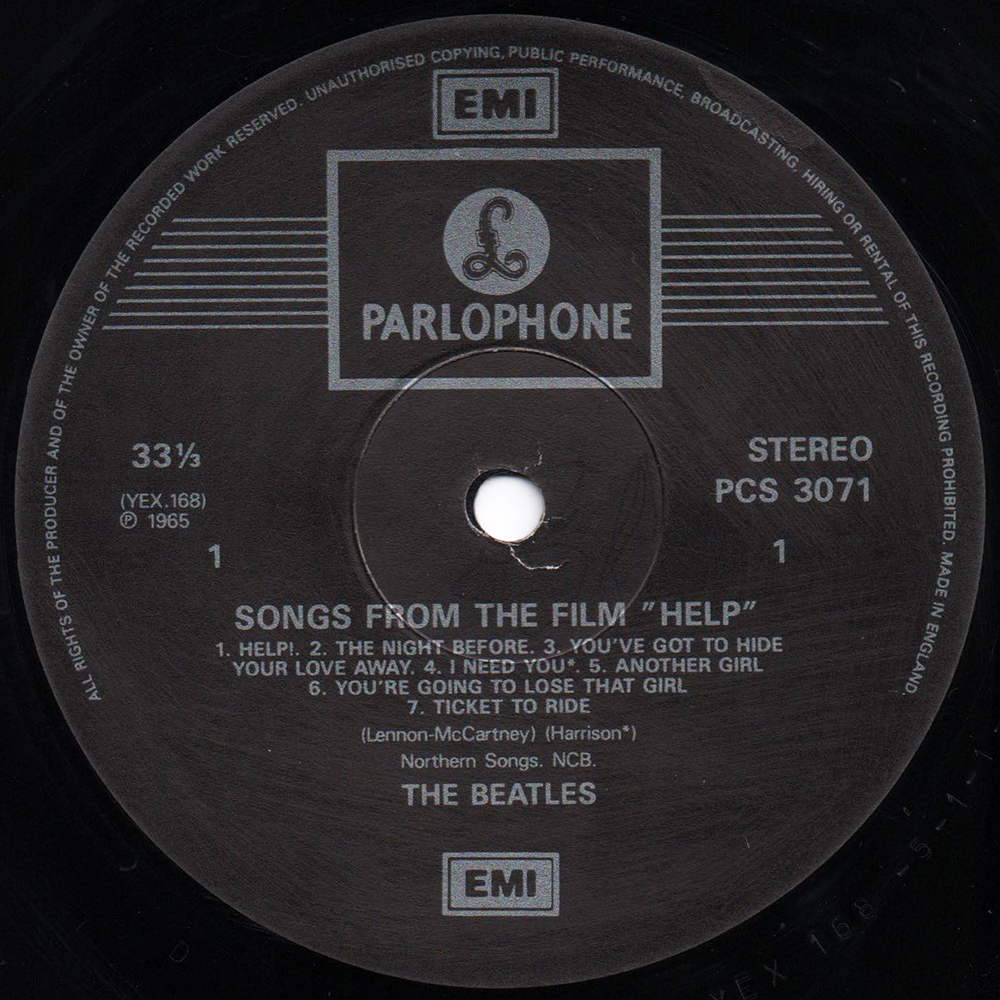
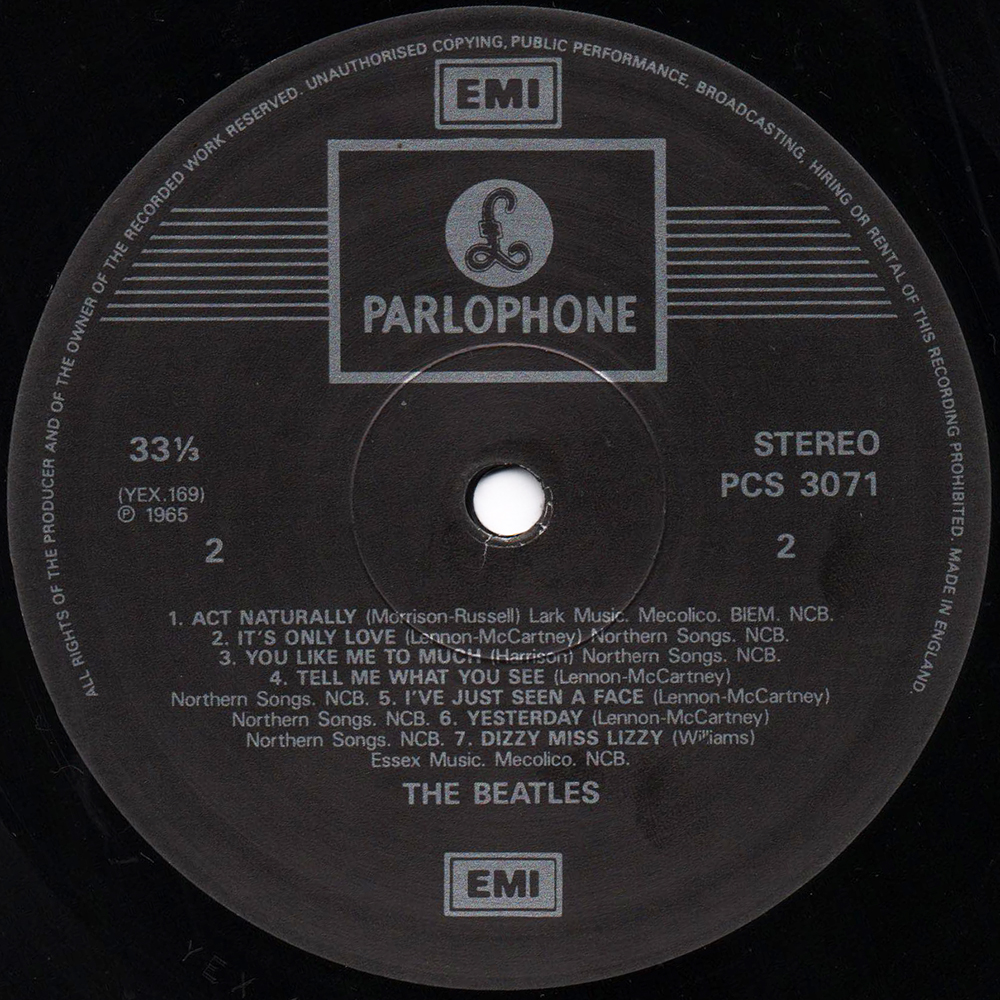
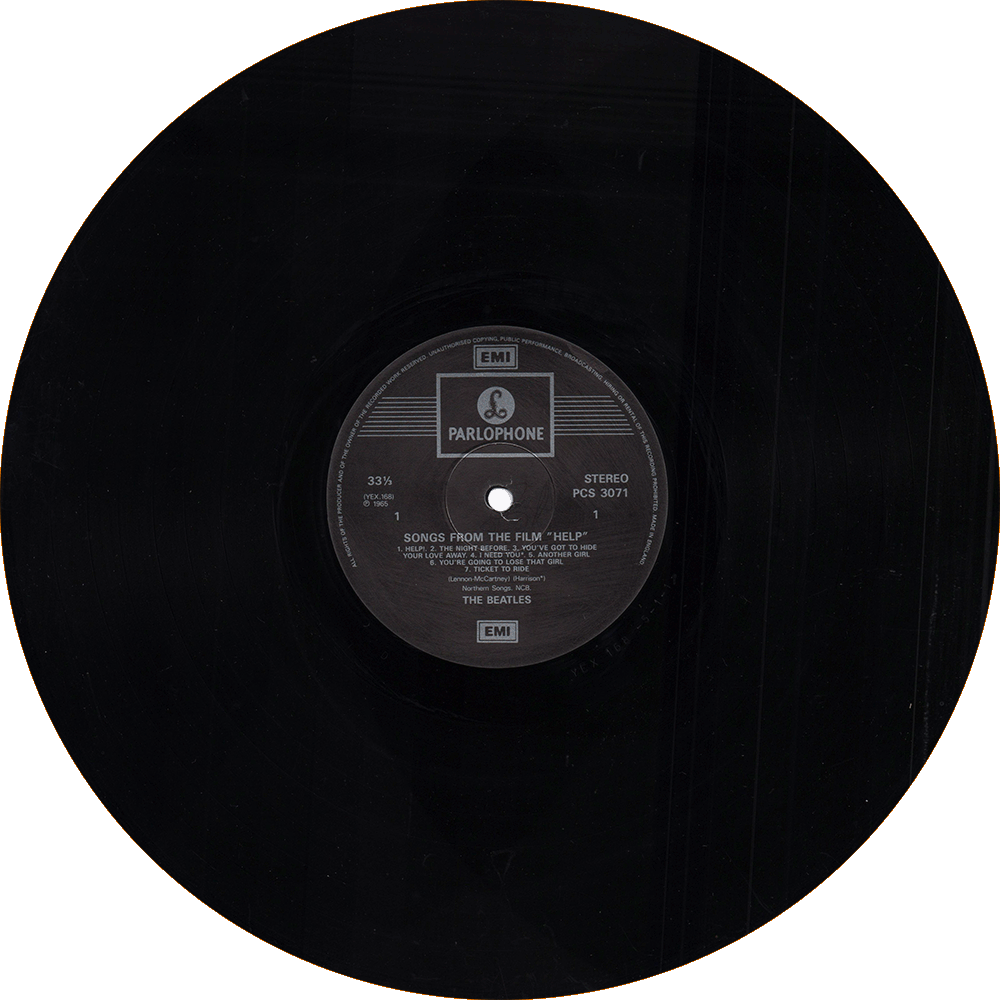
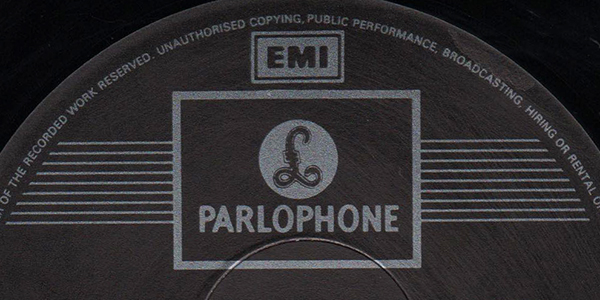
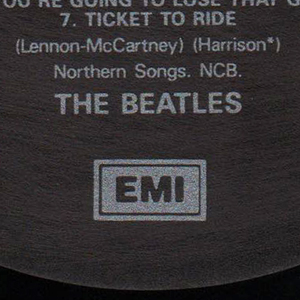
The black Parlophone
labels use silver print, with EMI boxed marks at
approximately 12 and 6 o’clock. The outer silver perimeter
ring found on the preceding label design is absent. |
||
 |
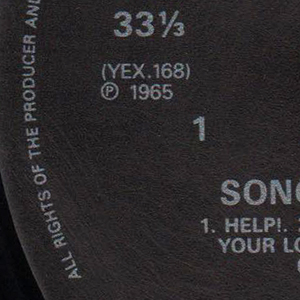
The upper rim
begins “ALL RIGHTS OF THE PRODUCER…”, and the
country-of-origin notice reads “MADE IN ENGLAND”. |
||||
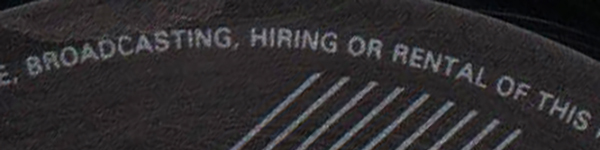 |
The rim text
reads “HIRING OR RENTAL” instead of the earlier “HIRING,
RENTING”. |
||||
| LABEL CLOSE-UP | |||||
| SIDE 1 |
SIDE
2 |
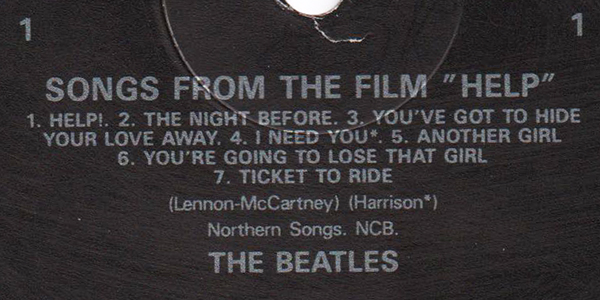
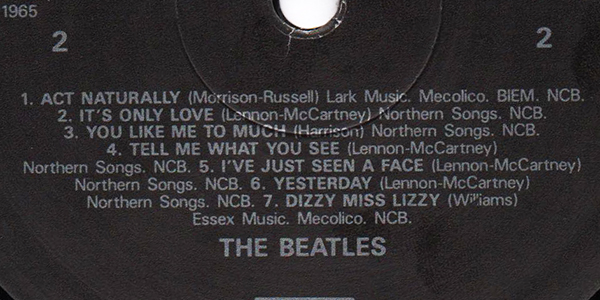
Side 1
lists “4. I NEED YOU*”; Side 2 is typeset as individual
track entries with writer and publisher credits. The labels
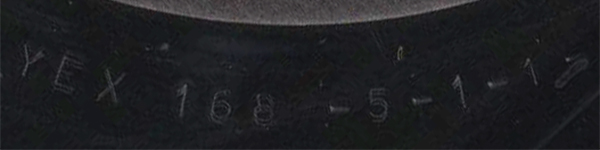
show ℗ 1965 and the on-label matrix numbers (YEX.168) /
(YEX.169). |
|||
 |
 |
||||
 |
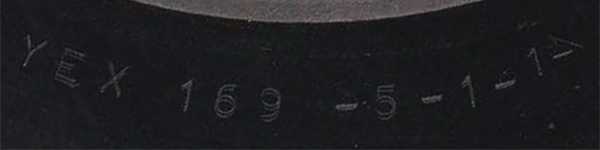 |
SIDE 1: YEX 168-5-1-1- D SIDE 2: YEX 169-5-1-1- D |
|||
|
OTHER ITEM
|
|||||
| - | |||||
| LABEL | Silver Parlophone label Two EMI
Marks / No outer silver ring |
||||
| MIX | STEREO | ||||
| MATRIX No. | SIDE 1 | YEX 168-5-1-1- D | MOTHER & STAMPER |
1/1 |
|
| SIDE 2 | YEX 169-5-1-1- D | 1/1 |
|||
| VINYL COLOR | BLACK | ||||
| RECORD COMPANY'S NAME | No record company name on the labels; the back cover retains “E.M.I. RECORDS (The Gramophone Company Ltd.)”. | ||||
| CENTRAL REMARK "SOLD IN U.K..." |
NONE |
||||
| RECORDING PUBLISHED CREDIT | ℗ 1965 |
||||
| COVER FORM | Single-pocket picture sleeve,
laminated on both the front and back; non-gatefold and without flipbacks. |
||||
| “stereo” TEXT SIZE | Medium / Outline | ||||
| PRINTER CREDIT | No printer credit | ||||
| COVER DESIGN/ PHOTO/ NOTES | Original sleeve photographs: Robert Freeman. The original back credits “Photography: Robert Freeman”; the digital-era information is overprinted elsewhere. | ||||
| INNER SLEEVE | Plain white paper inner sleeve.
Whether it was paired with this record at the time of sale
has not been established. |
||||
| PRODUCER | George Martin | ||||
|
COMMENTS
|
This
pressing: U.K. Parlophone PCS 3071 with two silver EMI marks
and no outer silver ring. The rim text uses “HIRING OR
RENTAL” and ends “MADE IN ENGLAND”. Both sides have -5-1-1 D
matrices (cut 5 / mother 1 / stamper 1). The jacket is
laminated on both sides, with a barcode and DMM statement
but no Apple logo. EMI introduced the DMM Beatles LP reissue program during the 1987 digital-remaster period. The first four original U.K. albums were issued in mono and later albums, including Help!, in stereo. Abbey Road Studios had already introduced a Neumann DMM cutting lathe in 1984. Producer George Martin prepared new stereo mixes of Help! and Rubber Soul for the 1987 CD releases. This is a mixing change relative to the original 1965 stereo LP, not simply a change of pressing or mastering technique. This U.K. LP belongs to the digitally remastered DMM reissue program and is associated with the 1987 stereo mixes. From 1982, EMI U.K. generally stamped the matrix identifier, cut number, mother number and stamper number together, separated by hyphens. In earlier EMI pressings, the cut, mother and stamper identifiers were often placed at separate positions in the run-out area; the older GRAMOPHLTD letter code was used for stampers. The -5-1-1 sequence here belongs to the later, numerical format. The black Parlophone labels use silver print, with EMI boxed marks at approximately 12 and 6 o’clock. The outer silver perimeter ring found on the preceding label design is absent. The upper rim begins “ALL RIGHTS OF THE PRODUCER…”, and the country-of-origin notice reads “MADE IN ENGLAND”. The rim text reads “HIRING OR RENTAL” instead of the earlier “HIRING, RENTING”. The Side 1 label reads “SONGS FROM THE FILM "HELP"” and lists “4. I NEED YOU*”; Side 2 is typeset as individual track entries with writer and publisher credits. Both sides of the jacket are laminated. Front: The 1965 design with the Parlophone and elliptical EMI logos, red-outline HELP! title, and outline “stereo”. The jacket has no flipbacks. Back: The earlier design retains portraits, track listing, Robert Freeman photography credit, George Martin producer credit, the Emitex cleaner notice, and “6509”. The upper right carries an EAN barcode, LP/Cassette/CD catalog numbers, and the DMM statement. No Apple logo is printed on the back. Printed DMM notice: This album has been direct metal mastered from a digitally re-mastered original tape to give the best possible sound quality. Country-of-origin wording: The lower left reads “Sleeve printed in England” and “Manufactured in England”, while the earlier printed design also retains “Made and Printed in Great Britain”. Reference: What Is DMM (Direct Metal Mastering)? DMM is a mastering process in which audio grooves are cut directly into a copper-coated metal disc instead of a conventional lacquer disc. This eliminates an intermediate electroplating stage and can improve the accuracy of groove reproduction. DMM is a cutting technique and does not necessarily require a digital recording. |
||||
