1. What is Nimbus Supercut:
History, Manufacturing Technology, and Connection with
Hi-Fi Magazines
|
 |
Background and History In the late
1970s to early 1980s, the analog record industry saw
a significant decline in the sound quality of
commercial LPs due to the mixing of recycled
polyvinyl chloride to reduce costs, the spread of
thin (lightweight) records, and excessive dynamic
range compression. As an antithesis to this
situation, "Nimbus Supercut" was a high-fidelity
reissue project jointly launched by Nimbus Records,
based in Monmouthshire, UK, and "Practical Hi-Fi," a
monthly audio magazine published by major UK
publisher IPC Magazines.
These records were not distributed in general record
stores but were offered exclusively through mail
order to the magazine's readers. The number of copies pressed is generally reported to have been around 1,000 per title.
|
|
|
Record
Manufacturing Technology and Production Base
for High Sound Quality
Nimbus Records was an independent British record
company established in the early 1970s, based at
Wyastone Leys near the Welsh border. Under the
leadership of Gerald Reynolds, the company's
technical director, record production was carried
out with thorough craftsmanship at their in-house
studio and pressing plant. A major strength of
Nimbus was that basically all processes, except for
the sleeves (jackets), were conducted at a single
Nimbus location, and Reynolds supervised the entire
process.
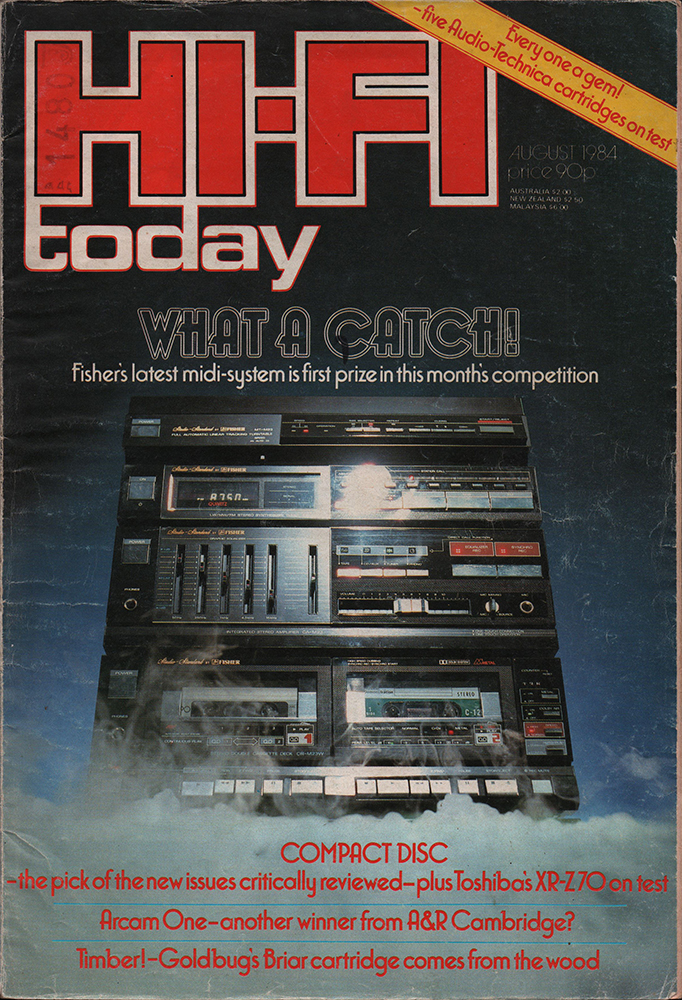
A 1979 issue of "Music Week" also introduced Nimbus
as featuring a "studio, disc-cutting system,
electric forming, [and] pressing plant" all in one
location, and the August 1984 issue of "Hi-Fi Today"
similarly explained, "Every stage in producing a
Hi-Fi Today Supercut is undertaken in this one
location."
The following points regarding specific technical
features and manufacturing processes can be
confirmed from magazines and materials of the time:
|
|
- Direct Cutting from Original Master Tapes:
The primary focus was to extract the maximum
information from the "original master tape"
provided by each record company, and the cutting
stage (cutting the grooves of the record) was
performed while respecting the intentions of the
composers, performers, producers, and engineers.
Mastering was carried out using
all-valve/discrete equipment that minimized
intervening circuits.
- Zero Limiting and varigroove: A core
feature repeatedly described about the Supercut
is "without limiting" (the complete elimination
of limiters/compressors). They entirely avoided
the dynamic range compression typically applied
to commercial records to prevent skipping, and
faithfully engraved the dynamics of the master
tape into the sound grooves. An interesting
technology related to this is "varigroove". This
technology optimized the groove spacing
according to sections with high volume or heavy
low frequencies, ensuring dynamic range without
unnaturally lowering the volume within the
limited surface area of the record. This was
particularly significant for recordings like
Sgt. Pepper, as it aligned with the philosophy
of sending the master tape's dynamic range to
the cutting lathe exactly as it was.
- Removal of Low-Frequency Stereo Limitation
(Mono-ization): In normal LP production,
low-frequency components below 150Hz are
sometimes subjected to groove modulation
processing (such as EEQ) that combines them into
the same phase left and right (centered/mono) to
prevent cutting and tracking issues like needle
skipping and excessive amplitude. However,
Supercut did not do this at all, and as
explained by the phrase "bass can move from
channel to channel," they were produced in a way
that captured the independent low-frequency
components of the left and right channels
exactly as they were. The philosophy was not to
"organize the sound source for safety because
it's an LP," but to engrave the original sound
source into the grooves as unaltered as
possible.
- Strict Management of Metalwork (Fully
Integrated Production and Engraving): Unlike
typical descriptions of "audiophile records,"
the magazine explicitly stated that they managed
everything up to "cutting, plating, origination
of new metal-work". This means they maintained
quality control in the same facility through the
subsequent processes: lacquers, electroplating
immediately after cutting, mothers, and
stampers. As proof of this, the run-out groove
(unrecorded groove) is engraved with "NIMBUS
ENGLAND".
- Adoption of Super Vinyl manufactured by ICI
UK: The vinyl itself was specially
selected, utilizing the highest purity,
additive-free virgin vinyl co-developed with the
major British chemical company ICI. Later
materials also note that ICI manufactured this
highly pure vinyl, boasting a smoothness
comparable to the Victor-made Super Vinyl
adopted by Mobile Fidelity Sound Lab (MFSL) in
the US, thereby reducing surface noise to the
absolute minimum.
Management of Pressing and Cooling Time: Sufficient
pressure was applied during press molding, and they
even managed the "length of time each individual
record is allowed to cool after pressing". This
indicates that manufacturing was conducted with a
focus on quality control for every single record,
right down to the finished product inspection.
|
|
|
Cutting
Equipment
The technical documents surviving for Sgt. Pepper
also confirm the specific equipment configuration.
The equipment line up used to produce this pressing
was as follows:
- Neumann mastering lathe with Dr. Hallidays
special varigroove system to take up less space
for a given level.
- Neumann 300 watt Valve cutting amplifiers with
low noise front end by Dr. Halliday,
- Studer A80 tape playback machine.
- Passive gain control to minimise the amount of
electronics in the signal path.
- An Ortofon box which applied a variable low
pass filter. This precaution was needed to
protect the heads drive coils from up to 1.5
kWatts of peak energy. They were also cooled by
helium gas.
Source: Popsike.com |
From "Studio
Sound" (February 1980 issue)
|
- Established: Around 1978, with
approximately two years in business at the time
- Staff: 20 employees
- Location: A country house on a hillside
near Monmouth, overlooking the River Wye
- Technical Directors: Michael and Gerald
Reynolds
- Musical Director: Numa Libin
- Production capacity: Around 500,000
discs per year
- Reputation: Already highly respected
within the UK record industry for custom
cutting, plating and pressing
- Customers: Rediffusion, Magnus, and
the BBC Transcription Unit, among others
- SAM (Super Analogue Masters): Developed
after Nimbus noticed the exceptionally clean
sound of 12-inch 45rpm singles. The system
combined 45rpm cutting with the full playing
time of a conventional 33⅓rpm LP, while
maintaining high sound quality.
- Cutting technology: An aging Neumann
Varigroove was modified, enabling Nimbus to fit
over 30 minutes per side on a 12-inch disc at
45rpm.
- Cutting philosophy: Limiting,
equalisation and compression were avoided;
Nimbus instead maximized the use of the space
between grooves and spent considerably more time
preparing each cut.
- Nimbus 2123: Demonstrated the extreme
capability of the system, offering a full one
hour of music at 45rpm, featuring Gilbert
Rowland playing harpsichord sonatas by Padre
Antonio Soler.
|
FRONT COVER
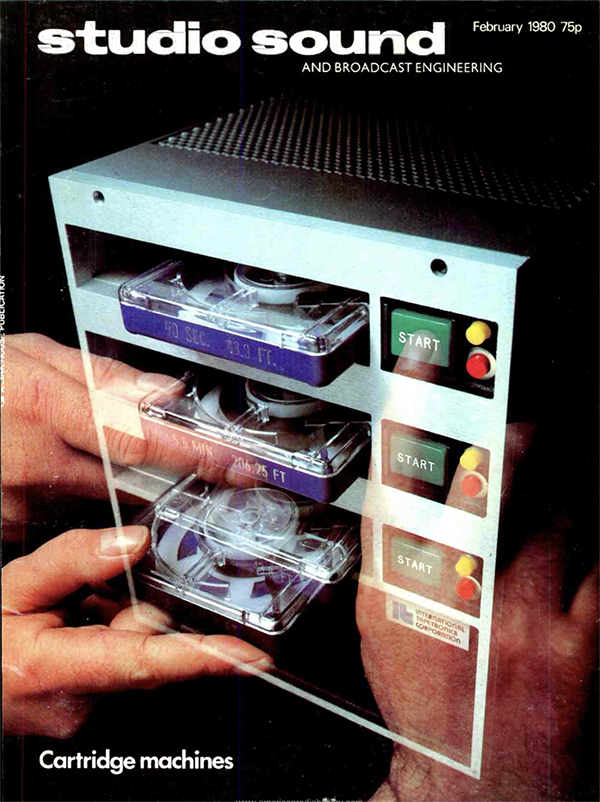
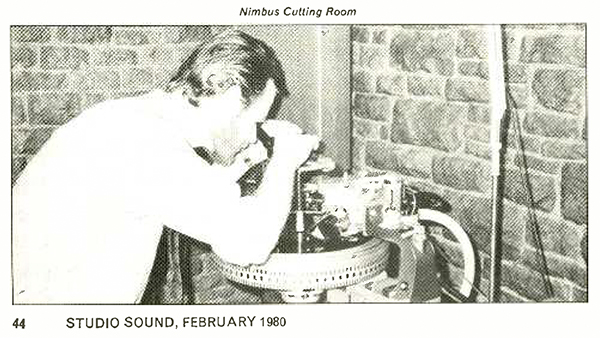
Nimbus
Cutting Room
 |
|
Connection
with Hi-Fi Magazines
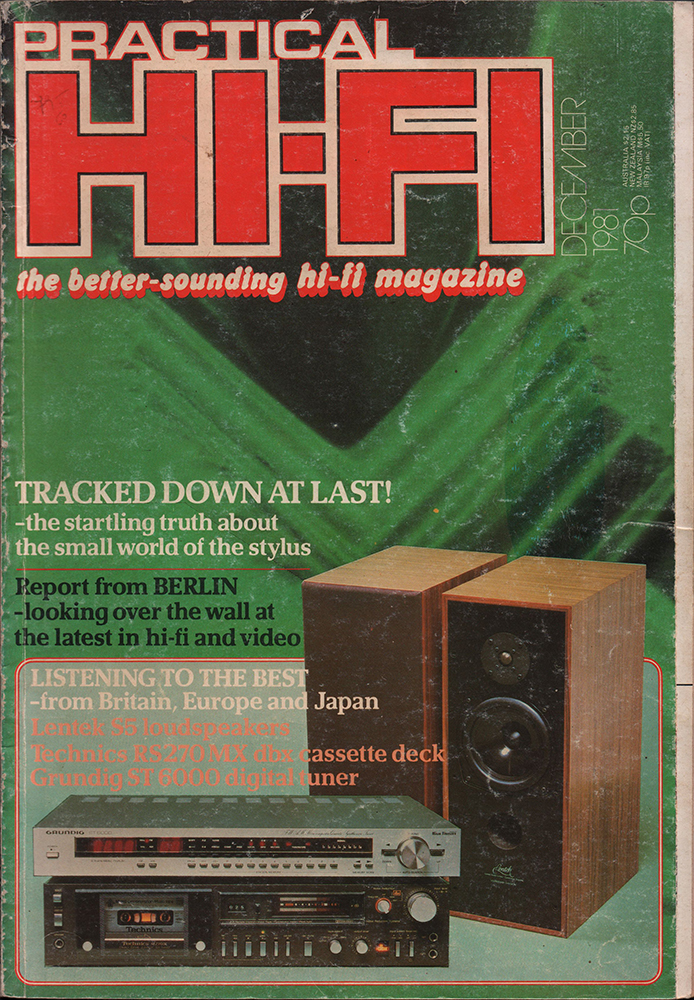
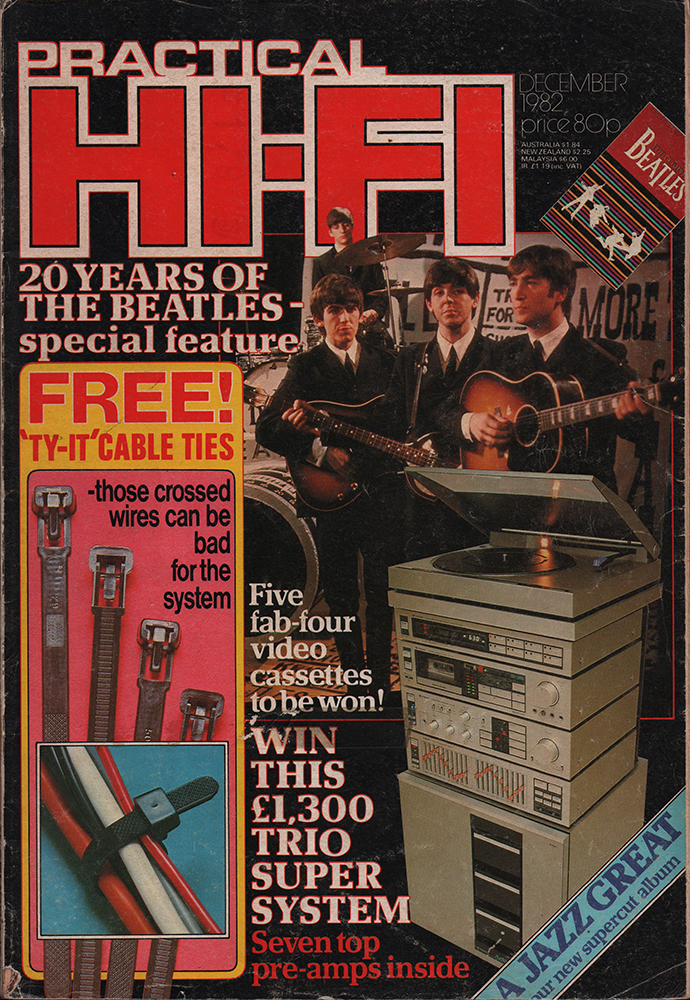
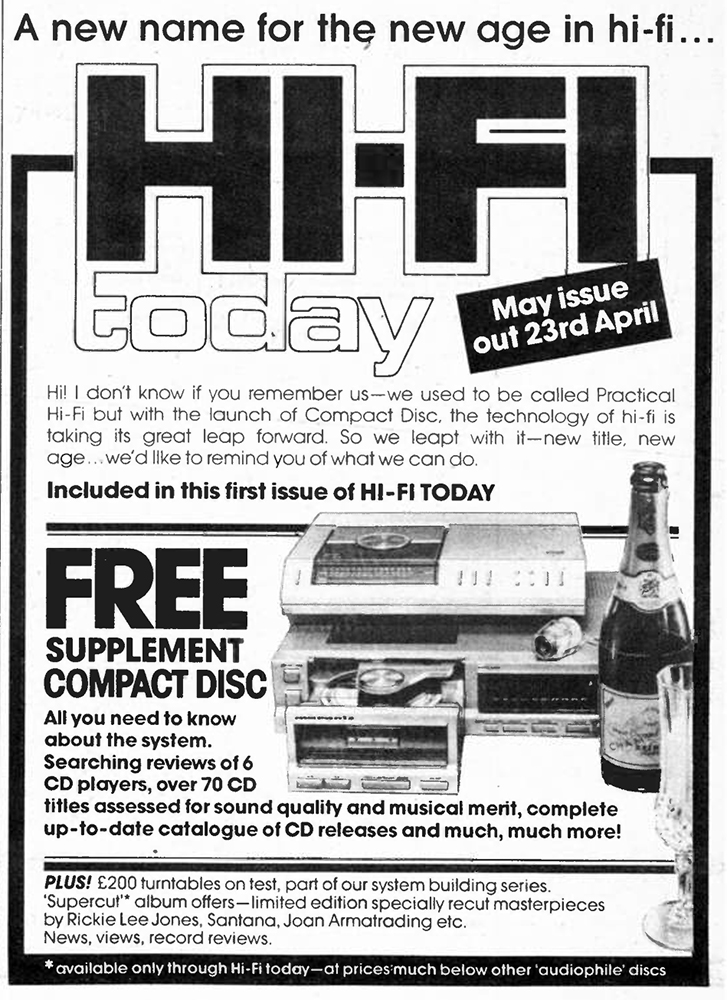
The project was initially launched in the pages of
Practical Hi-Fi, but triggered by the introduction
of the Compact Disc (CD) at the end of 1982, the
magazine was renamed Hi-Fi Today starting with the
May 1983 issue (released April 23, 1983).
The special gold oval sticker affixed to the front
of the jacket was also changed from the "Practical
Hi-Fi" designation to "Hi-Fi Today" in conjunction
with this renaming.
|
New Music
Magazine
(16 April 1983) |
|
Mail Order Mechanism and
Packaging Specifications
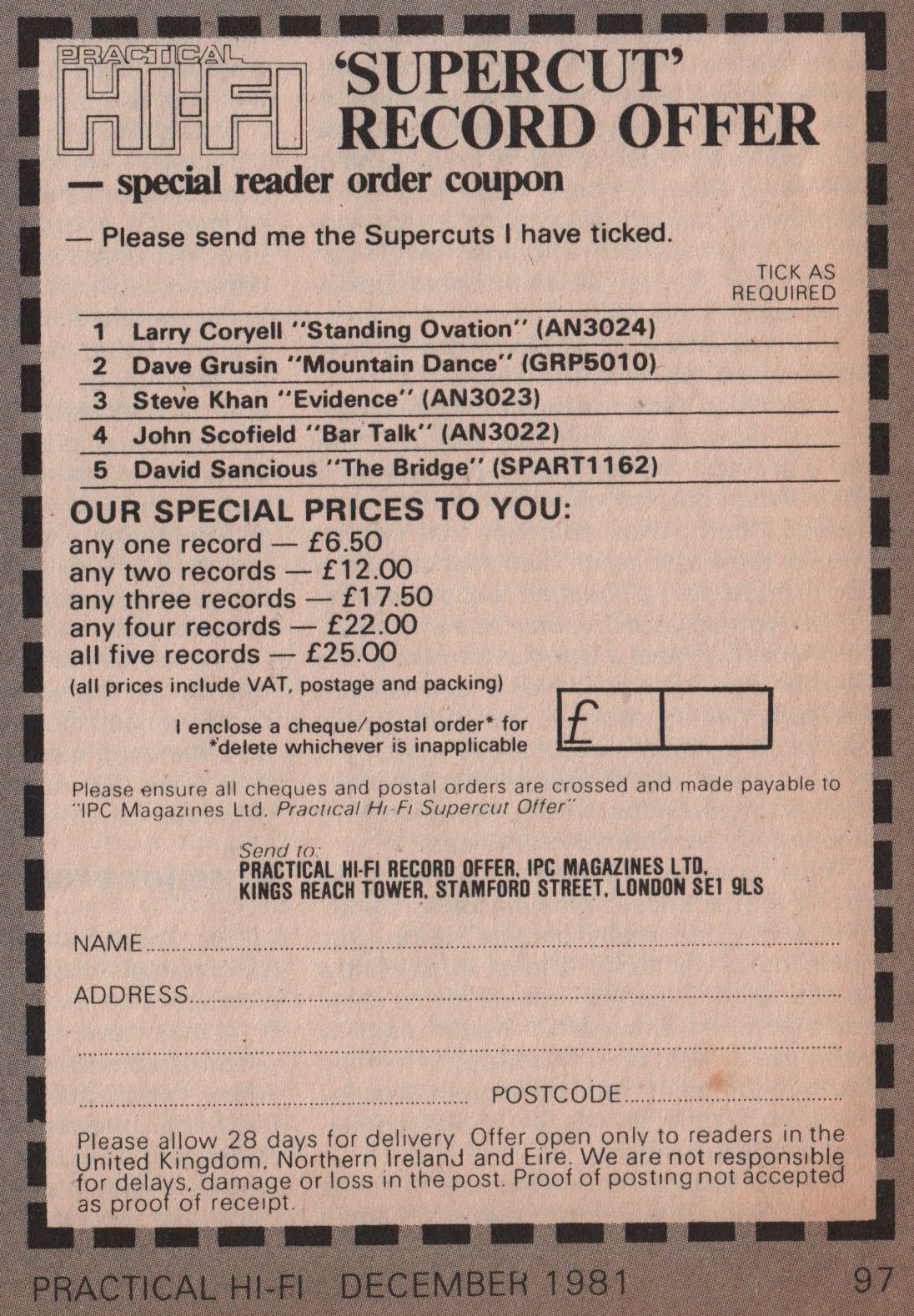
Readers cut out the "Special Reader
Order Coupon" printed at the back of the magazine,
filled in their desired titles, name, and address,
and mailed it along with payment information
(Cheque, Postal Order, or Access/Visa credit card).
Orders were centralized directly at Nimbus in
Monmouthshire or an affiliated window, and after
strict inspection, the discs were individually
packaged and shipped directly to the readers.
Regarding the exterior packaging, to avoid the cost
of manufacturing new custom materials for printing
the jackets, the exact same jackets as the original
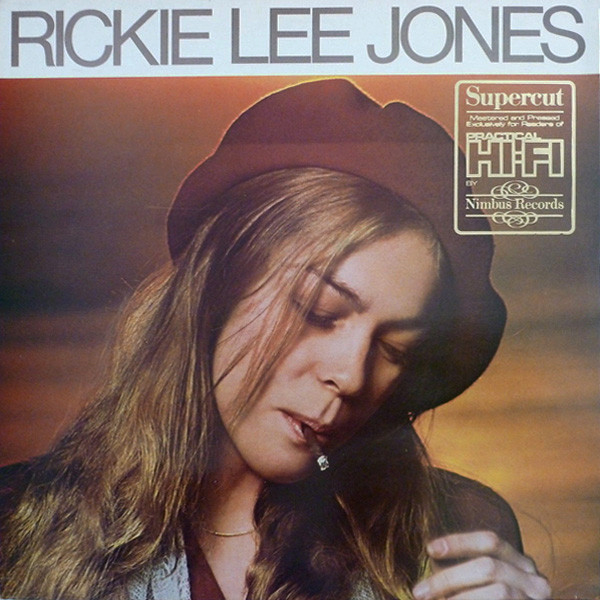
commercial releases were reused. However, to prove
that these were special high-quality pressings, a
custom gold sticker printed with "Supercut /
Mastered and Pressed Exclusively for Readers of
PRACTICAL HI-FI [or HI-FI TODAY] by Nimbus Records"
was affixed in a prominent position, such as the
upper right corner of the front cover. |
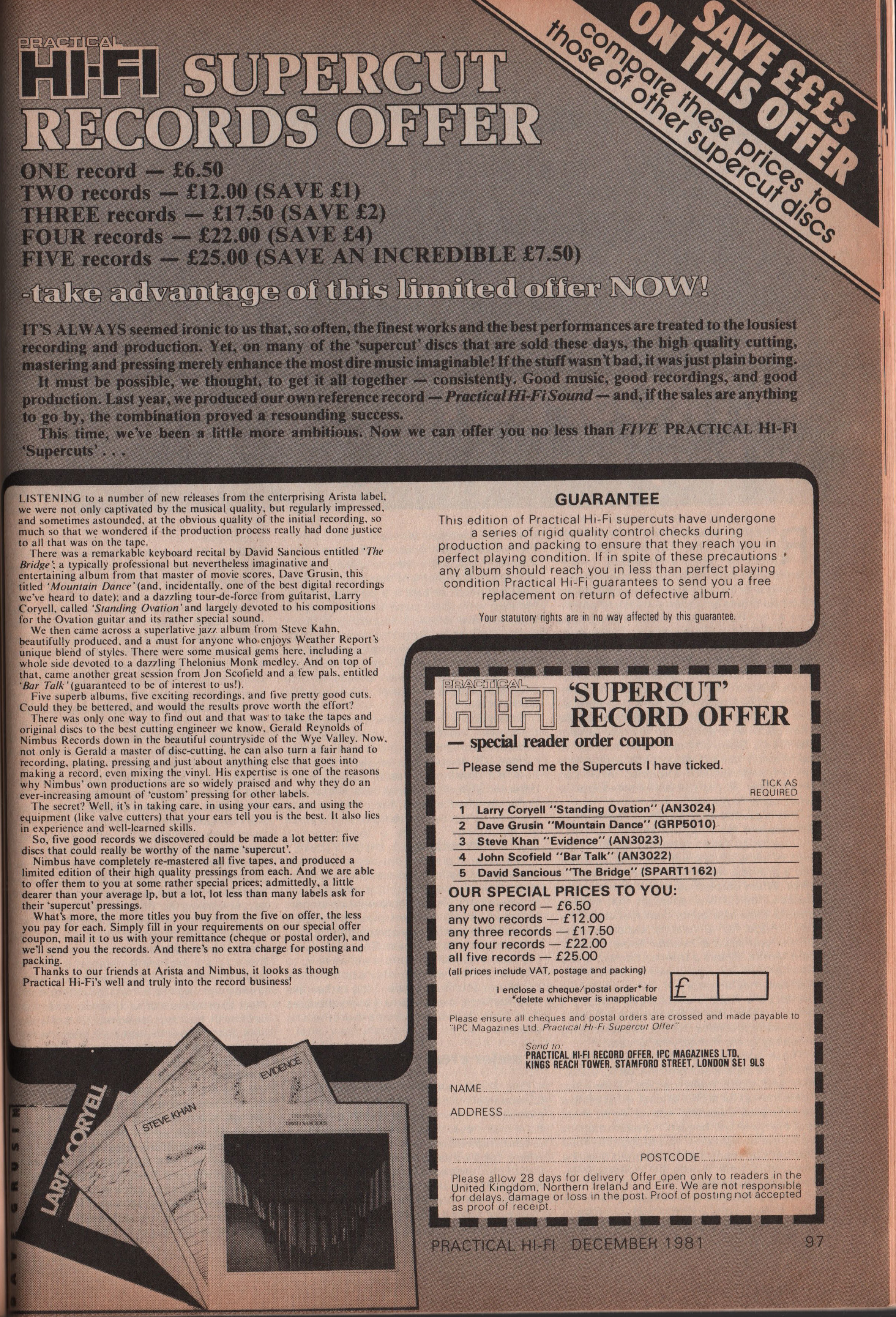
Special reader order
coupon
(Practical Hi-Fi Dec.1981)
|
|
|
Evolution of Pricing Strategy
and Manufacturing Economics
Despite being sold directly to readers, which
eliminated intermediary distribution margins,
significant price revisions were implemented between
the end of 1982 and the summer of 1984. |
|
|
Number of Copies
Purchased
|
End of 1981
(Practical Hi-Fi Era)
|
Summer of 1984
(Hi-Fi Today Era)
|
|
1 copy
|
£6.50
|
£10.00
|
|
2 copies
|
£12.00 (£1.00 discount off
standard)
|
£19.00 (£1.00 discount off
standard)
|
|
3 copies
|
£17.50 (£2.00 discount off
standard)
|
£28.00 (£2.00 discount off
standard)
|
|
4 copies
|
£22.00 (£4.00 discount off
standard)
|
£36.00 (£4.00 discount off
standard)
|
|
5 copies
|
£25.00 (£7.50 discount off
standard)
|
£45.00 (£5.00 discount off
standard)
|
|
6 or more copies
|
Not set
|
£54.00 (discount added for
each additional copy)
|
|
At the start of the project in 1981,
records were supplied at £6.50, adding only a slight
premium to standard commercial LPs; however, by the
summer of 1984, the price was raised by
approximately 54% to £10.00 per copy.
The background to this price surge included the
increased raw material costs for the high-purity
vinyl custom-ordered from ICI, as well as the
extremely low "yield rate" (percentage of good
products) associated with cutting without limiters.
Since the sound grooves containing huge dynamic
transients would immediately lead to scratch noise
or distortion from even minute resin filling
failures or uneven cooling during pressing, a very
high percentage of rejected discs were discarded
during the strict inspection process, and this
manufacturing cost was reflected in the sales price.
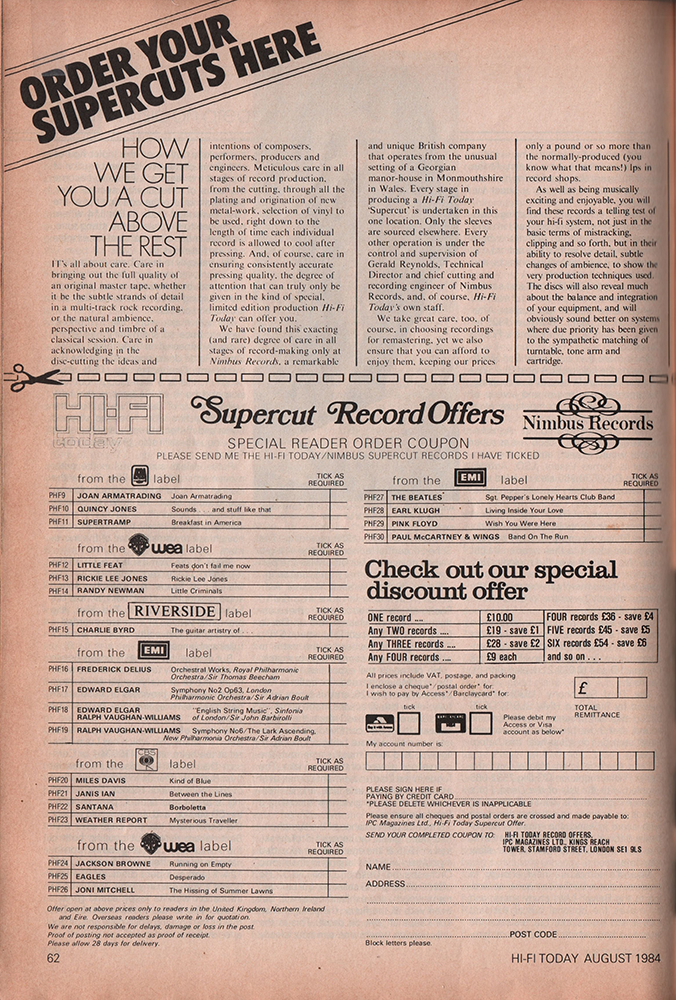
Production quantities are generally reported to have been around 1,000 copies per title. The August 1984 order coupon lists a price of £10.00 for one record. |
|
|
2. List of
Supercut Record Releases
|
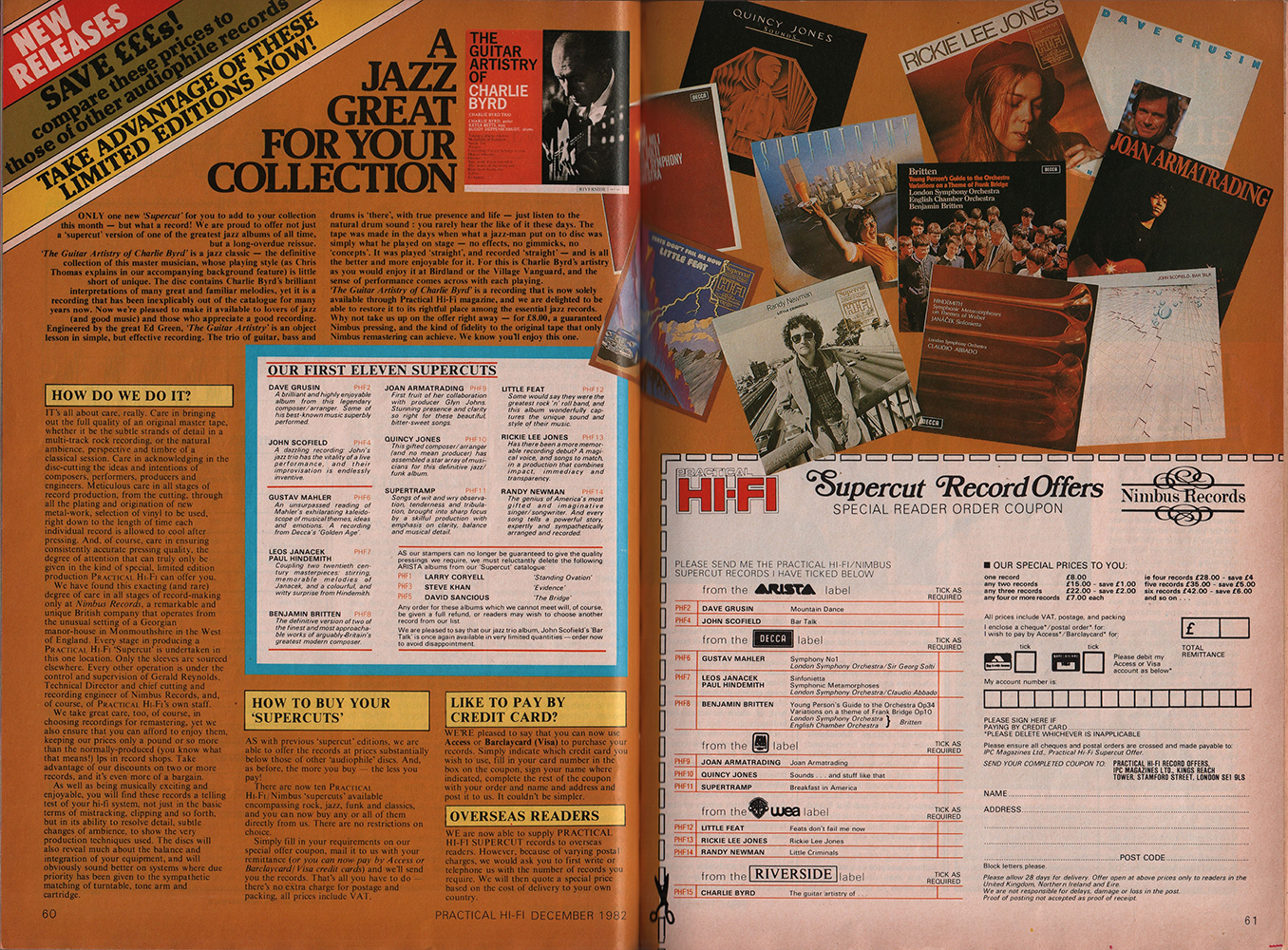
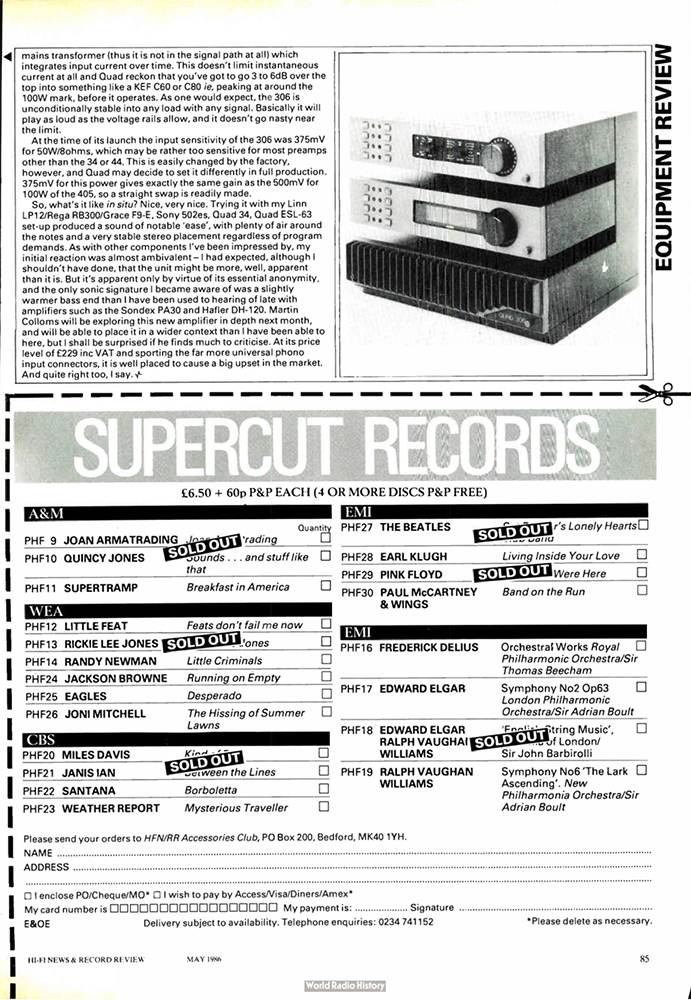
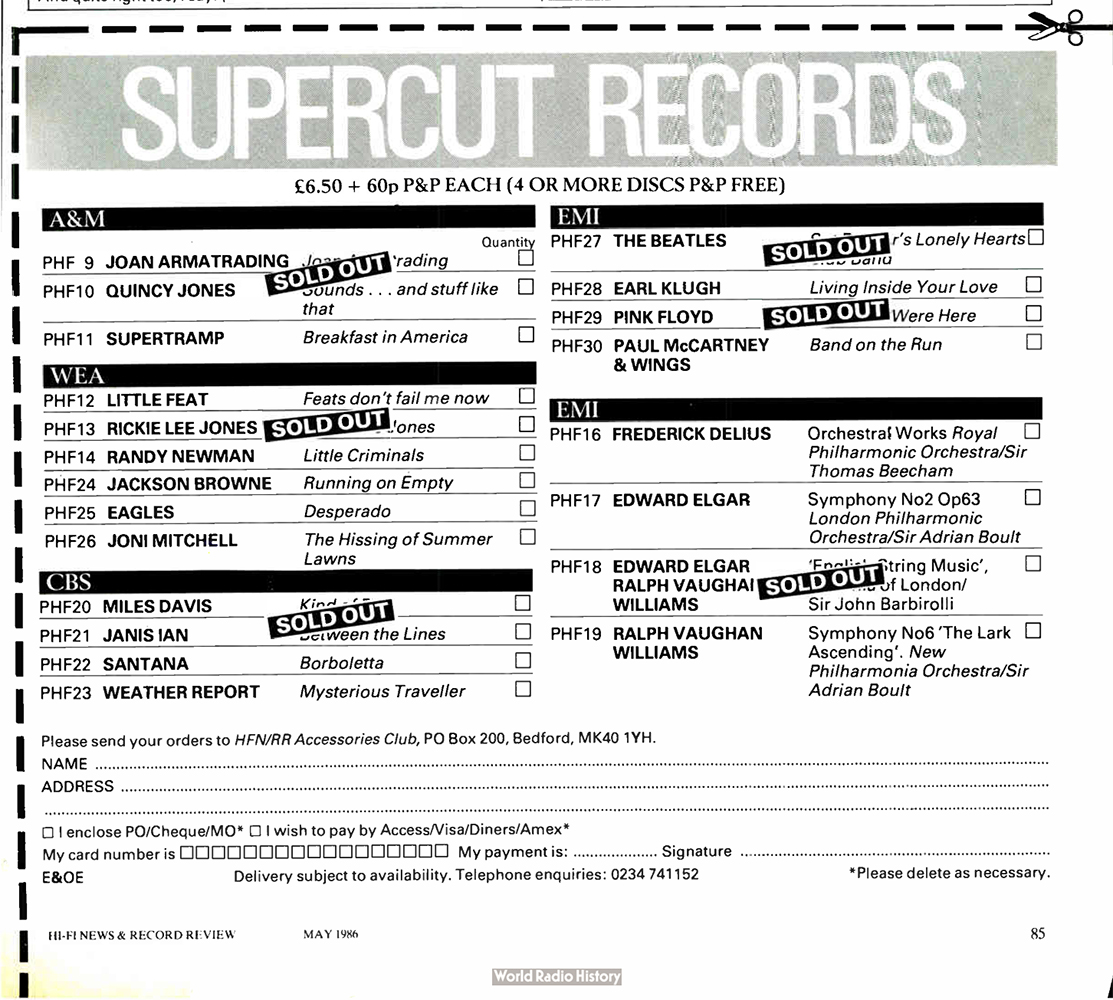
The mail-order coupon in the August
1984 issue of Hi-Fi Today listed a complete catalog
stamped with serial numbers prefixed with "PHF," an
acronym for its predecessor, Practical Hi-Fi. Below
is the catalog list in order of PHF serial numbers
based on the magazine order coupons from Practical
Hi-Fi and Hi-Fi Today.
Among the initial five titles introduced in the
December 1981 issue, the three works by Larry
Coryell, Steve Khan, and David Sancious quickly
reached their stamper limits and went out of print,
so they were excluded from the official PHF
numbering. |
"New Musical Express"
Advertising
Source: World
Radio History
|
| 14th August
1982 issue |
19th March
1983 issue |
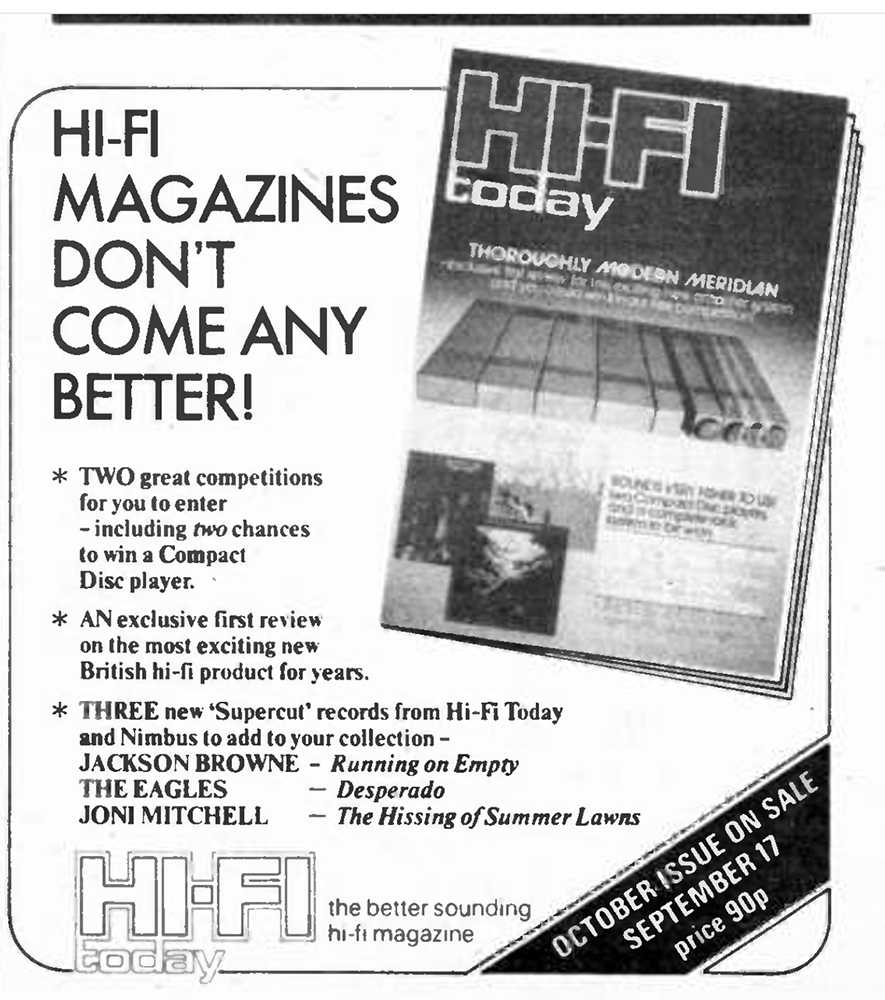
17th
September 1983 issue
|
 |
 |
 |
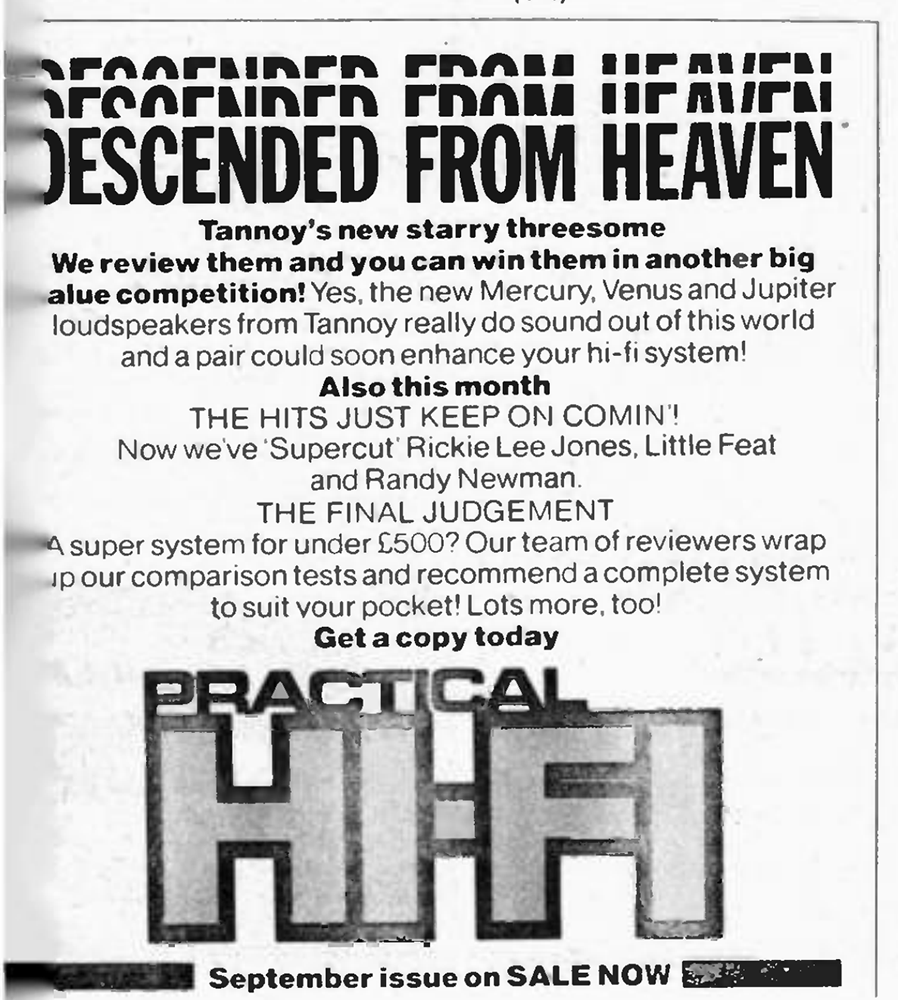
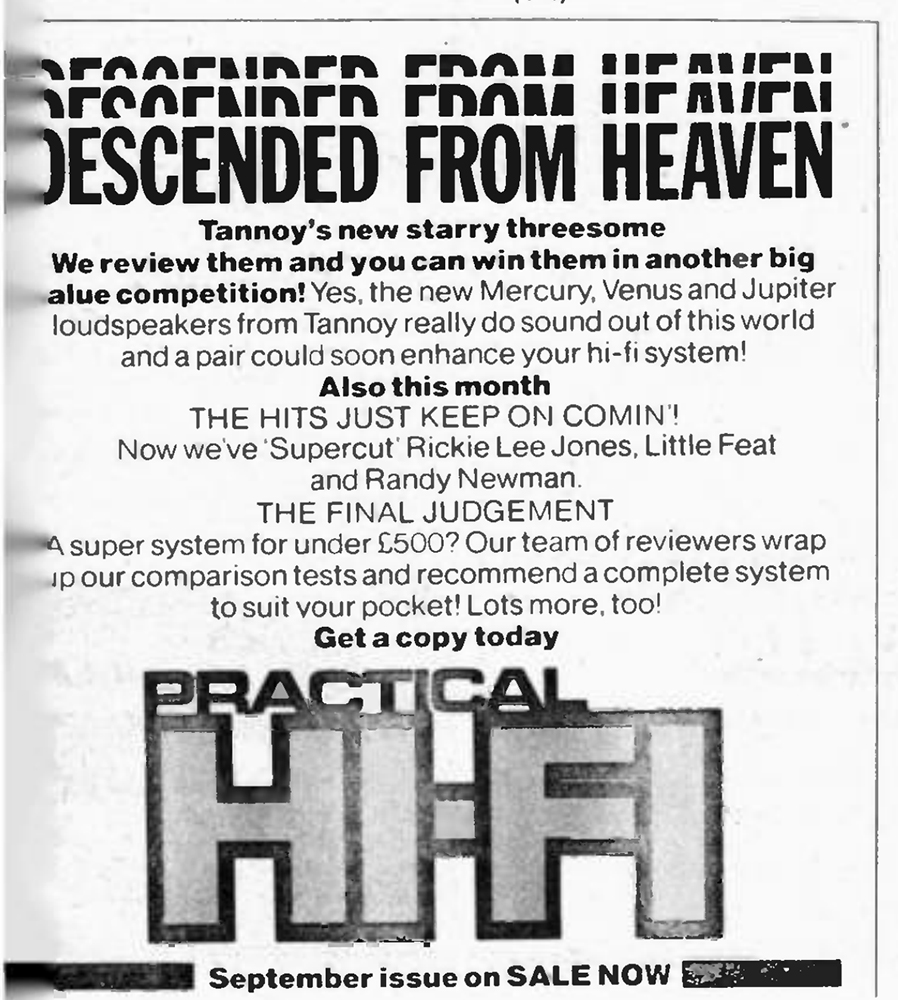
| The ad announces
the addition of three new albums byRickie Lee Jones,
Little Feat, and Randy Newman. |
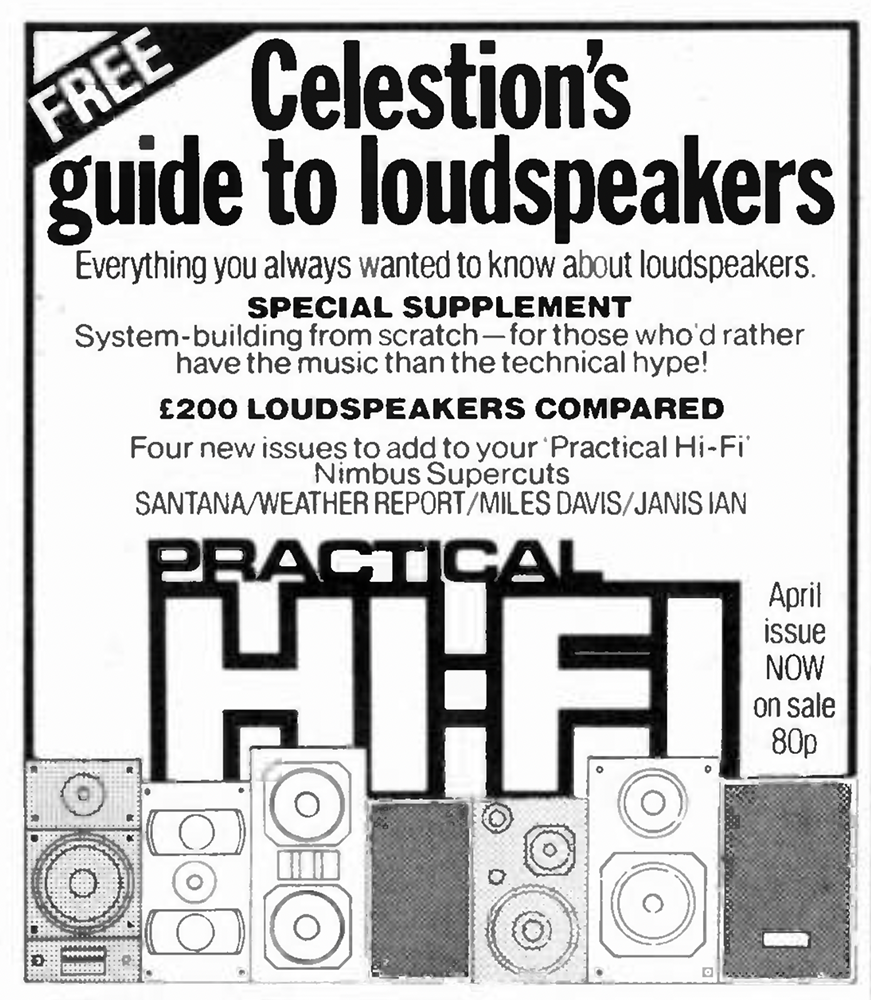
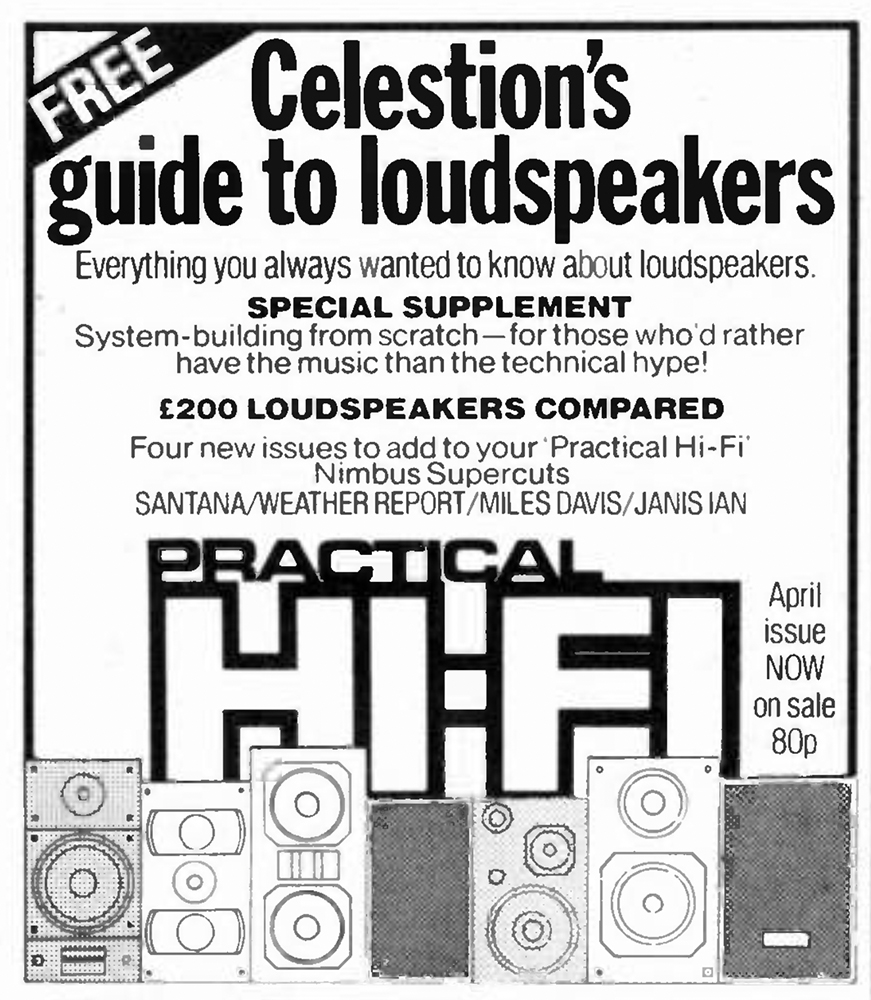
The ad announces
the addition of three new albums by Santana, Weather
Report, Miles Davis, and Janis Ian.
|
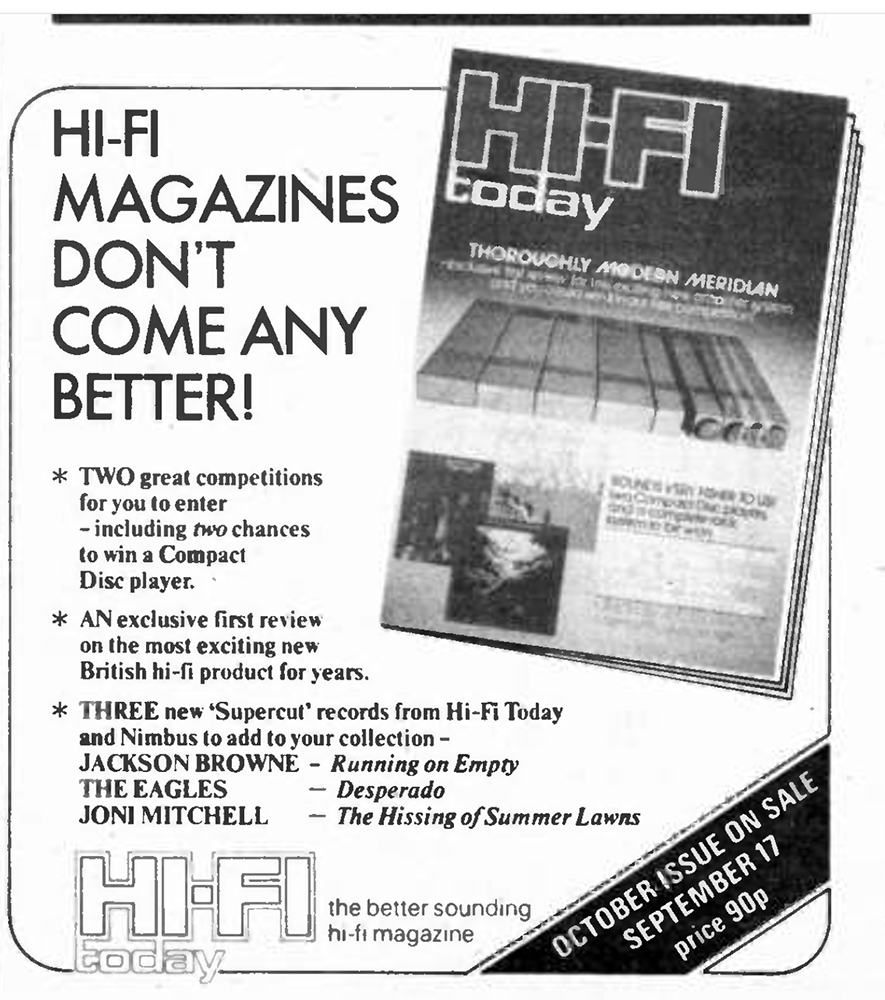
The ad announces
the addition of three new albums by Jackson Browne,
The Eagles, and Joni Mitchell.
|
|
|
PHF Number
|
Artist Name
|
Album Title
|
Artwork
|
Original Label
|
Appearance Period /
Background
|
|
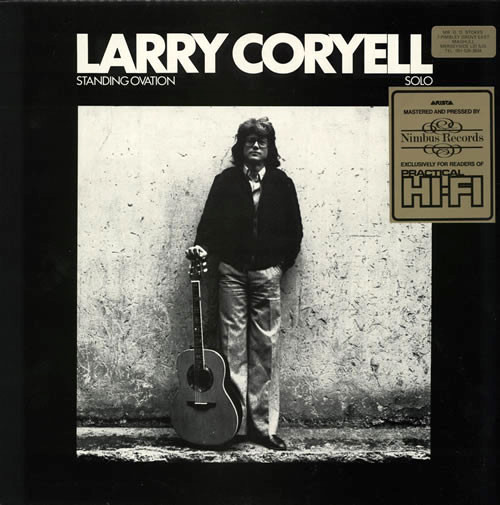
PHF 1
|
Larry Coryell
|
Standing Ovation - Solo
|
 |
Arista
|
Initial offer in Dec 1981
issue. Out of print announcement in Dec 1982 issue
due to stamper wear
|
|
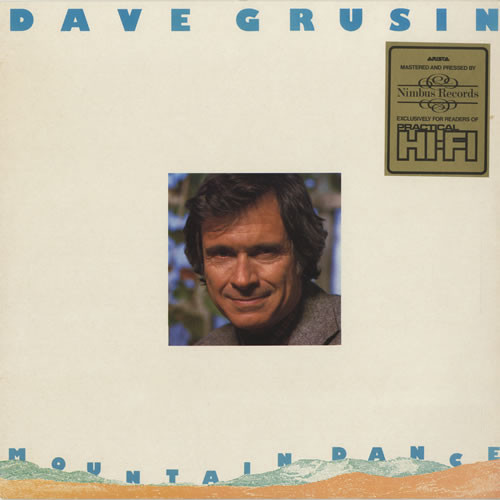
PHF 2
|
Dave Grusin
|
Mountain Dance
|
 |
Arista / GRP
|
Initial offer in Dec 1981
issue. Listed in Dec 1982 coupon
|
|
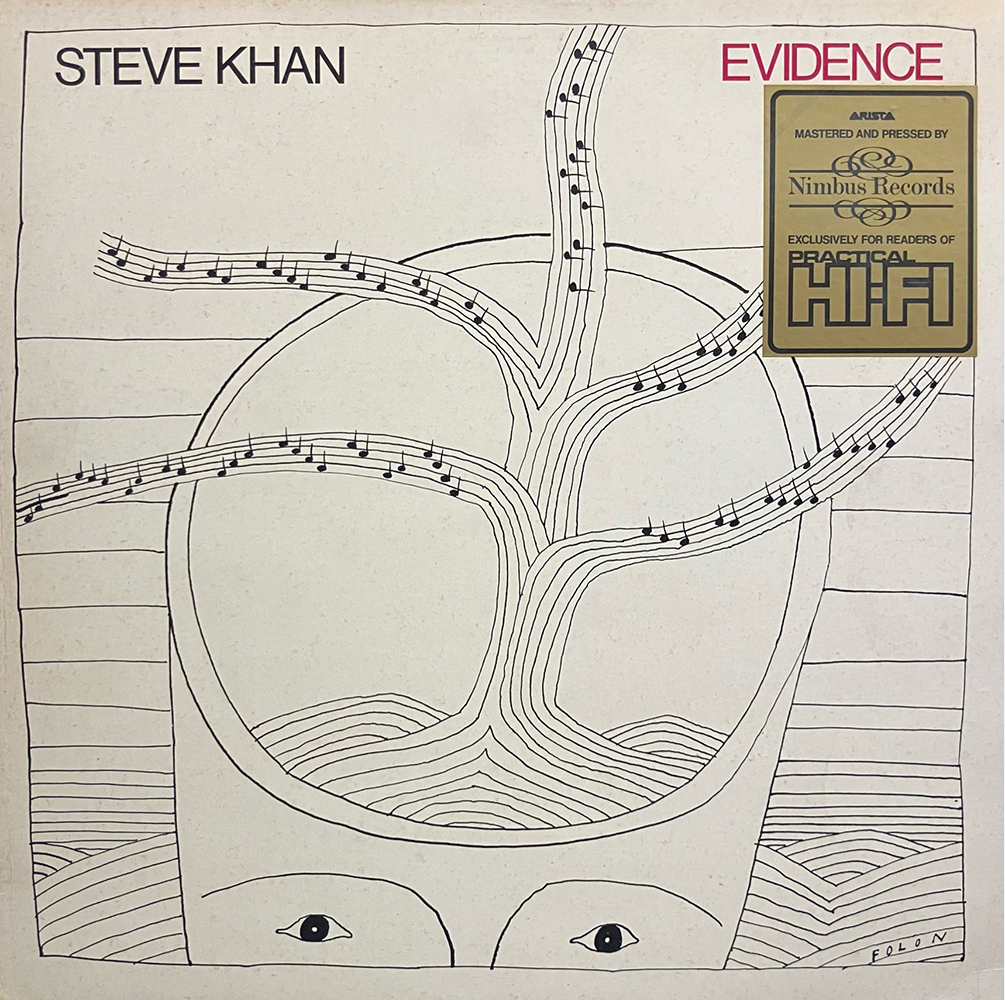
PHF 3
|
Steve Khan
|
Evidence
|
 |
Arista
|
Initial offer in Dec 1981
issue. Out of print announcement in Dec 1982 issue
due to stamper wear
|
|
PHF 4
|
John Scofield
|
Bar Talk
|
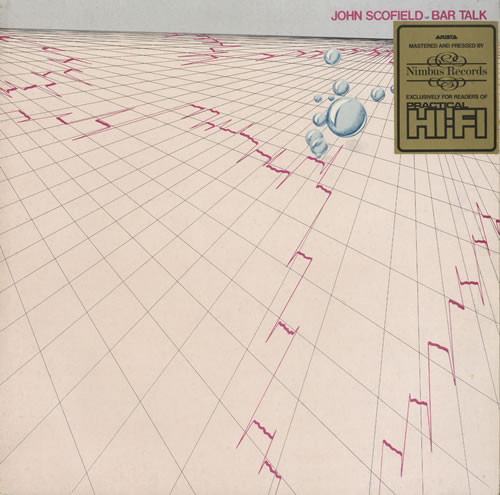 |
Arista
|
Initial offer in Dec 1981
issue. Listed in Dec 1982 coupon
|
|
PHF 5
|
David Sancious
|
The Bridge
|
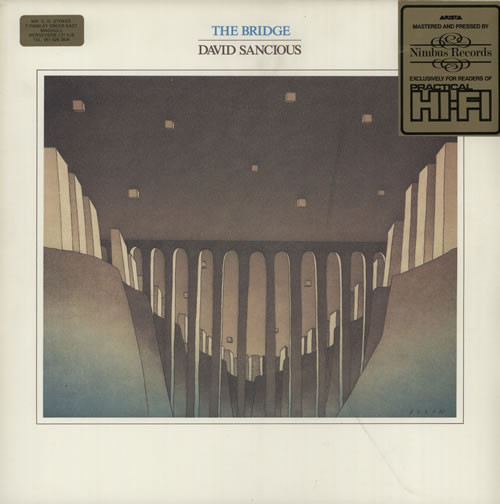 |
Arista
|
Initial offer in Dec 1981
issue. Out of print announcement in Dec 1982 issue
due to stamper wear
|
|
PHF 6
|
Gustav Mahler
|
Symphony No. 4
|
 |
Decca
|
Appeared in 1982 (Decca
Classical 1st release)
|
|
PHF 7
|
Leos Janacek / Paul
Hindemith
|
Sinfonietta / Symphonic
Metamorphoses
|
 |
Decca
|
Appeared in 1982 (Abbado /
London Symphony Orchestra)
|
|
PHF 8
|
Benjamin Britten
|
The Young Person's Guide To
The Orchestra
|
 |
Decca
|
Appeared in 1982 (Britten /
English Chamber Orchestra)
|
|
PHF 9
|
Joan Armatrading
|
Joan Armatrading
|
 |
A&M
|
Appeared in Dec 1982.
Listed on row 1, left column of Aug 1984 coupon
|
|
PHF 10
|
Quincy Jones
|
Sounds... and Stuff Like
That!
|
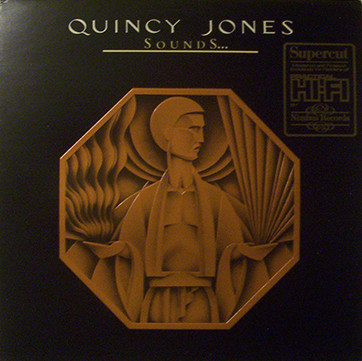 |
A&M
|
Appeared in Dec 1982.
Listed on row 2, left column of Aug 1984 coupon
|
|
PHF 11
|
Supertramp
|
Crime Of The Century
|
 |
A&M
|
Appeared in Dec 1982.
Listed on row 3, left column of Aug 1984 coupon
|
|
PHF 12
|
Little Feat
|
Feats Don't Fail Me Now
|
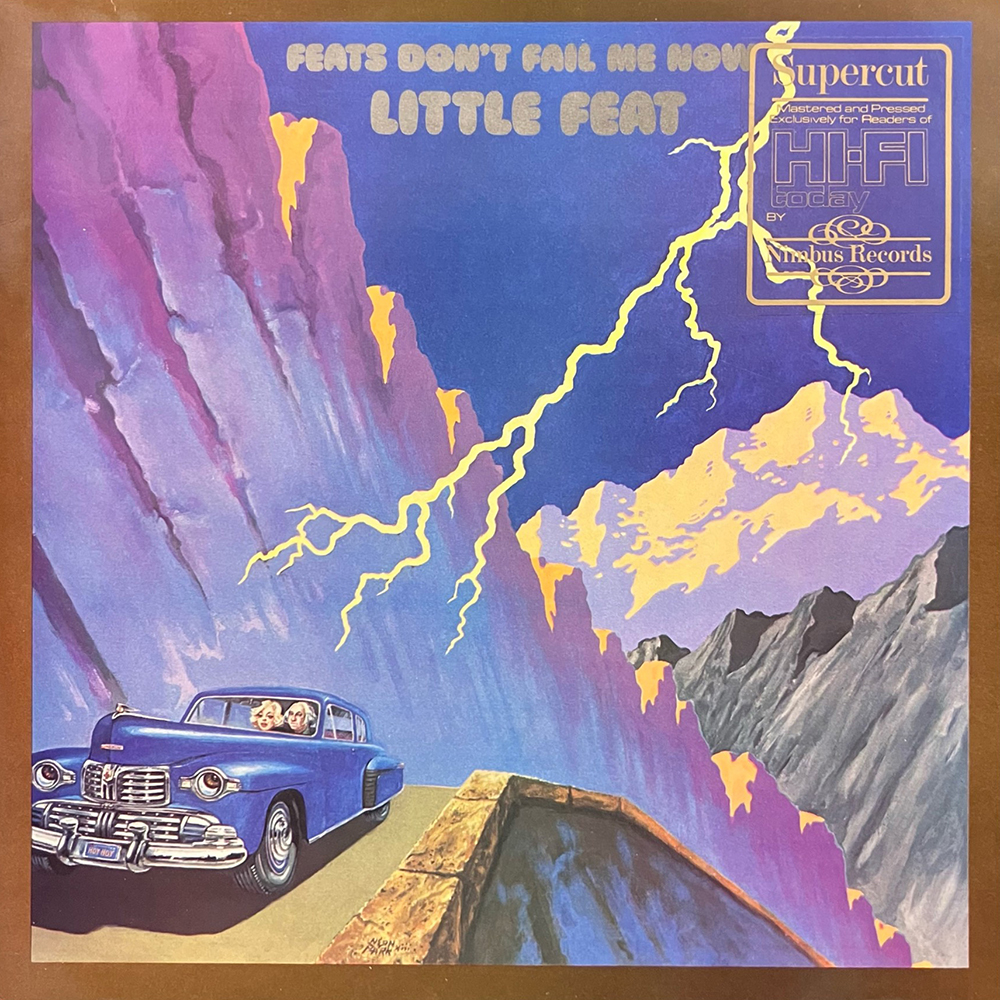 |
WEA
|
New
release in Sep 1982 issue.
Listed on row 4, left column of Aug 1984 coupon
|
|
PHF 13
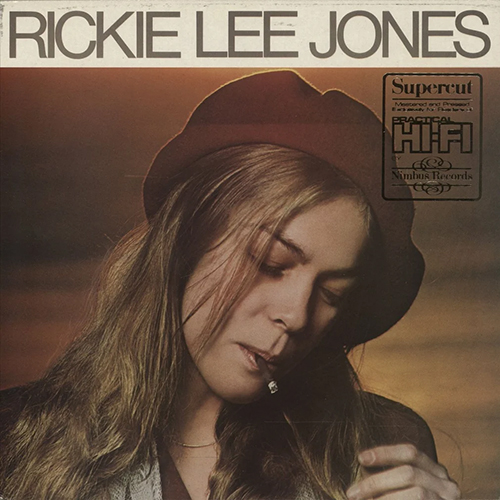
|
Rickie Lee Jones
|
Rickie Lee Jones
|
 |
WEA
|
New
release in Sep 1982 issue.
Listed on row 5, left column of Aug 1984 coupon
|
|
PHF 14
|
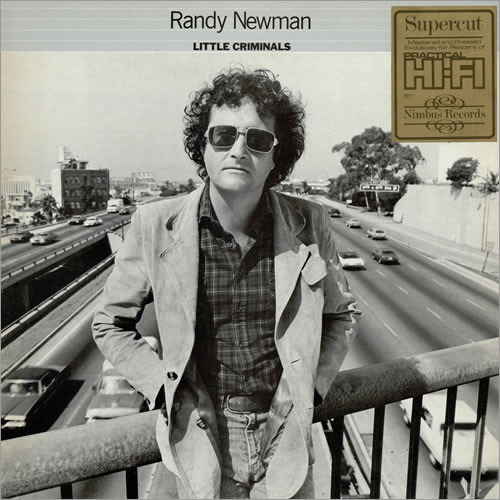
Randy Newman
|
Little Criminals
|
 |
WEA
|
New
release in Sep 1982 issue.
Listed on row 6, left column of Aug 1984 coupon
|
|
PHF 15
|
Charlie Byrd
|
The Guitar Artistry of
Charlie Byrd
|
 |
Riverside
|
Lead new release in Dec
1982 issue. Listed on row 7, left col. of Aug 1984
coupon
|
|
PHF 16
|
Frederick Delius
|
Orchestral Works
|
 |
EMI
|
Appeared in 1983 (Beecham).
Listed on row 8, left column of Aug 1984 coupon
|
|
PHF 17
|
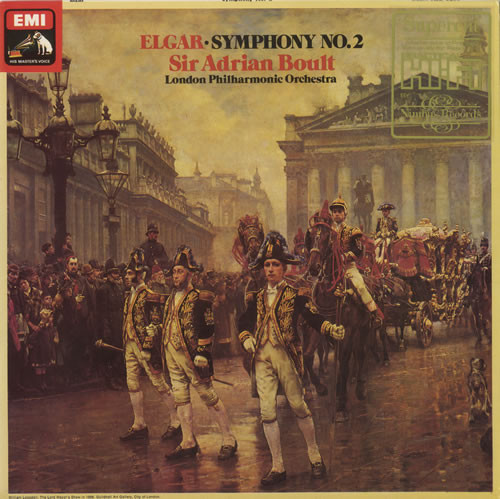
Edward Elgar
|
Symphony No. 2
|
 |
EMI
|
Appeared in 1983 (Boult).
Listed on row 9, left column of Aug 1984 coupon
|
|
PHF 18
|
Edward Elgar / Ralph
Vaughan Williams
|
String Quartets (E minor /
A minor)
|
 |
EMI
|
Appeared in 1983. Listed on
row 10, left column of Aug 1984 coupon
|
|
PHF 19
|
Ralph Vaughan Williams
|
Symphony No. 6 / The Lark
Ascending
|
 |
EMI
|
Appeared in 1983 (Boult).
Listed on row 11, left column of Aug 1984 coupon
|
|
PHF 20
|
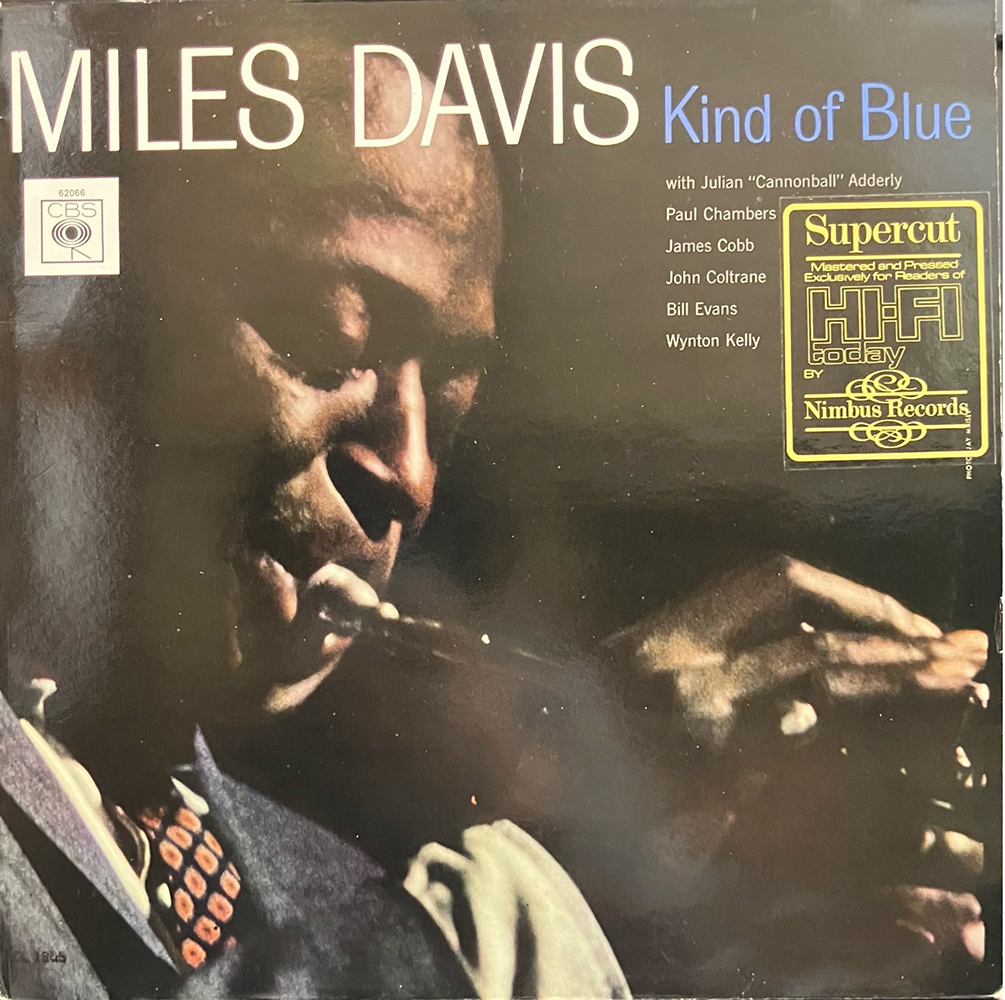
Miles Davis
|
Kind Of Blue
|
 |
CBS
|
New
release in Mar 1983 issue (CBS 1st
release). Listed on row 12, left col. of Aug 1984
coupon
|
|
PHF 21
|
Janis Ian
|
Between The Lines
|
 |
CBS
|
New
release in Mar 1983 issue.
Listed on row 13, left column of Aug 1984 coupon
|
|
PHF 22
|
Santana
|
Borboletta
|
 |
CBS
|
New
release in Mar 1983 issue.
Listed on row 14, left column of Aug 1984 coupon
|
|
PHF 23
|
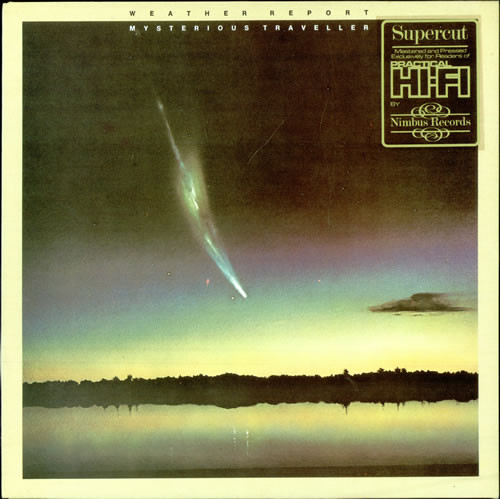
Weather Report
|
Mysterious Traveller
|
 |
CBS
|
New
release in Mar 1983 issue.
Listed on row 15, left column of Aug 1984 coupon
|
|
PHF 24
|
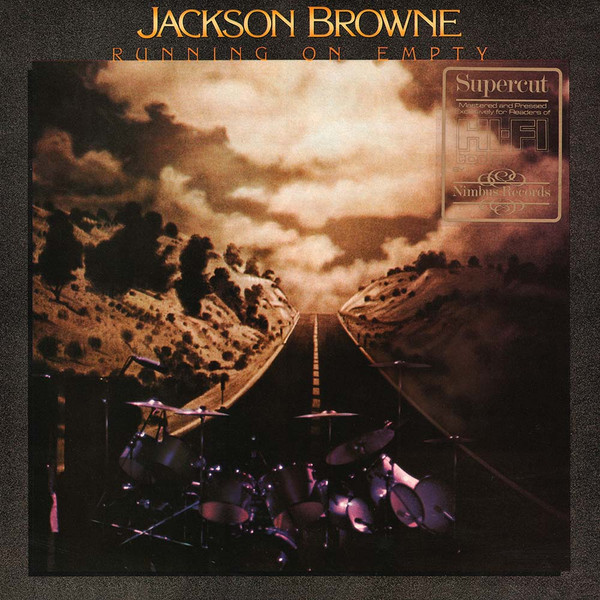
Jackson Browne
|
Running On Empty
|
 |
WEA
|
New
release in Sep 1983 issue.
Listed on row 16, left column of Aug 1984 coupon
|
|
PHF 25
|
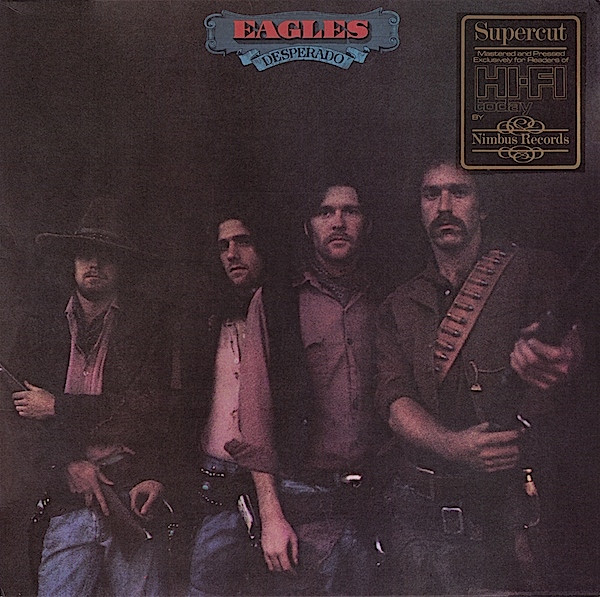
Eagles
|
Desperado
|
 |
WEA
|
New
release in Sep 1983 issue. Listed on
row 17, left column of Aug 1984 coupon
|
|
PHF 26
|
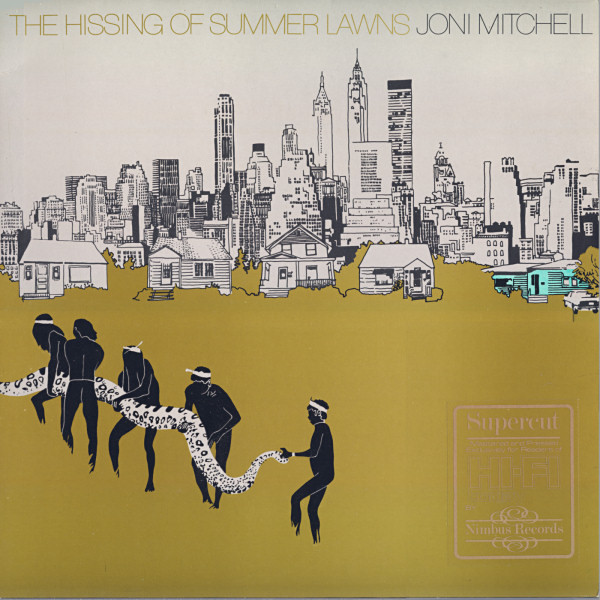
Joni Mitchell
|
The Hissing Of Summer Lawns
|
 |
WEA
|
New
release in Sep 1983 issue.
Listed on the bottom row 18, left col. of Aug 1984
coupon
|
|
PHF 27
|
The Beatles
|
Sgt. Pepper's Lonely Hearts
Club Band
|
 |
EMI
|
New release in Aug 1984
issue?? Listed on row 1 of the special EMI
block, top right
|
|
PHF 28
|
Earl Klugh
|
Living Inside Your Love
|
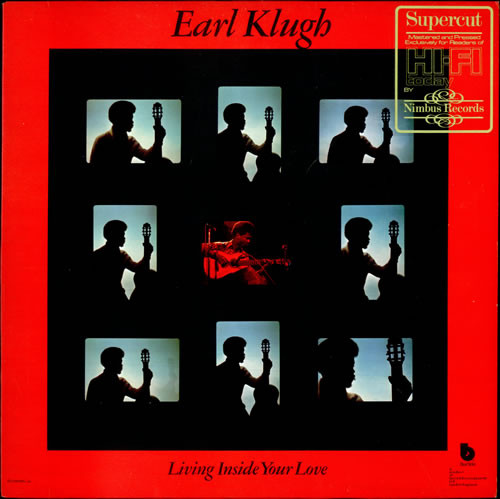 |
EMI
|
New release in Aug 1984
issue?? Listed on row 2 of the special EMI
block, top right
|
|
PHF 29
|
Pink Floyd
|
Wish You Were Here
|
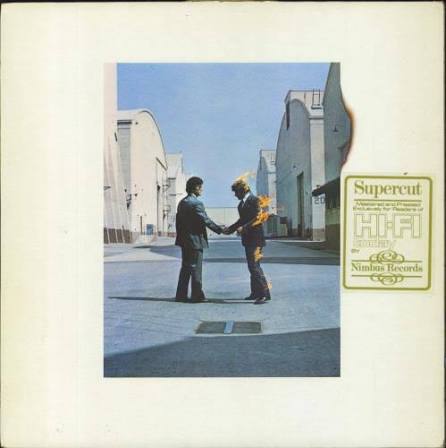 |
EMI
|
New release in Aug 1984
issue?? Listed on row 3 of the special EMI block,
top right
|
|
PHF 30
|
Paul McCartney & Wings
|
Band On The Run
|
 |
EMI
|
New release in Aug 1984
issue?? Listed on row 4 of the special EMI
block, top right, final series number
|
|
|
3.
Examination of the Release Date of
The Beatles' "Sgt. Pepper's Lonely Hearts Club Band"
|
Here is an examination of the release
date for The Beatles' "Sgt. Pepper's Lonely Hearts
Club Band" (Catalog number: PCS 7027), which is
among the most popular of the Nimbus Supercut
releases.
|
|
- First Appearance in Order Coupons: This
work appeared in the order coupon at least as
early as the August 1984 issue of Hi-Fi Today.
In the upper right column of the coupon for that
issue, four works were listed together under
"from the EMI label": The Beatles' Sgt. Pepper,
Earl Klugh's Living Inside Your Love, Pink
Floyd's Wish You Were Here, and Paul McCartney
& Wings' Band on the Run.
- Identification of the PHF Number: In
the order of the coupons, the final number in
the WEA section at the bottom of the left column
is PHF 26 (Joni Mitchell), and Sgt. Pepper,
located at the top of the right column, is
assigned PHF 27.
- Publishing Cycle of the UK Publishing
Industry and Substantive Release Period: Advertisements for other issues of Hi-Fi Today indicate that regular issues were generally released on the third Saturday of the preceding month. If the same schedule was followed in 1984, the August 1984 issue can be estimated to have gone on sale around 21st July 1984, a Saturday.
- Timing of Shipping and Delivery to Readers:
The order form includes a note stating, "Please
allow 28 days for delivery." Copies may have reached readers from around mid-August through September 1984, depending on when orders were placed and how long processing and delivery took.
|
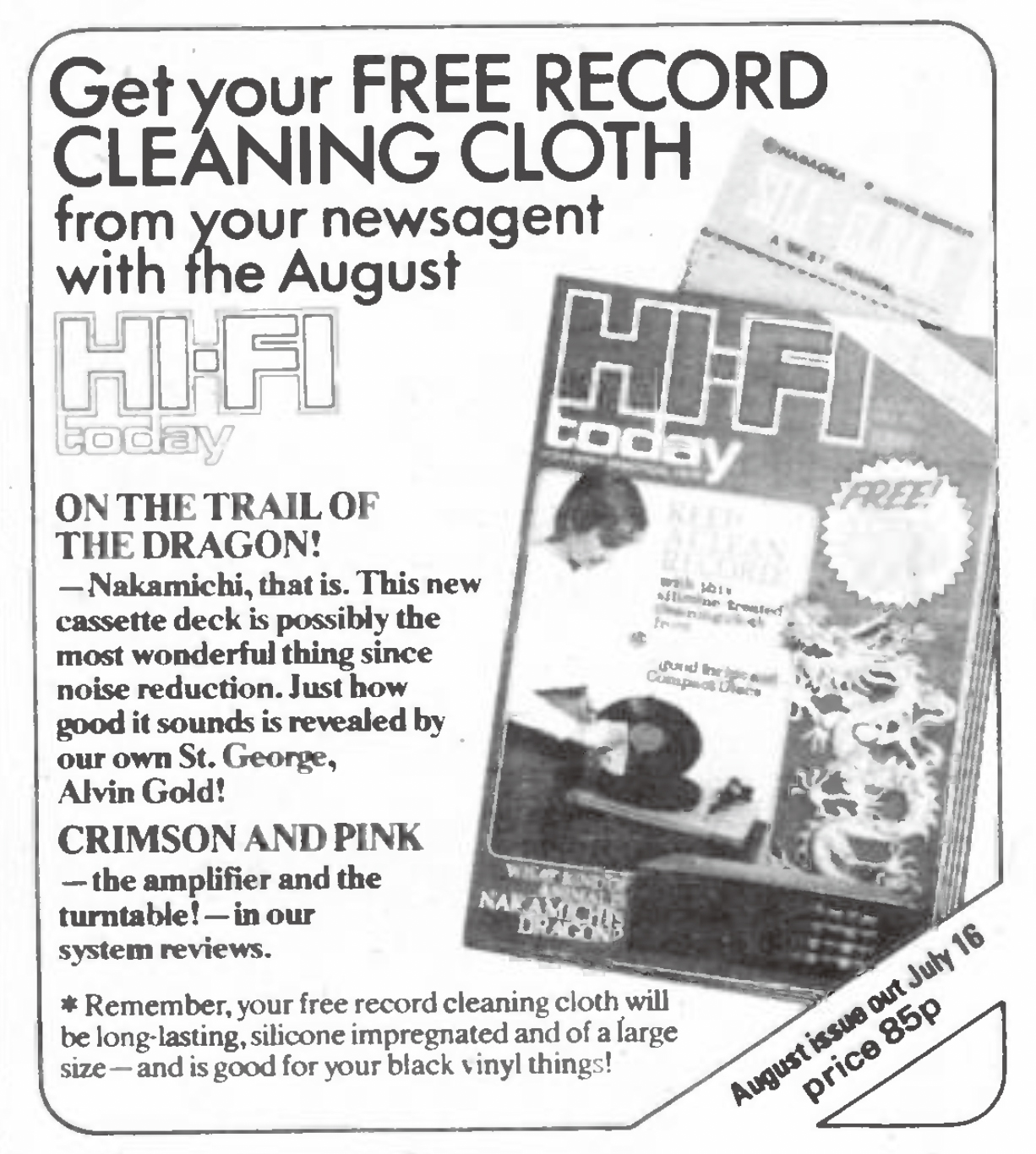
New Musical
Express
(16 July 1983)
|
|
|
Conclusion:
Based on the
information currently available, it can be
inferred that orders for the Nimbus Supercut
edition of The Beatles' Sgt.
Pepper's Lonely Hearts Club Band
were being accepted by the August 1984 issue of
Hi-Fi Today,
which was released in mid-July 1984.
It is possible that Sgt.
Pepper had already been
offered in an earlier issue. However, the fact
that it was still being offered in the August
1984 issue shows that orders were still being invited at that time. The pressing quantity is generally reported to have been around 1,000 copies, but the advertisement does not establish how many had been produced or sold by then. As the records were
presumably pressed and shipped in batches after
orders had been collected, it is likely that the
actual pressing and shipment of Sgt.
Pepper took place after the
August issue's order period, probably from late
August into September 1984.
Therefore, while the exact release date
remains unconfirmed, the available evidence
suggests that copies were most likely shipped to customers in late
August or September 1984.
However, this assumption would not hold true if the
records had been pressed in advance and were shipped
sequentially as orders were received.
Therefore, if it turns out that the announcement was
made earlier in 1984, the possibility of "sequential
shipping" must be considered, and I plan to
re-evaluate the timing of its initial release.
|
Source: UK
Data Service / JICNARS
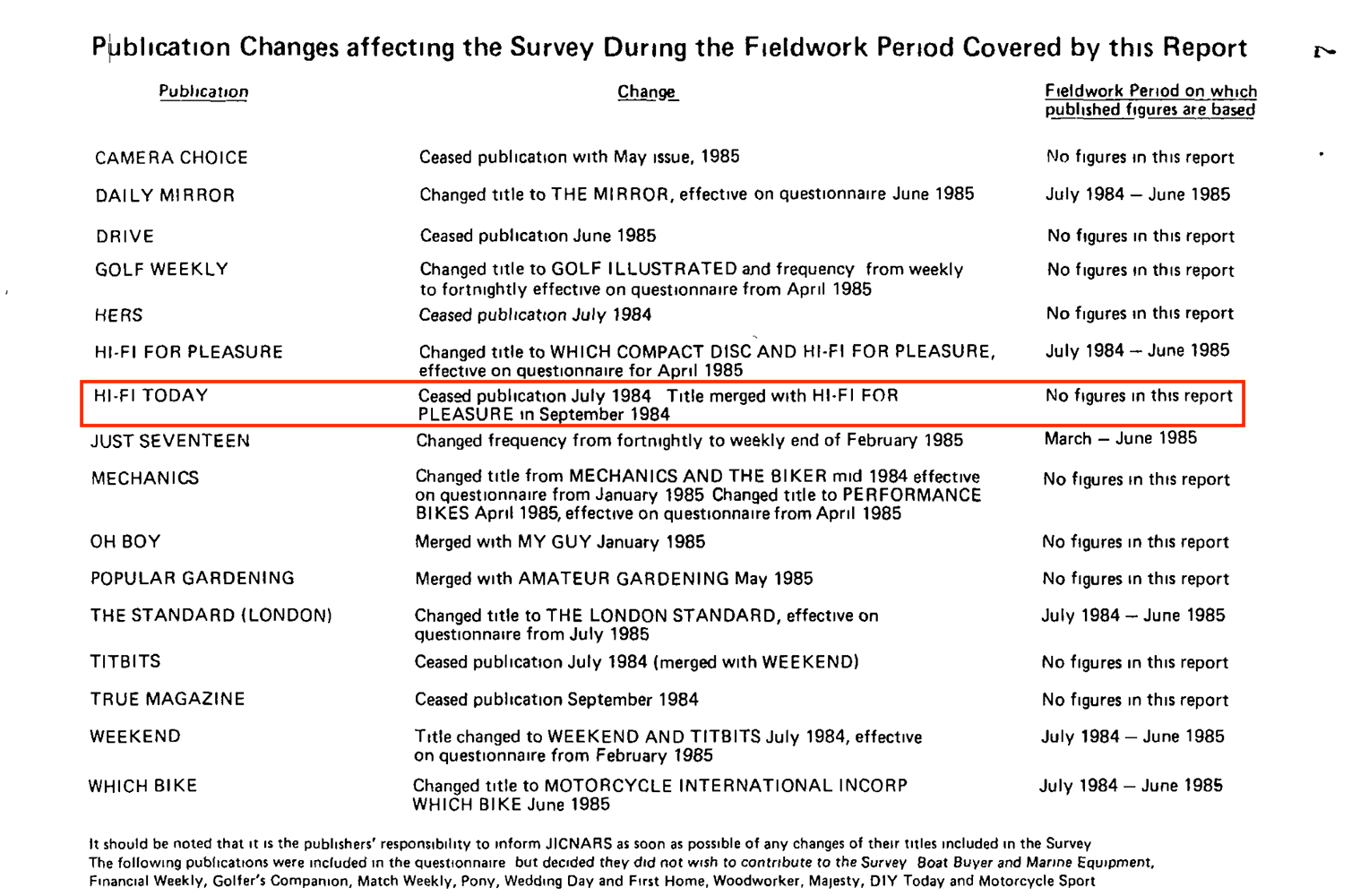 |
Finally, referring to the publication records in "UK
Data Service / JICNARS", it is noted that "Hi-Fi
Today" ceased publication in July 1984 and was
subsequently merged into "Hi-Fi FOR PLEASURE" in
September 1984.
Considering that the August 1984 issue of Hi-Fi
Today was actually released in mid-July, this issue
effectively marked the end of the magazine's
independent run.
Therefore, it can be inferred that the Nimbus
Supercut series promoted in this issue—featuring
albums by The Beatles, Earl Klugh, Pink Floyd, and
Paul McCartney & Wings—was the
final set of records produced for
this project.
|
|