


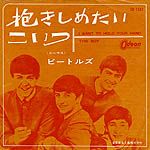
|
TRACK LISTING
|
SIDE 1
|
I Want To Hold Your Hand (Lennon-McCartney) | |||
|
SIDE 2
|
This Boy (Lennon-McCartney) | ||||
|
RELEASE DATE
|
5th February.1964/First Press | ||||
| SIDE 2 -->Click! | DISK -->Click! | ||||
 |
 |
 |
 |
 |
|
|
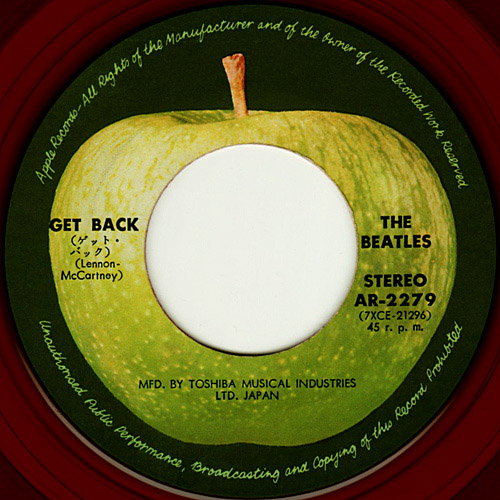
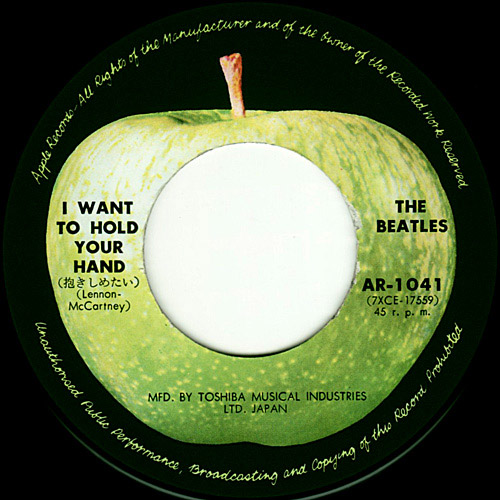
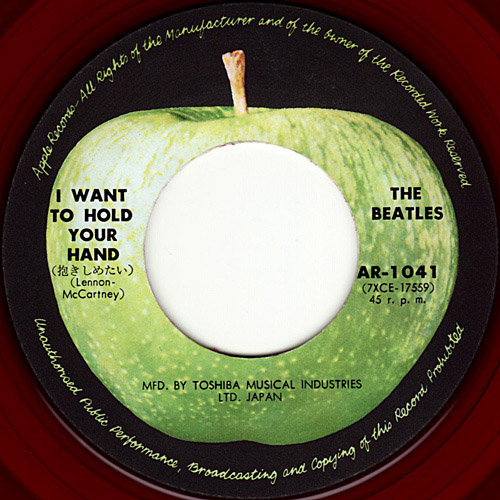
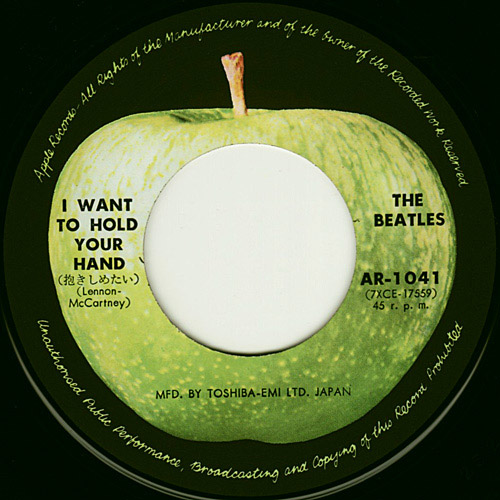
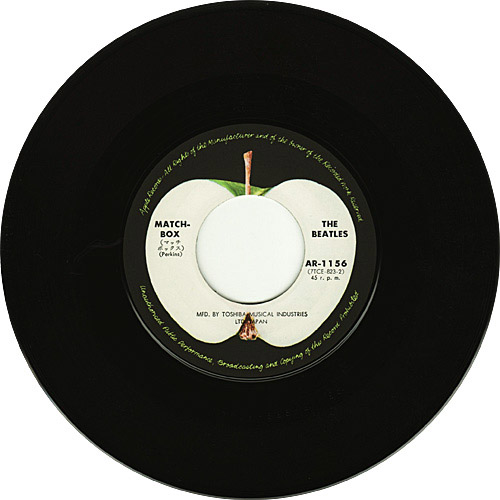
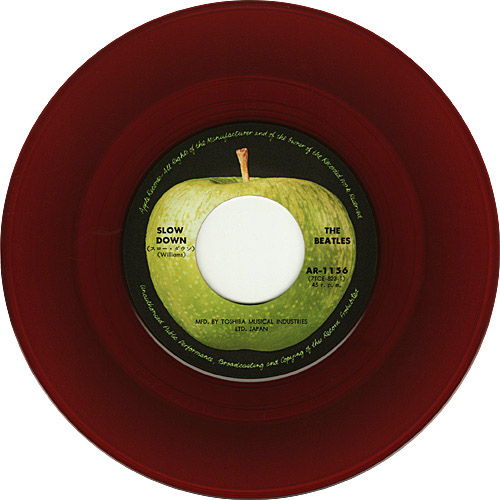
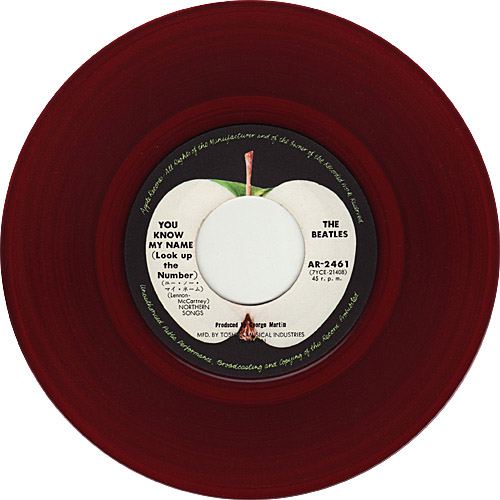
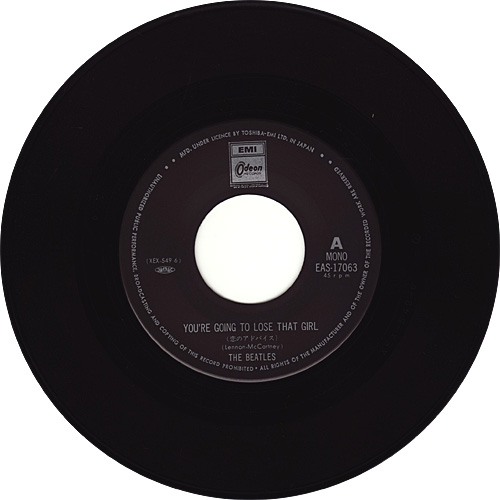
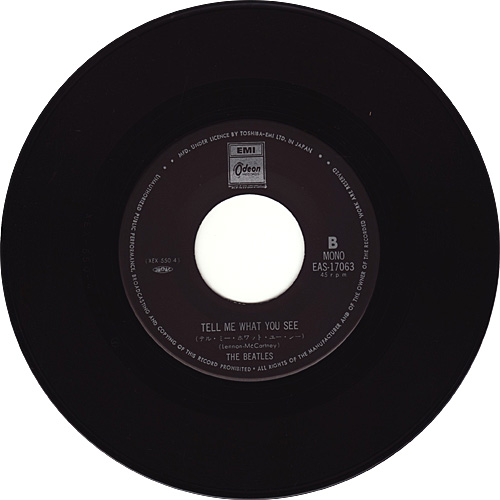
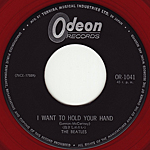
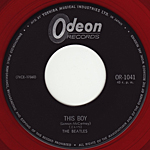
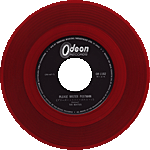
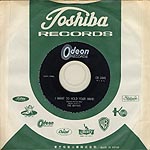
LABEL CLOSE UP
|
|||||
 |
 |
 |
 |
||
|
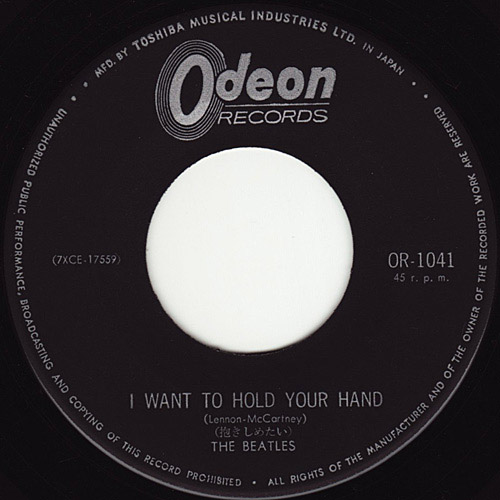
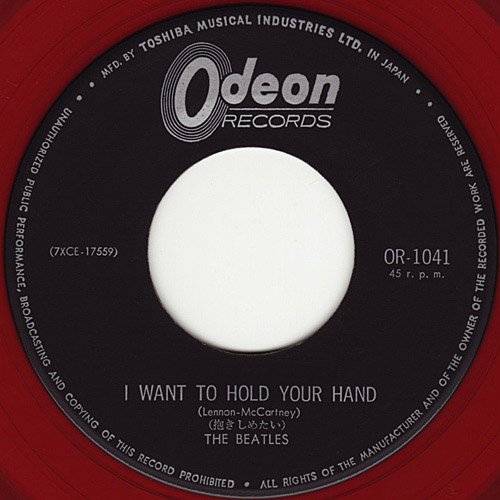
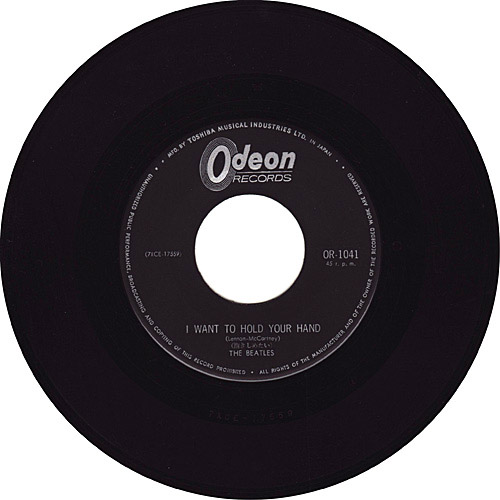
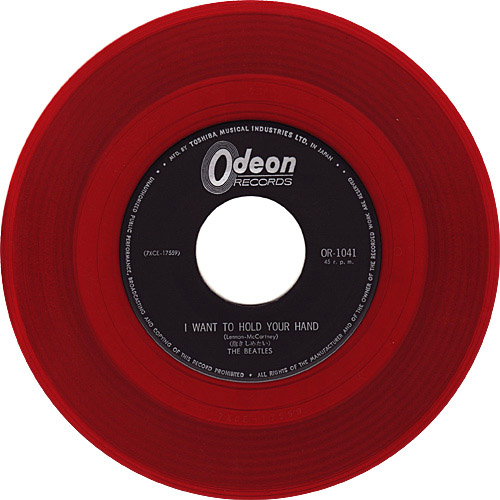
The words "MFD. BY TOSHIBA MUSICAL
INDUSTRIES LTD. IN JAPAN" was printed at the perimeter.
|
|||||
|
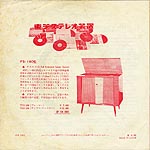
LYRIC SHEET:
FRONT CLOSE UP
|
LYRIC SHEET: INSIDE CLOSE UP | LYRIC SHEET: BACK CLOSE UP | |||
 |
 |
 |
 |
||
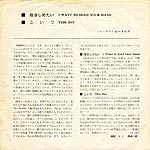
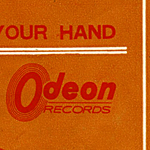
| Odeon logomark was printed at the upper
of the lyric sheet. The words "Toshiba Musical Industries Ltd." was printed at the bottom of the lyric sheet. |
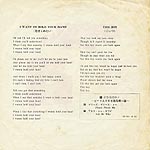
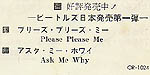
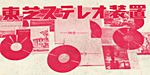
The first Beatles single in Japan, "Please Please Me/Ask Me Why" was introduced at the lyric sheet. | "Toshiba Audio system" advertising was introduced at the back of the lyric sheet. | |||
| LYRIC SHEET: BACK CLOSE UP | |||||
 |
Two key identifying characteristics with
which the collector should be familiar are the circled
letter symbol and the price. There are important to note because TOSHIBA would reprint records from time to time without changing catalog numbers but with different symbols and price designations. "MADE IN JAPAN", "symbol=F" and "¥330" were printed at the bottom of the lyric sheet. |
||||
|
OTHER ITEM
|
|||||
|
-
|
|||||
| Odeon type 1 | |||||
| OR-1041 | |||||
|
SIDE 1
|
7XCE-17559 26 | ||||
|
SIDE 2
|
7XCE-17560 18 | ||||
| D4 | |||||
| Red | |||||
| DISK EDGE | Flat Edge | ||||
| Bifold | |||||
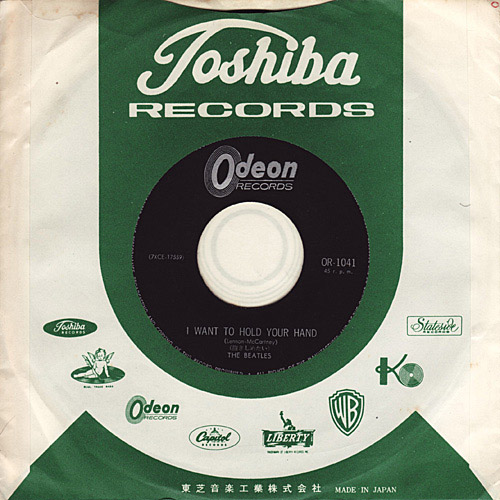
| Toshiba Records Sleeve type 1 | |||||
|
MIX
|
Mono | ||||
|
COVER
|
Toshiba Ongaku kogyo Kabusikigaisha | ||||
|
LABEL
|
MFD. BY TOSHIBA MUSICAL INDUSTRIES LTD. IN JAPAN | ||||
| F-330YEN | |||||
|
COMMENTS
|
Toshiba released the
first Japanese record featuring the Beatles by name as a
group: "I Want To Hold Your Hand/This Boy (OR-1041)". When this record was released in 1964, Toshiba's official name was "Toshiba Musical Industries Ltd." and they used the Odeon label for this and subsequent Beatles releases. The LPs, singles and EPs were initially released on both red and black vinyl, with the red variants reportedly offering particularly good sound quality. They are particularly sought-after by audiophiles, and are considerably rarer than the black vinyl versions - red vinyl signifies first pressings of a release. Nearly all of the Japanese Beatles singles were issued with "bifold" picture lyric sheet and company inner sleeve. "Please please me" has a lower catalog number and was scheduled to be the first Odeon Beatles single. However, "I want to hold your hand" was rush released to the market first. |
||||
| Company
name |
Company Name credit |
Label Type |
Comments |
||
| Odeon |
Apple |
EMI/Odeon |
|||
| TOSHIBA
MUSICAL INDUSTRIES LTD. (- Sep.1973) |
MFD. BY TOSHIBA MUSICAL
INDUSTRIES LTD. IN JAPAN |
Odeon Type-1 |
- |
- |
|
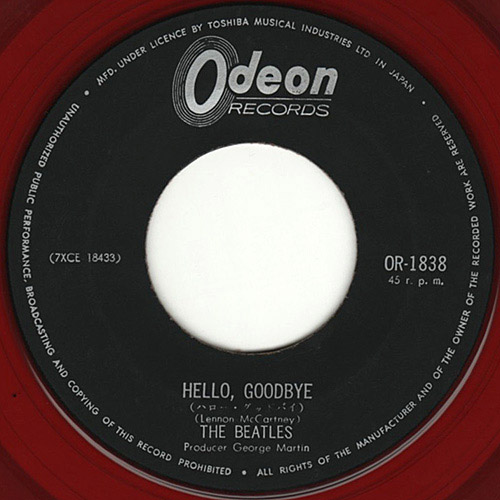
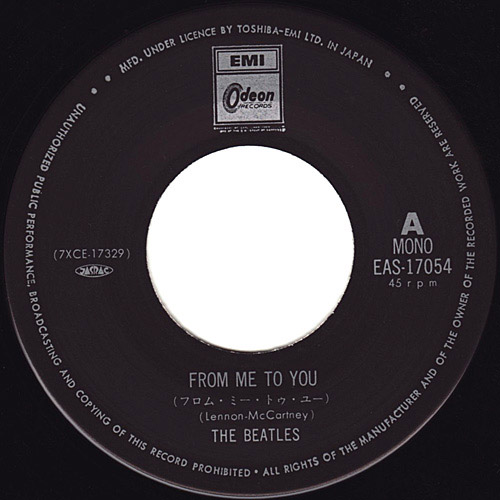
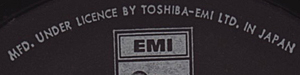
| MFD. UNDER LICENCE BY
TOSHIBA MUSICAL INDUSTRIES LTD. IN JAPAN |
Odeon Type-2 |
- |
- |
||
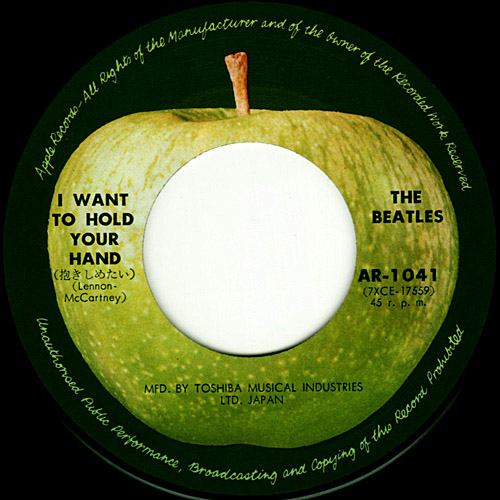
| MFD.
BY TOSHIBA MUSICAL INDUSTRIES LTD. JAPAN |
- |
Apple Type-1 |
- |
Dark Green Apple |
|
| - |
Apple Type-2-1 |
- |
Light
Green Apple |
||
| TOSHIBA-EMI
LTD. (Oct. 1973 - ) |
MFD. BY TOSHIBA-EMI LTD. JAPAN | -- |
Apple Type-2-2 |
- |
|
| MFD. UNDER LICENCE BY TOSHIBA-EMI LTD. IN JAPAN | - |
- |
EMI/Odeon Type-1 |
||
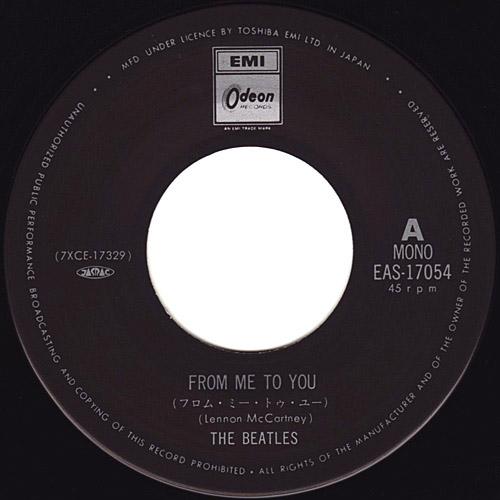
| - |
- |
EMI/Odeon Type-2 |
AN EMI TRADE MARK | ||
| Prefix | Label | Vinyl |
| OR | Odeon | Black |
| Red | ||
| AR | Apple | Black |
| Red | ||
| EAR | Apple | Red |
| EAR | EMI/Odeon | Black |
| EAS | EMI/Odeon | Black |
| The numbering system for singles
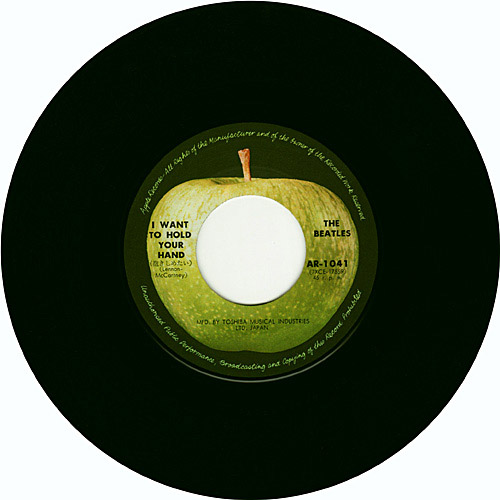
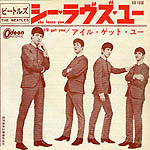
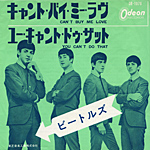
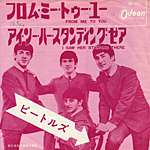
is a lot of simpler. From 1964-1968, Odeon singles were issued in the form "OR-****". The change from the Odeon to the Apple label starting in 1969 also resulted in the reissue of all singles in the form "AR-****". Only the prefixes of the reissues were changed; the numbers remained the same.When the label changed to EMI/Odeon in 1976, most of the singles were reissued and renumbered sequentially with EAR prefixes. In 1980, some singles were reissued in a mono series and renumbered sequentially with EAS prefixes. |
| Besides
good sound and quality printing, Japanese records also
offered some other things of interest to the
collector. One of the primary manufacturing
companies in Japan, Toshiba, pressed a lot of their
records on red, “Everclean” vinyl from 1958 through 1974
(maybe). While not pressed as collectors’ items,
these red vinyl pressings are more sought out by
collectors than their black vinyl counterparts. The
Everclean vinyl was designed to be less prone to
collecting static electricity and dust than the more
common black vinyl. |
 Toshiba Kawaguchi Factory, in Saitama |
| All of the Toshiba's red vinyl records were exclusively manufactured by its factory in Kawaguchi, Saitama. |
| Catalog Number |
Odeon type1 |
Odeon type2 |
Apple type1 |
Apple
type2-1 |
Apple type2-2 |
EMI/Odeon type1 |
EMI/Odeon type2 |
||||||||
| Red |
BK |
Red |
BK |
Red |
BK |
Red |
BK |
Red |
BK |
Red |
BK |
Red |
BK |
||
| OR-1024 | 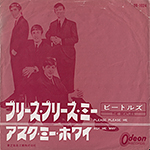 |
Yes | Yes | Yes |
Yes |
Yes |
Yes |
- |
- |
- |
- |
||||
| OR-1041 | |
Yes | Yes | Yes |
Yes |
Yes |
Yes |
- |
- |
- |
- |
||||
| OR-1058 |
 |
Yes | Yes | Yes |
Yes |
Yes |
Yes |
- |
- |
- |
- |
||||
| OR-1076 |
 |
Yes | Yes | Yes |
Yes |
Yes |
Yes | - |
- |
- |
- |
||||
| OR-1077 |
 |
Yes | Yes | Yes |
Yes |
Yes |
Yes |
- |
Yes | - |
Yes |
||||
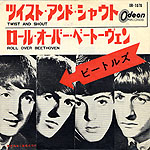
| OR-1078 |
 |
Yes | Yes | Yes |
Yes |
Yes |
Yes |
- |
- |
- |
- |
||||
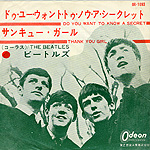
| OR-1093 |
 |
Yes | Yes | Yes |
Yes |
Yes |
Yes |
- |
Yes | - |
|||||
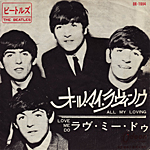
| OR-1094 |
 |
Yes | Yes | Yes |
Yes |
Yes |
Yes |
Yes |
- |
- |
- |
- |
|||
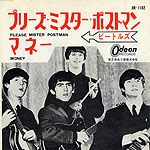
| OR-1102 |
 |
Yes | Yes | Yes |
Yes |
Yes |
- |
- |
- |
- |
|||||
| OR-1119 |
 |
Yes | Yes | Yes |
Yes |
Yes | Yes | - |
- |
- |
- |
||||
| OR-1139 |
|
Yes | Yes | Yes | Yes | Yes | - |
- |
- |
- |
|||||
| OR-1142 |
 |
Yes |
Yes |
Yes |
- |
- |
- |
- |
- |
- |
- |
- |
- |
- |
|
| OR-1145 |
|
Yes | Yes | Yes | Yes | Yes | Yes | - |
- |
- |
- |
||||
| OR-1155 | 
|
Yes | Yes | Yes | Yes | Yes | Yes | - |
- |
- |
- |
||||
| OR-1156 |
 |
Yes | Yes | Yes | Yes | Yes | Yes | - |
Yes | - |
|||||
| OR-1172 |
 |
Yes | Yes | Yes | Yes | Yes | - |
Yes | - |
Yes | |||||
| OR-1179 |
 |
Yes | Yes | Yes |
Yes | Yes | Yes | - |
- |
- |
- |
||||
| OR-1189 |
 |
Yes | Yes | Yes | Yes | Yes | - |
Yes | - |
Yes | |||||
| OR-1192 |
 |
Yes | Yes | Yes | Yes | Yes | - |
- |
- |
- |
|||||
| OR-1193 |
 |
Yes | Yes | Yes | Yes | Yes | Yes | - |
- |
Yes | |||||
| OR-1194 |
 |
Yes | Yes | Yes | Yes | Yes | - |
Yes | - |
Yes | |||||
| OR-1195 |
 |
Yes | Yes |
|
Yes | Yes | Yes | - |
Yes | - |
Yes | ||||
| OR-1261 |
 |
Yes | Yes | Yes |
Yes | Yes | Yes | Yes | - |
- |
- |
- |
|||
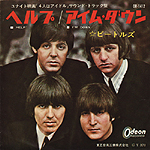
| OR-1412 |
 |
Yes | Yes | Yes | Yes | Yes | - |
- |
- |
- |
|||||
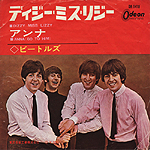
| OR-1418 |
 |
Yes | Yes | Yes | Yes | Yes | Yes | - |
- |
Yes | |||||
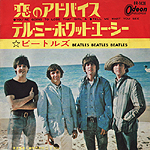
| OR-1426 |
 |
Yes | Yes | Yes | Yes | Yes | - |
Yes | - |
|
|||||
| Catalog No. |
Odeon type1 |
Odeon type2 |
Apple type1 |
Apple type2-1 |
Apple type2-2 |
EMI/Odeon type1 |
EMI/Odeon type1 |
||||||||
| Red |
BK |
Red |
BK |
Red |
BK |
Red |
BK |
Red |
BK |
Red |
BK |
Red |
BK |
||
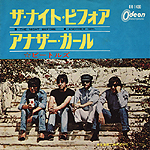
| OR-1430 |
 |
Yes | Yes | Yes | Yes | - |
Yes | - |
|||||||
| OR-1437 |
 |
Yes | Yes | Yes |
Yes |
Yes | Yes | Yes | - |
- |
- |
- |
|||
| OR-1445 |
 |
Yes | Yes | Yes |
Yes | Yes | Yes | Yes | - |
- |
- |
- |
|||
| OR-1510 |
 |
Yes | Yes | Yes | Yes | Yes | Yes | - |
Yes | - |
|||||
| OR-1529 |
 |
Yes | Yes | Yes |
Yes | Yes | Yes | - |
- |
- |
- |
||||
| OR-1578 |
 |
Yes | Yes | Yes |
Yes | Yes | Yes | - |
- |
- |
- |
||||
| OR-1685 |
 |
Yes | Yes | Yes | Yes | Yes | - |
- |
- |
- |
|||||
| OR-1763 |
 |
Yes | Yes | Yes | Yes | Yes | - |
- |
- |
- |
|||||
| OR-1838 |
 |
- |
- |
Yes |
Yes |
Yes | Yes | Yes | - |
- |
- |
- |
|||
| OR-1902 |
 |
- |
- |
Yes |
Yes |
Yes | Yes | Yes | - |
- |
- |
- |
|||
| OR-2121 |
 |
- |
- |
Yes |
Yes |
Yes | Yes | Yes | Yes | - |
- |
- |
- |
||
| AR-2207 |
 |
- |
- |
- |
- |
Yes | Yes | Yes | Yes | - |
- |
- |
- |
||
| AR-2279 |
 |
- |
- |
- |
- |
Yes | Yes | Yes | Yes | Yes | - |
- |
- |
- |
|
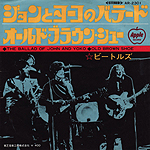
| AR-2301 |
 |
- |
- |
- |
- |
Yes | Yes | Yes | Yes | - |
- |
- |
- |
||
| AR-2400 |
 |
- |
- |
- |
- |
Yes | Yes | Yes | Yes | - |
- |
- |
- |
||
| AR-2461 |
 |
- |
- |
- |
- |
Yes | Yes | Yes | Yes | Yes | - |
- |
- |
- |
|
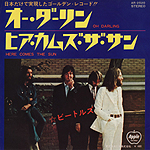
| AR-2520 |
 |
- |
- |
- |
- |
Yes | Yes | Yes | Yes | - |
- |
- |
- |
||
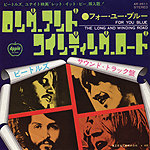
| AR-2611 |
 |
- |
- |
- |
- |
Yes | Yes | - |
- |
- |
- |
||||
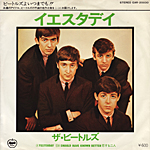
| EAR-20030 |
|
- |
- |
- |
- |
- |
- |
- |
- |
- |
Yes | - |
- |
- |
- |
| EAR-20050 |
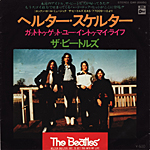
|
- |
- |
- |
- |
- |
- |
- |
- |
- |
- |
- |
Yes | - |
|
| EAR-20221 |
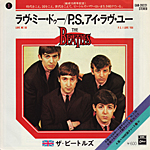 |
- |
- |
- |
- |
||||||||||
| EAR-20223 | 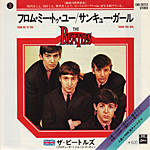 |
- |
- |
- |
- |
||||||||||
| EAR-20501 |
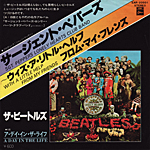 |
- |
- |
- |
- |
- |
- |
- |
- |
- |
- |
- |
Yes | - |
|
| EAS-17158 |
 |
- |
- |
- |
- |
- |
- |
- |
- |
- |
- |
- |
- |
Yes | |
| EAS-17226 |
 |
- |
- |
- |
- |
- |
- |
- |
- |
- |
- |
- |
Yes (custom) |
- |
|
| Most if not all
of the red vinyl OP Odeon EPs were manufactured with an
ingredient intended to prevent the buildup of static
electricity on the disks. TOSHIBA's trademark for records
manufactured with this ingredient is "Ever Clean",
and special efforts were made to promote this feature. The
"Ever Clean" trademark appears as shown below on the back
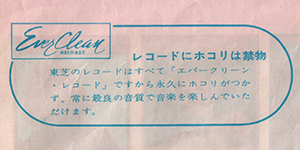
cover or (if applicable ) inside the gatefold of an LP. "Ever Clean" seems to have been used on LPs only. EPs or Singles bearing the trademark cannot be found. |
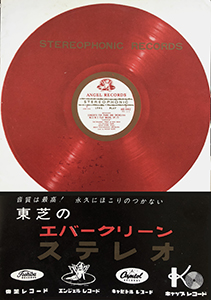 booklet: "Toshiba Ever Clean (July 1960)" |
|
 |
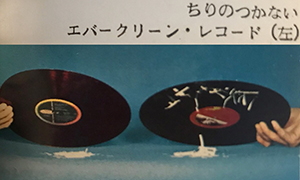 |
| "EverCrean" Dust is prohibited on records All Toshiba records are "Ever Clean", so you can always enjoy the music with the best sound quality without dust. (printed on the inner sleeve) |
No dust on Everclean Records (left) |
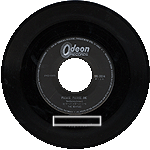
| Matrix numbers are alphanumeric
codes (and on occasion, other symbols) stamped or hand
written (or a combination of the two) into the run-out
groove area of a gramophone record. This is the
non-grooved area between the end of the final song on a
record's side and the label, also known as the run-off
groove area, end-groove area, matrix area, or "dead wax". There are two parts of the matrix number to be considered: the "main number", which is usually printed on the label as well, and "extra information" which can include a cut or take number. The most important part of the "extra information" is usually the cut number, which is a suffix to the main number. For example, matrix number 12345 is seen on a label, but examination of the run-out groove area reveals number 12345–3, which indicates this is the third cut of this side. It is not unusual to find records with a different cut number on each side. (From "Wikipedia, the free encyclopedia") |
|
 |
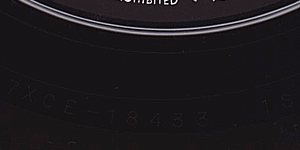 Matrix Number: 7XCE - 18433 1S |
 |
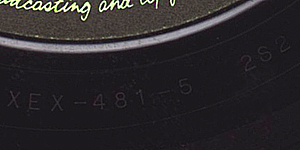 Matrix Number: XEX - 481 - 5 2 S 2 |
| According to "The Illustrated
Guide To The '60s Japanese LP With Obi (Published by:
Shinko Music Entertainment Co., Ltd.)", the inscription
area may also contain cutting dates. The press mark can be almost found stamped into the deadwax at the 9 o'clock position of side-1. |
| from October 1961 to May 1973 | |||||
| Press Mark: Alphabet +
Number ex.) "E4"=1964 May ex.) "M5"=December 1965 |
|||||
| A | B | C | D | E | F |
| January | February | March | April | May | June |
| G | H | J | K | L | M |
| July | August | September | October | November | December |
| from June 1973 - | |||||
| Press
Mark: Number + Number, or Number + Alphabet ex.) "3-7"=1973 July ex.) "4-X"=1974 October |
|||||
| 1 | 2 | 3 | 4 | 5 | 6 |
| January | February | March | April | May | June |
| 7 | 8 | 9 | X | Y | Z |
| July | August | September | October | November | December |
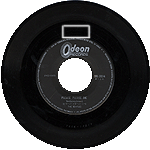 |
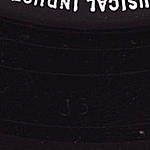 Press Mark: J6=September 1966 |
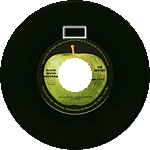 |
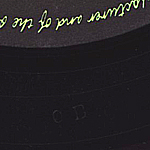 Press Mark: 0B=1970 February |
| The groove guard (edge of the record) was introduced in 1954 by RIAA (maybe).The groove guard is not only protected the record grooves when sliding the disc into the hard cardboard cover and when taking it out, but saved an important amount of vinyl. |
| Odeon Label | Apple Label | EMI/Odeon Label | ||
| - 1966? | 1966? - 1968? | 1968- | All of the disks | All of the disks |
 |
 |
 |
|
|
| Flat Edge | Knife Edge | Groove Guard | Groove Guard | Groove Guard |
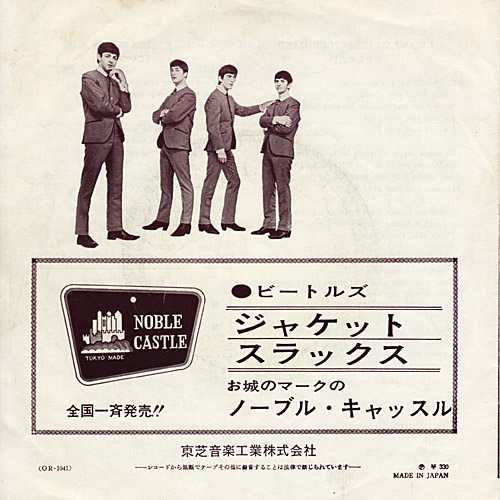
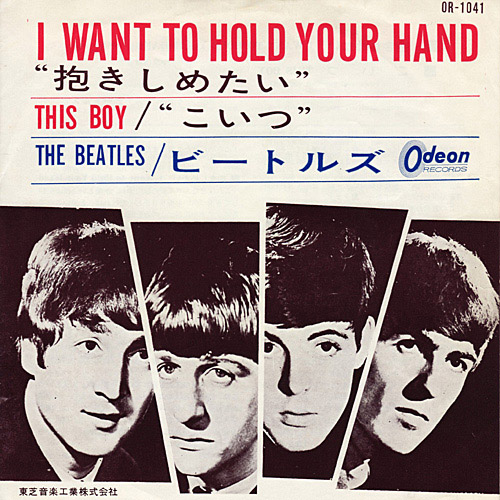
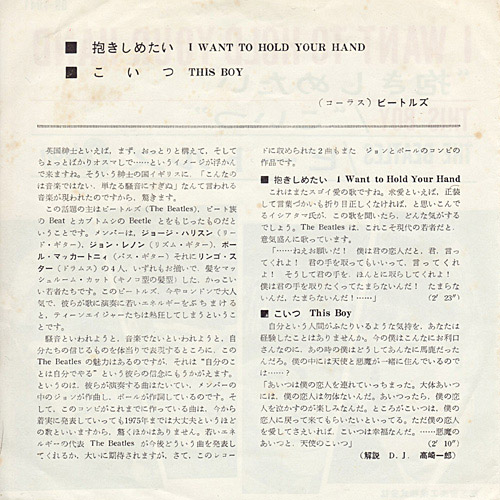
| TYPE 1: Bifold | |||
| Back | Front | Inside | |
|
 |
 |
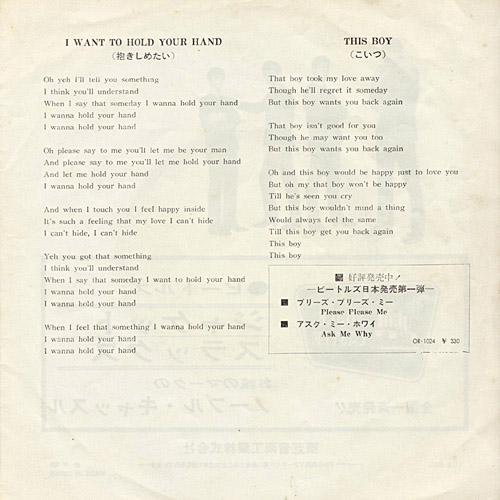 |
| Most of singles,
especially the older ones, have a cover that simply
consists of a 14" by 7" sheet of paper that is folded in
half (called a "bifold").When folded, the front
cover displays the artwork for the single and the inside
and back cover contain information, lyrics, and
occasionally photos. The example also shows how advertising was sometimes used on the back covers of the original singles. |
|||
| TYPE 2: Single Sheet | |||
| Front | Back | Other singles have a cover that is a 7" square sheet of paper (called a "single sheet") that has the cover art on the front and the lyrics on the back. | |
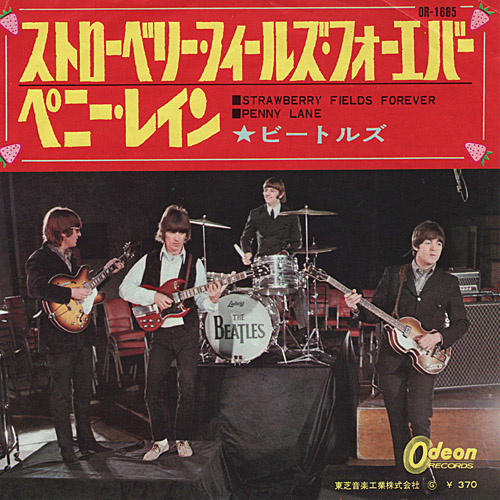 |
 |
||
| TYPE 3: Slip Sheet (inside the sleeve) | |||
| Lyric Sheet: Slip Sheet | Sleeve: Pocket Style | ||
| Front | Back | Front | Back |
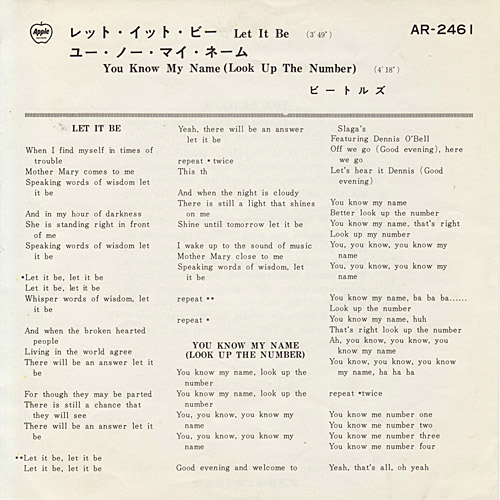 |
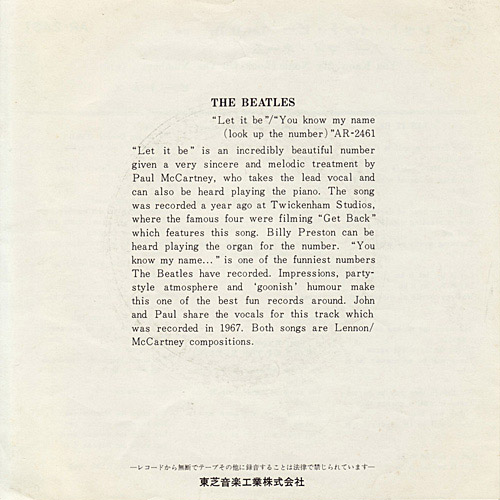 |
|
 |
| A third type of cover for singles is the pocket style.The cover designed as a 7" square open-topped envelope that displays the cover art on both side. A separate lyric sheet is inserted inside the cover. | |||
| Type | Front |
Back | Comments | |
| Toshiba
Records Sleeve Type-1 1964-early 1968 |
 |
 |
Most original and even most reissue Odeon singles have this inner sleeve design. | |
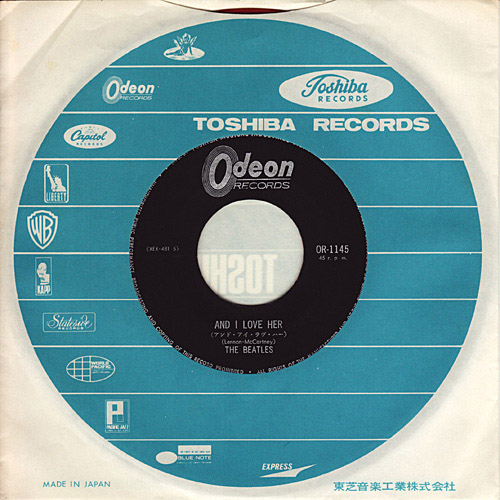
| Toshiba Records Sleeve Type-2-1 starting late1968 |
 |
 |
Also used with Odeon 400yen
reissues. Without "Apple Records" logo type. |
|
| The Beatles introduced Apple Records at a press conference in New York City on 14th. May1968. | ||||
| Toshiba Records Sleeve Type-2-2 1969? |
 |
 |
 |
Also used with
Odeon 400yen reissues. Added "Apple Records" logo type. |
| Toshiba Records Sleeve Type-2-3 1969? |
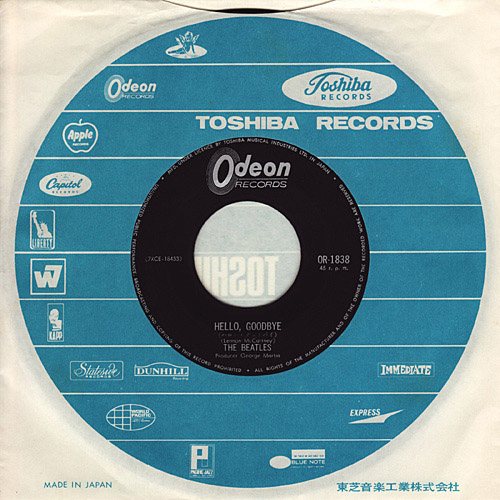 |
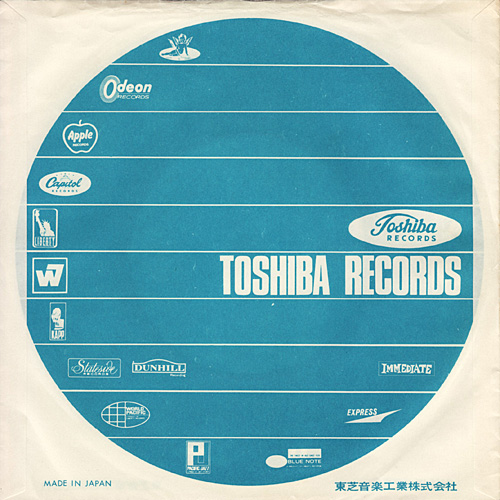 |
 |
Also used with
Odeon 400yen reissues. Added "Dunhill Recording" logo type. |
| Apple Records Sleeve 1969-1976? |
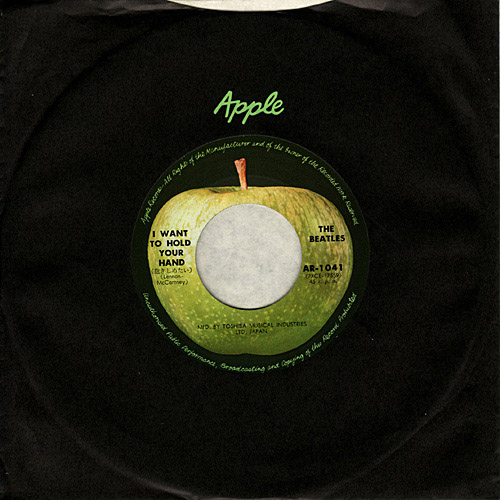 |
 |
All original Apple singles and most
Apple reissues use this style sleeve. A few later EAR prefix Apple singles use the EMI/Odeon sleeve shown at the next column. |
|
| On 1st. October 1973, Toshiba Musical Industries Ltd. changed its name to Toshiba-EMI Ltd. | ||||
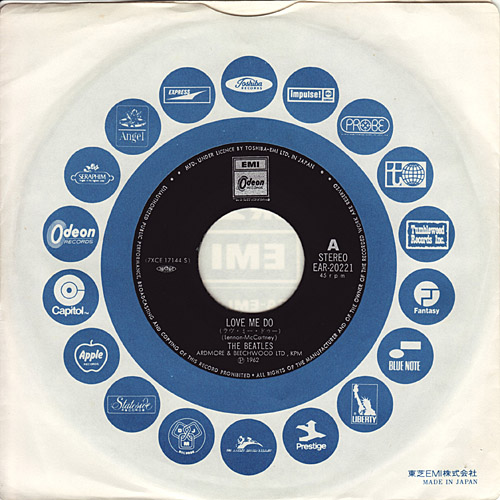
| Toshiba EMI Sleeve Type-1 1973? - 1976? |
 |
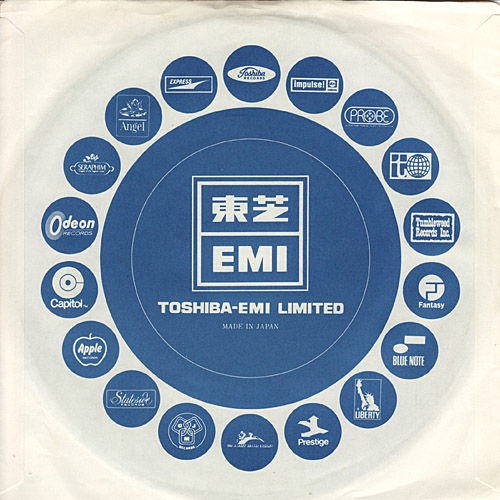 |
This inner sleeve is used with all
singles on the EMI/Odeon label and with singles on other
labels that were manufactured by TOSHIBA-EMI. Open top type. Glued left and right. |
|
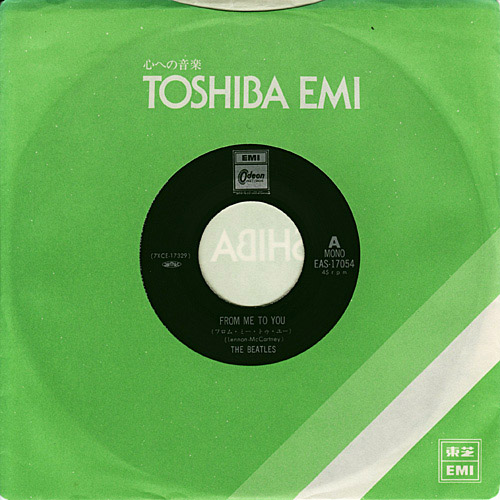
| Toshiba EMI Sleeve Type-2-1 1977? - 1980 |
 |
 |
This inner sleeve is used with all
singles on the EMI/Odeon label and with singles on other
labels that were manufactured by TOSHIBA-EMI. Open top type. Glued left and right. |
|
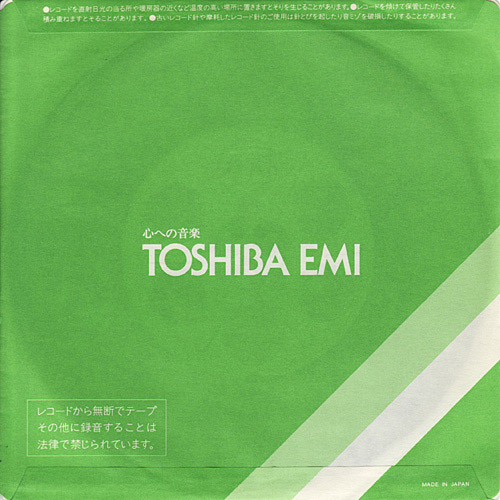
| Toshiba EMI Sleeve Type-2-2 1981? |
 |
 |
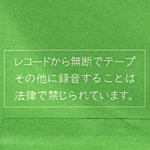 |
Open side type. Credited to "unauthorized copying of this record prohibited". Glued top and bottom. |
| Toshiba
EMI Sleeve Type-2-3 late 1981? - |
 |
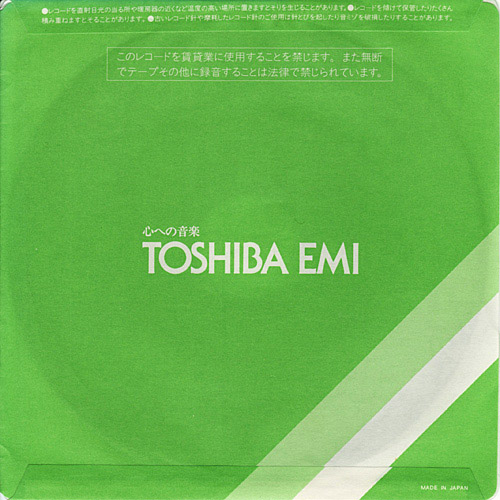 |
Open
side type. Credited to "unauthorized copying, hiring, renting". Glued top and bottom. |
|
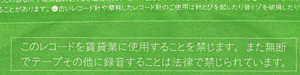 |
||||
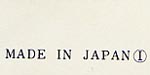
| Two
key identifying characteristics with which the collector
should be familiar are the circled letter symbol and the
price. There are important to note because TOSHIBA would reprint records from time to time without changing catalog numbers but with different symbols and price designations. |
|
 |
|
 |
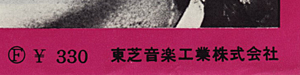
| Over the years, the circled "F"
symbol was changed to a circled "G", then to a
circled "H", and finally to a circled "I"
according to the approximate timeframes shown in the table
below: |
| Symbol | Dates Used |
| F | 1964-late1965 |
| G | late1965-late1968 |
| H | late1968-late1974 |
| I | late1974-1980's |
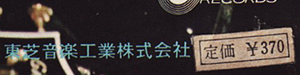
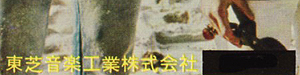
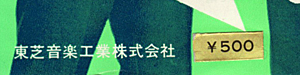
| For records bearing the same
circled letter, the price is used to distinguish an
earlier from a later release. The earlier release have
lower prices because just about all these records ware
released during a time of generally increasing prices.
Printed prices always appear somewhere on the cover of
Japanese records. In cases where the price changed before
a new cover could be printed, a sticker (usually gold with
black characters) bearing the new price was placed over
the printed cover price. |
|
 |
 |
 |
 |
 |
 |
 |
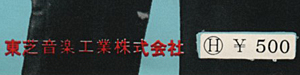 |
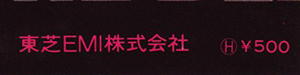 |
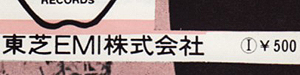 |
| Symbol | Price | Comments |
| Odeon | ||
| F | ¥330 | Available up through OR-1261 Sometimes stickered over with "370 yen" |
| G | ¥370 | Original starts OR-1412, but likely all OR singles (*)
have a 370yen version. (*) except Sometimes stickered over with "400 yen" |
| H | ¥370 | Some of these exit. ex.) OR-1437, OR-1838 and OR-1902 |
| H | ¥400 | Original starts OR-2121, but likely all OR singles(*)
have a 400yen version. (*) except OR-1024, OR-1156, OR-1194 and OR-1195 |
| Apple | ||
| H | ¥400 | Company's name: TOSHIBA MUSICAL INDUSTRIES LTD. Sometimes stickered over with "500yen" |
| H | ¥500 | Company's name: TOSHIBA MUSICAL INDUSTRIES LTD. |
| H | ¥500 | Company's name: TOSHIBA-EMI LTD. |
| I | ¥500 | Company's name: TOSHIBA-EMI LTD. |
| EMI/Odeon | ||
| I | ¥600 | Company's name: TOSHIBA-EMI LTD. |
| I | ¥700 | Company's name: TOSHIBA-EMI LTD. |
| In Japan, promotional records have traditionally been
provided at no charge to radio stations, record shops, and
the mass media to increase the sales of a record or in
some cases to promote a tour. There are two types of promotional releases. Type-1: This type is called the white label promo for which a unique label has been made. Sometimes unique cover art accompanies a white label promo release but most usually, the regular cover is used with appropriate alternations to prohibit commercial sale. Type-2: The second type of promo record is less elaborate and is called a sticker promo. It is simply a regular commercial release that has a promo sticker affixed to the cover. This type of promo is occasionally found on post-1975 releases. |
| Odeon White Label Promo | ||||
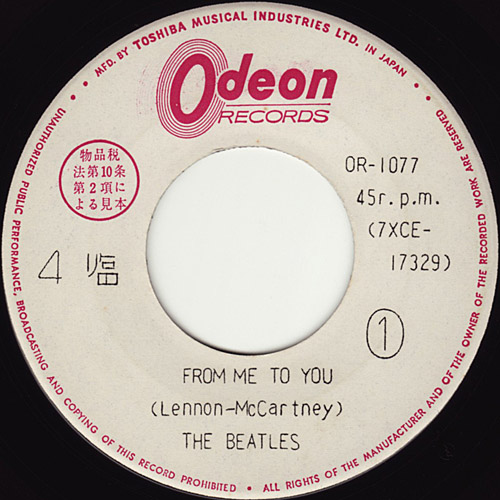
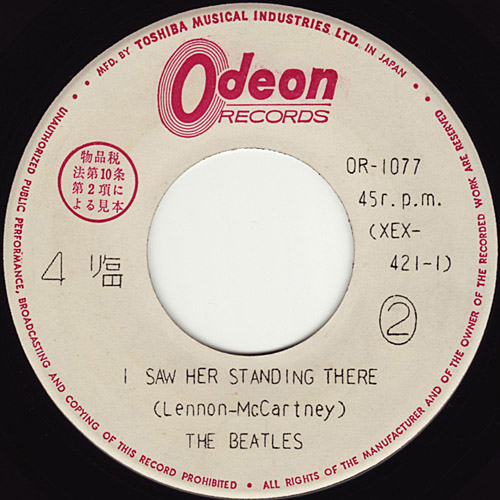
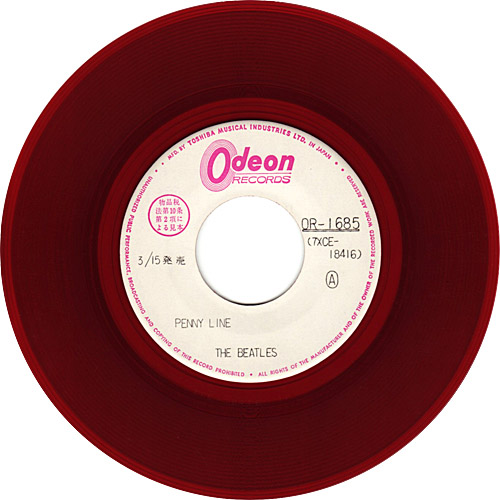
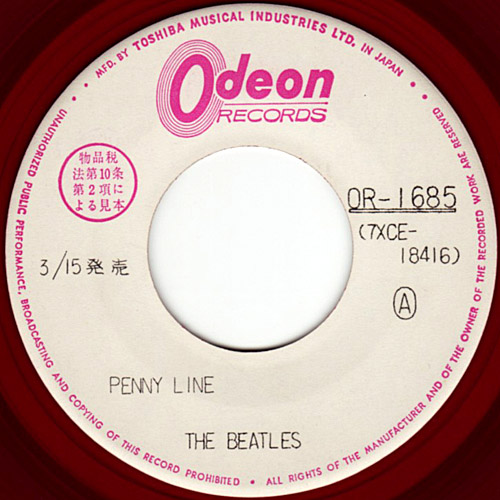
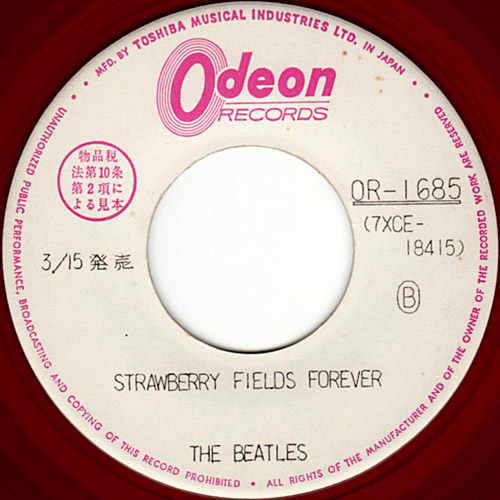
| The label design of Odeon white label singles is very similar to that of regular commercial Odeon singles. The promo version, however, features the perimeter print, Odeon logo, and circled text in red and all other printing in black. The print in black has an unusual "hand lettered" look to it quite unlike the regular commercial version. The release date is in black and appears above and to the left of the title. | ||||
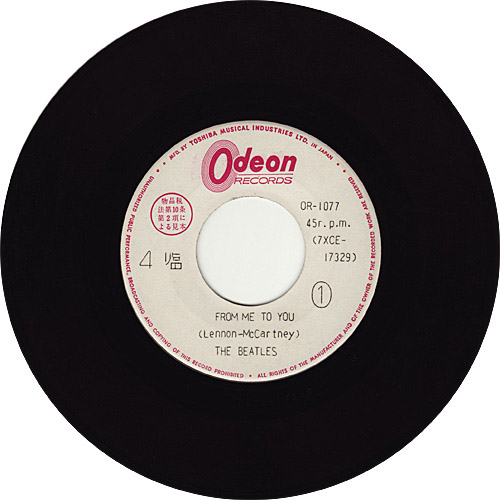 |
 |
 |
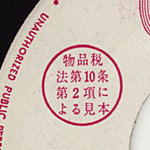 |
Here is a close-up of the circled
text: "Sample under Article 10, Clause 2 of the Commodity
Tax Law". The release date is in black. |
 |
 |
 |
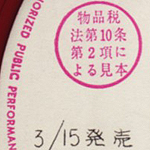 |
Here is a close-up
of the circled text: "Sample under Article 10, Clause 2 of
the Commodity Tax Law". The release date is in black. |
| Apple White Label Promo | ||||
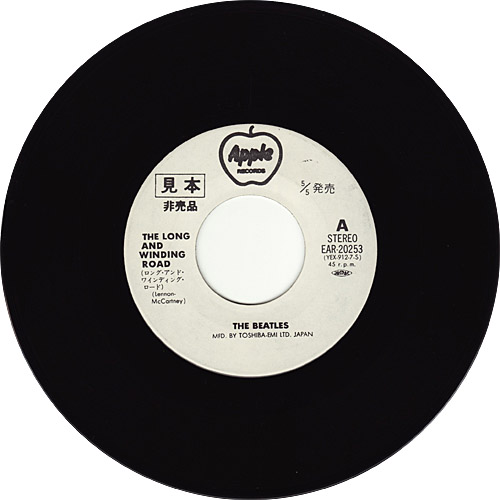
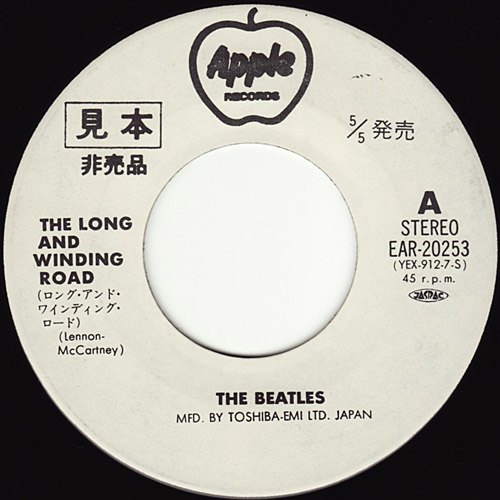
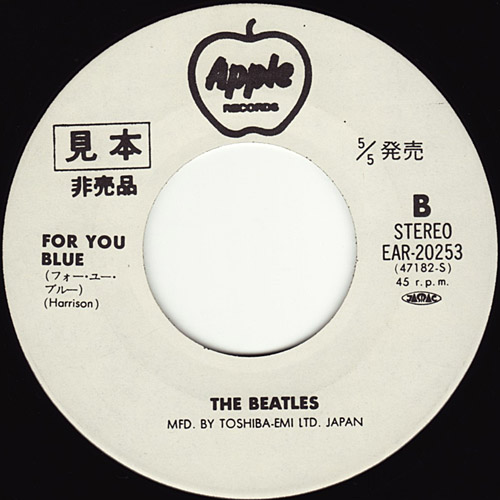
| The design of Apple white label promo
singles differs markedly from commercial Apple singles.
Promo versions eliminate perimeter print and feature a
line drawing of the Apple logo at the label top. All print is black. Notice the promo characters inside the rectangle to the left of the Apple logo and release date to the right. |
||||
 |
 |
 |
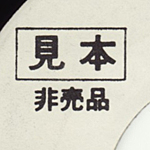 |
Notice the promo characters inside the rectangle to the left of the Apple logo. |
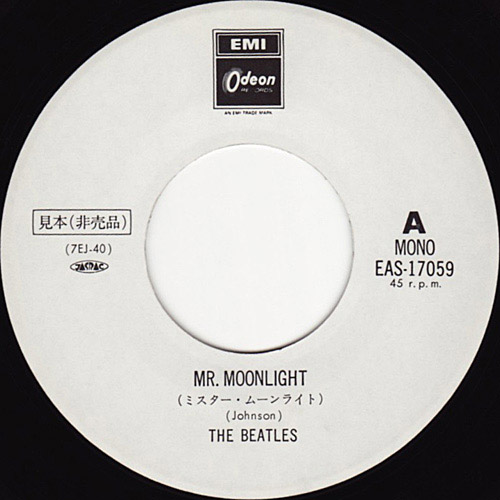
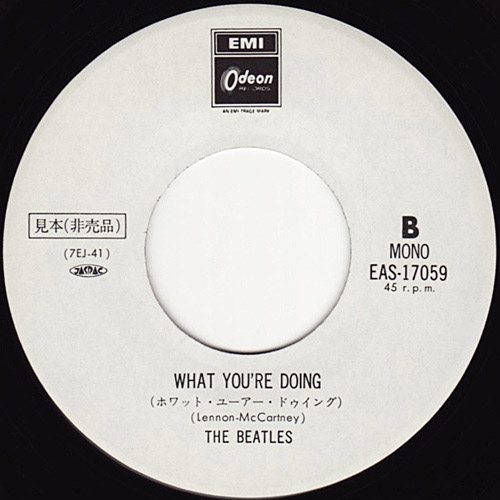
| EMI/Odeon White Label Promo | ||||
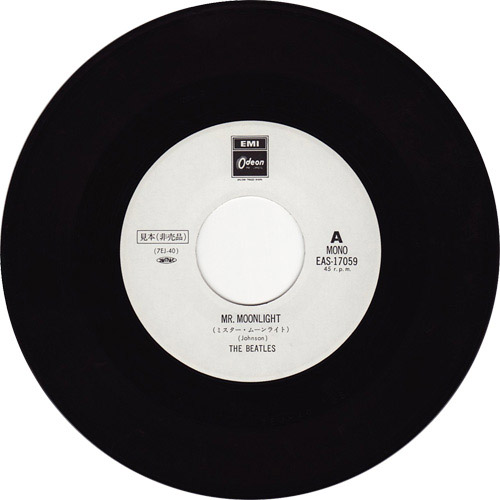
| The promo label coloring of EMI/Odeon
white label promo single is essentially the inverse of the
commercial version. The black print and white background
of the promo version is the "negative" of the commercial
version. The promo (not for sale) characters and "JASRAC"
logo mark were printed on the label. The white label promo singles lacks the perimeter print of the commercial version. The release date was not printed on the label. |
||||
 |
 |
 |
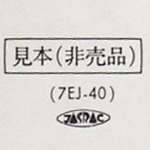 |
Notice the promo characters inside the rectangle to the left. |